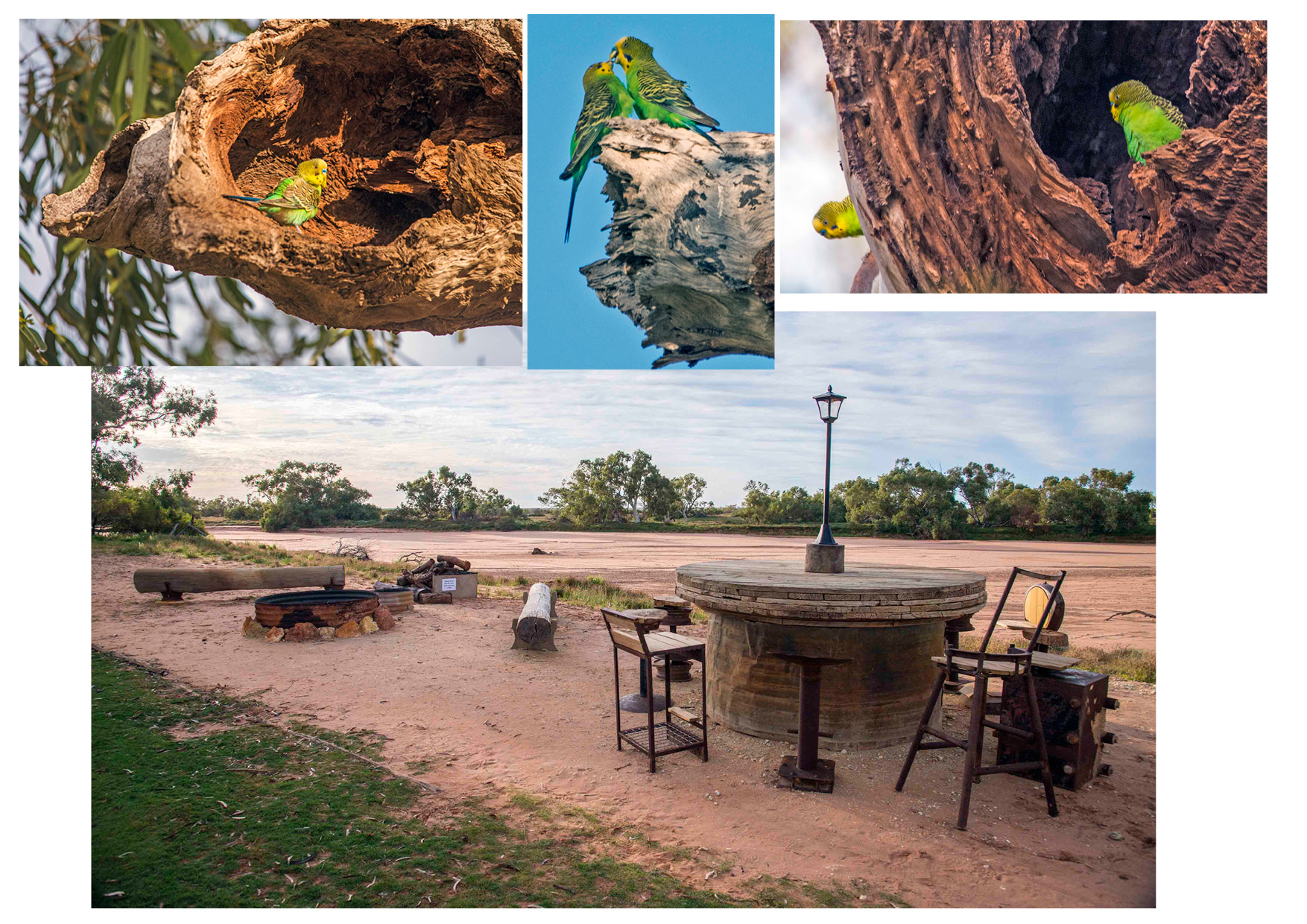
We escaped!
After an amazingly mild winter so far in Perth, suddenly the Bureau of Meteorology site predicted cold and wet weather so we packed up the caravan and drove due NORTH in search of the sun…
Spent some time with Michele and her Mum Audrey in Geraldton. We had one good day of weather before it started raining which we spent in the Chapman Valley…
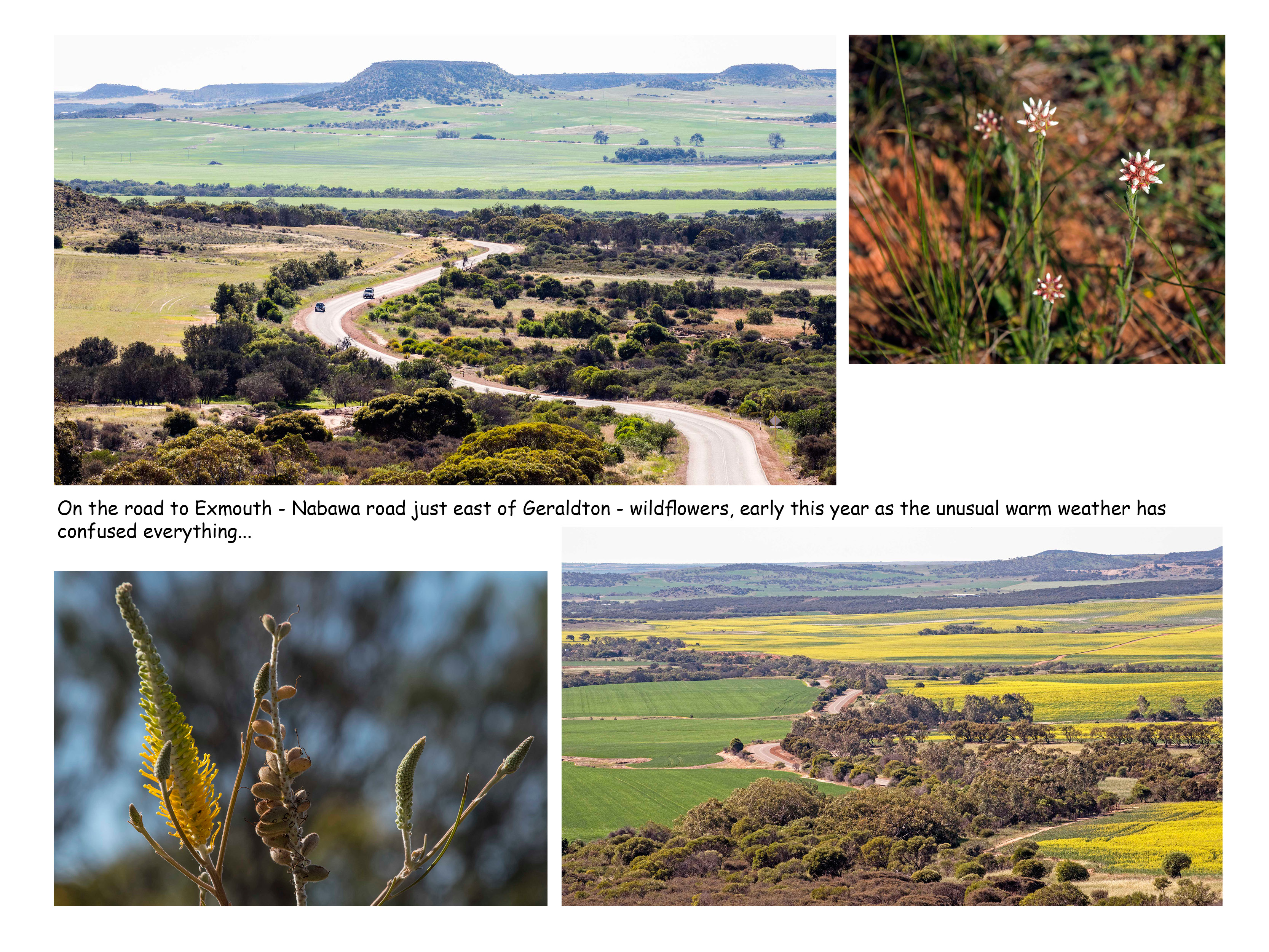
The Greenough river was interesting after recent floods – many trees uprooted and debris suspended in the trees lining the creek bed.
Took off to Carnarvon in rain and it continued intermittently for the next three days. That didn’t stop us from eating all the beautiful produce there – amazing fresh vegetables and fruit. Plus of course the pink snapper and freshly cooked huge king prawns at $18 per kg from Pickles Point Seafood!
Pulled out of Carnarvon for Exmouth in rain and it continued until half way between Minilya and Exmouth. Fortunately there was a short break while we were setting up our driveway camp thanks to friends Jan and Jamie.
First day was very miserable with intermittent rain and overcast conditions – not unknown in Exmouth as we can attest from past experience. However, it cleared up over night and for the last three days we have had wonderful conditions – blue skies, no wind and temps in the high 20’s… Bliss!
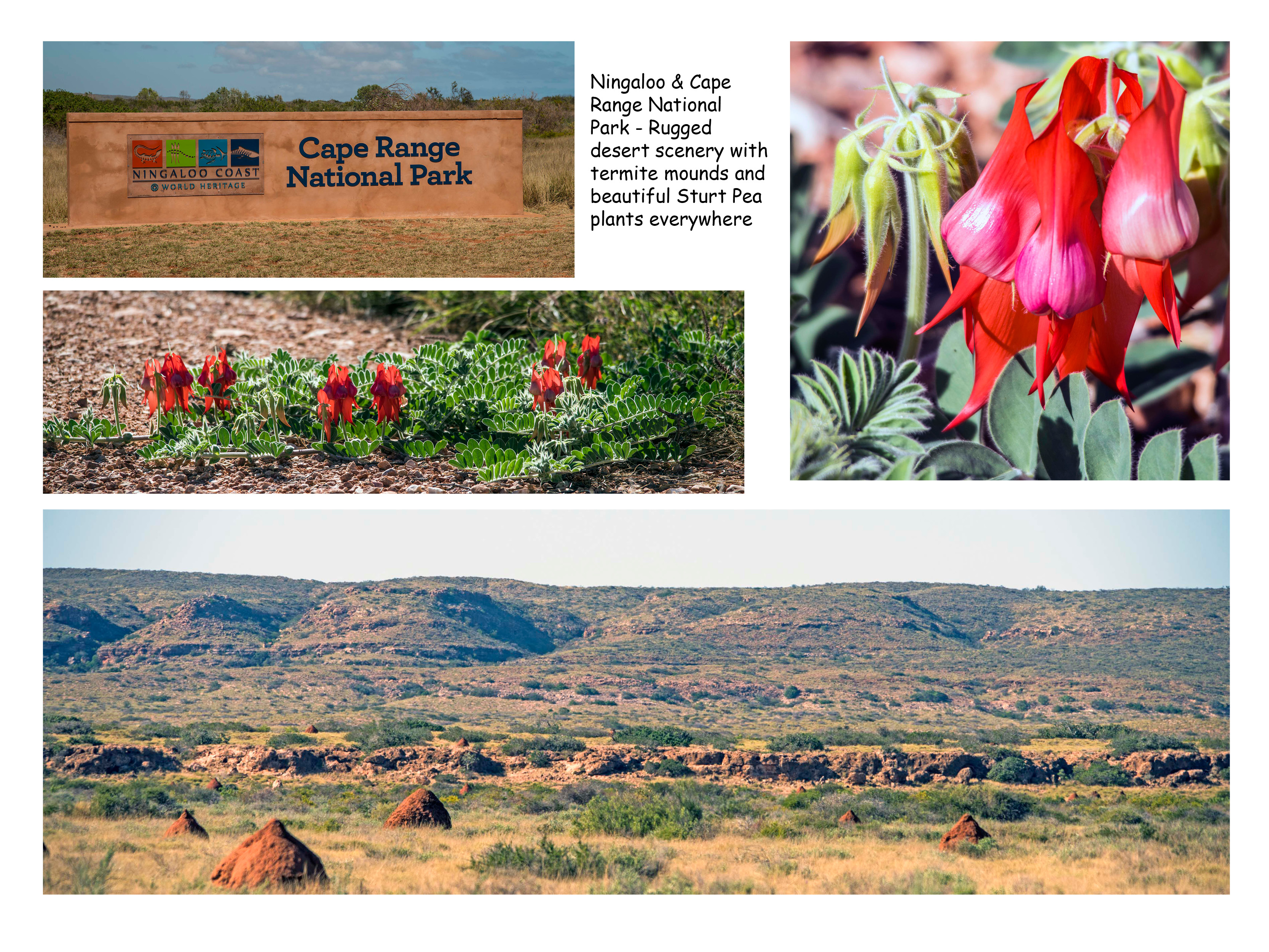
We have had a good look round and noted changes in Exmouth – the town is growing with a lot more homes on the marina and construction going on in town as well.
We revisited the Ningaloo coast as far south as Turquoise Bay and some of the coastal camping spots – all full! No vacancies anywhere down there.
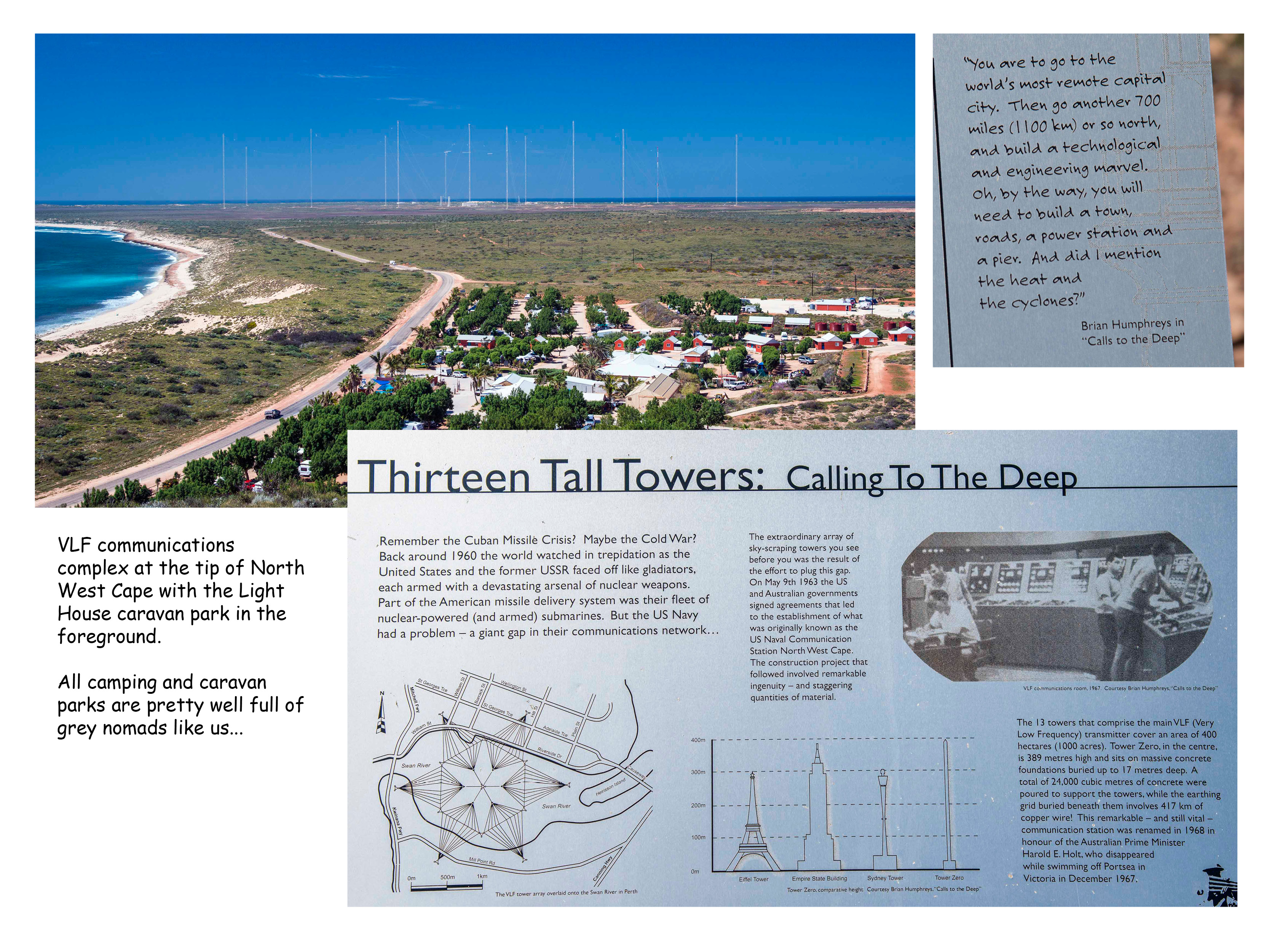
We must try to book a spot some time in the future, as it is a magnificent coast with lots on offer.
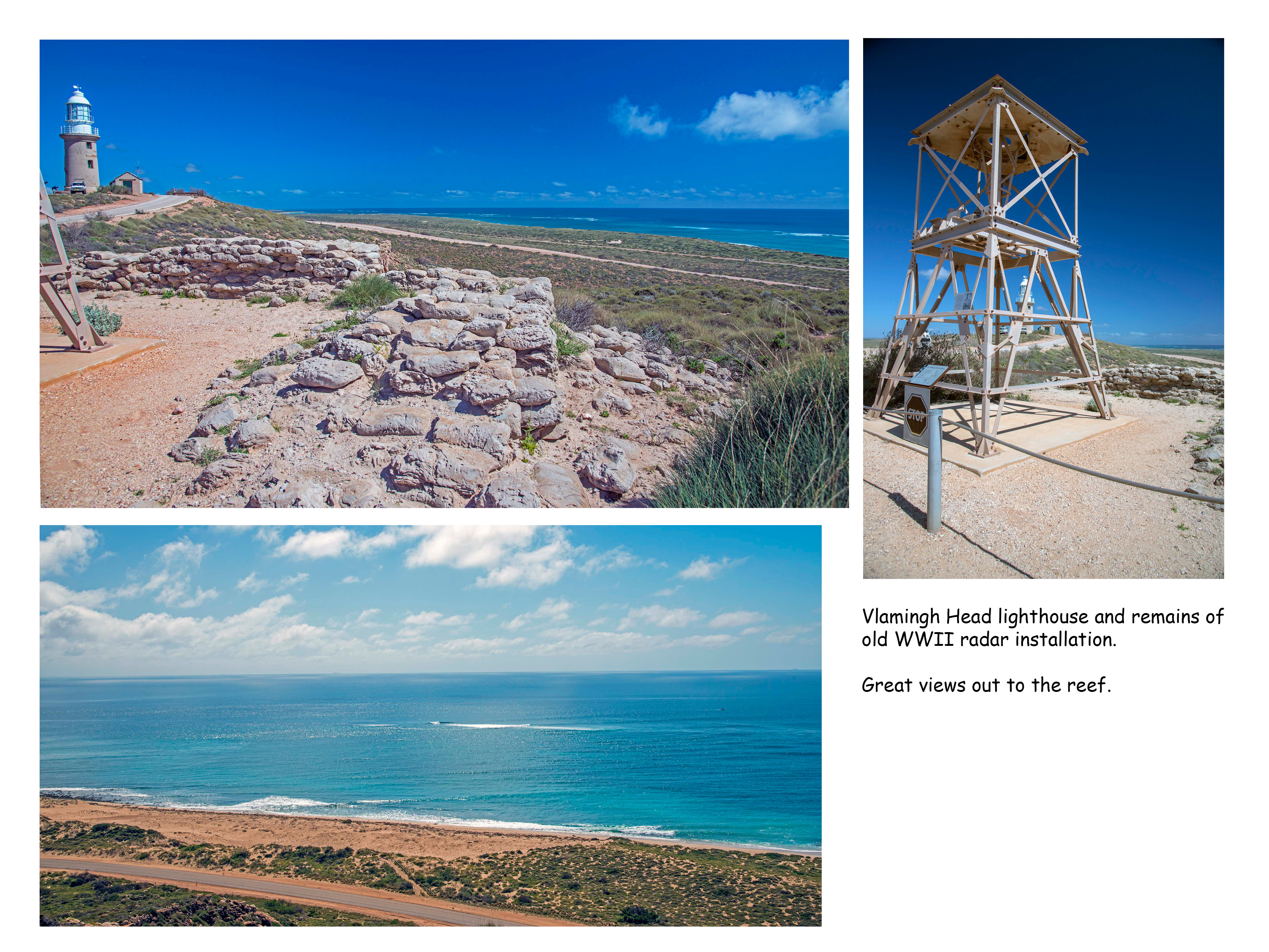
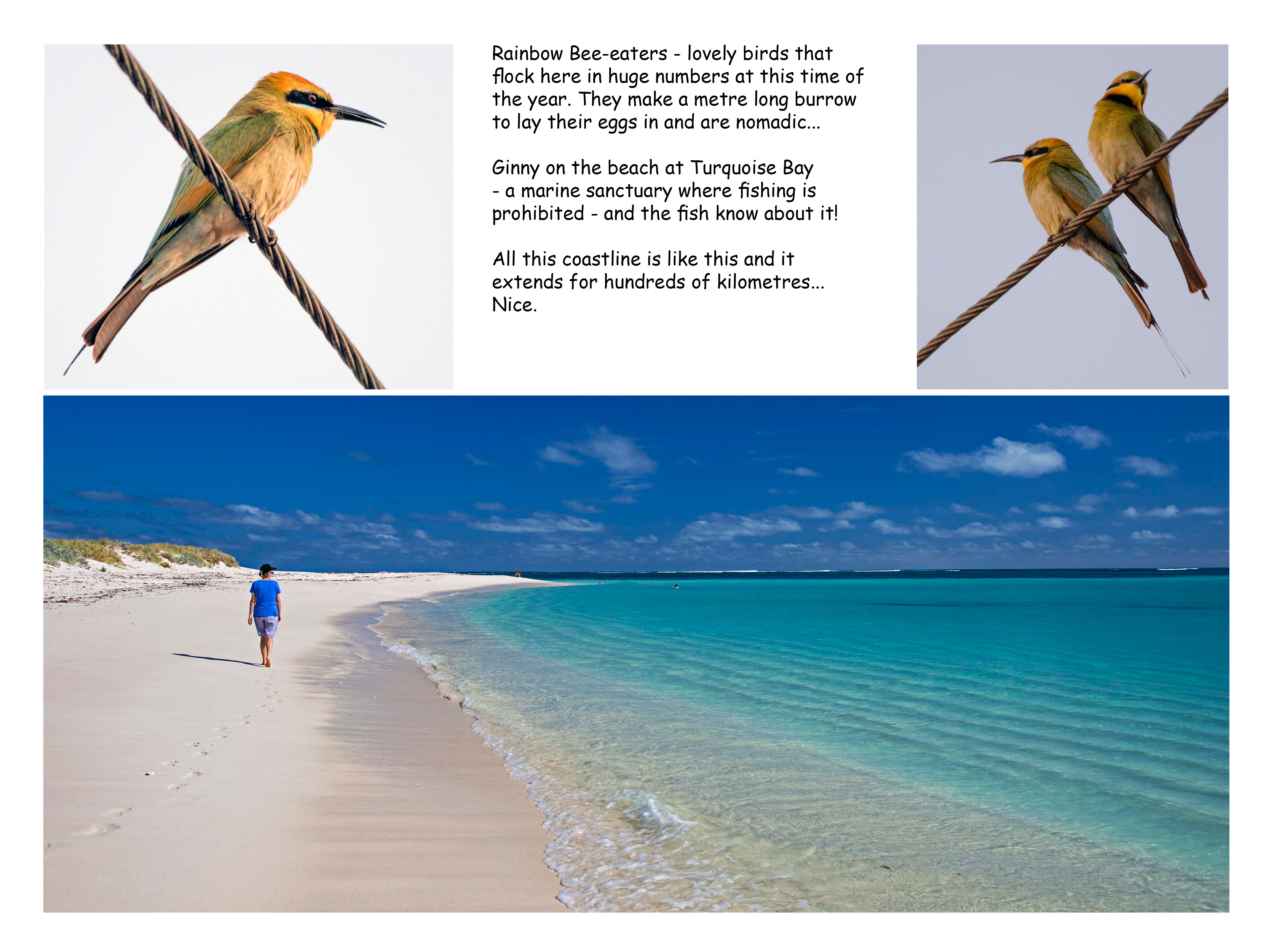
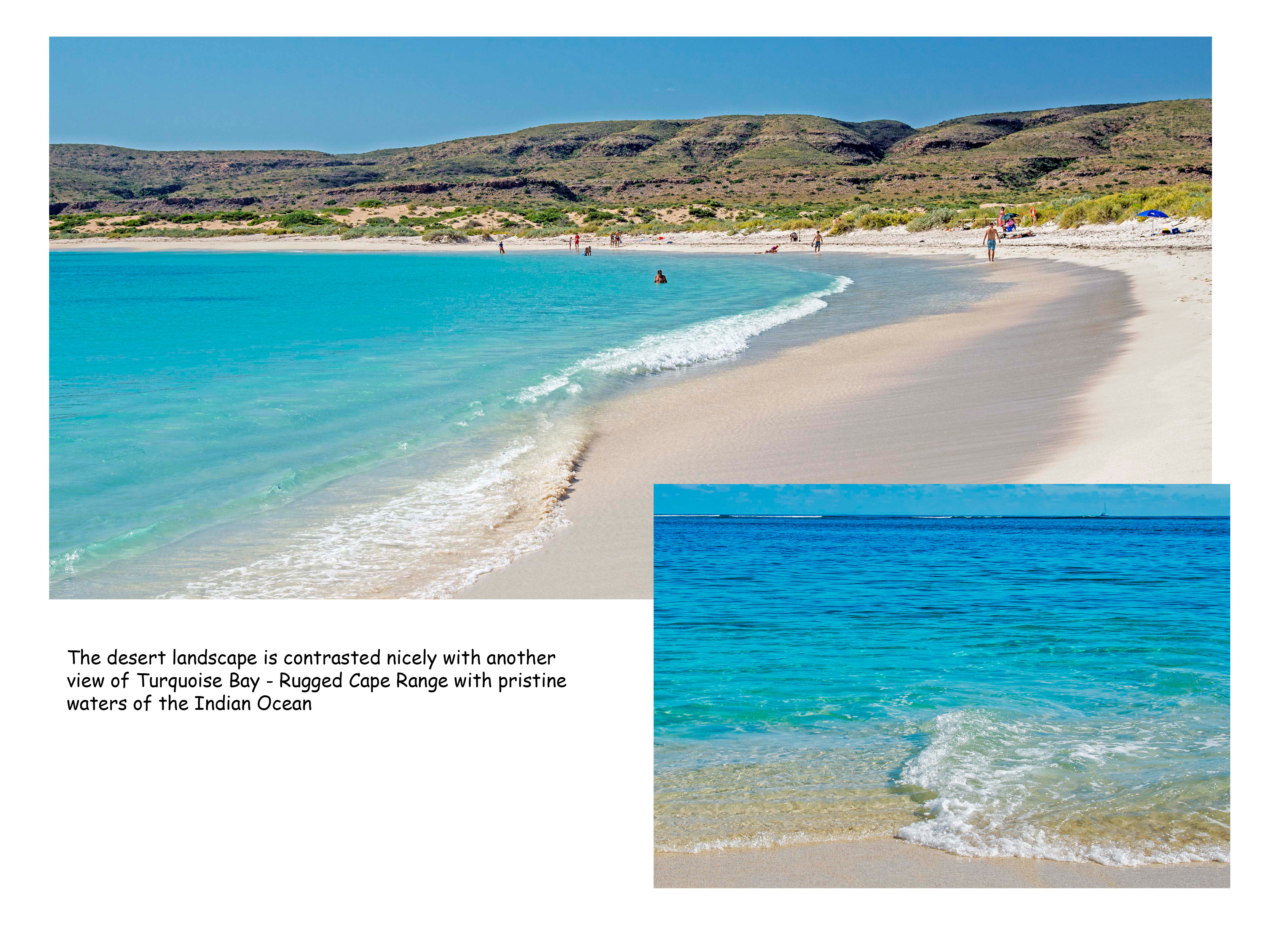
We are not into ‘swimming with whalesharks’ and we have done whale spotting elsewhere. So we are happy to go fishing and do some photography in the area. Lots of chances of great land/seascapes… but please tell us which photo above you like the best?!

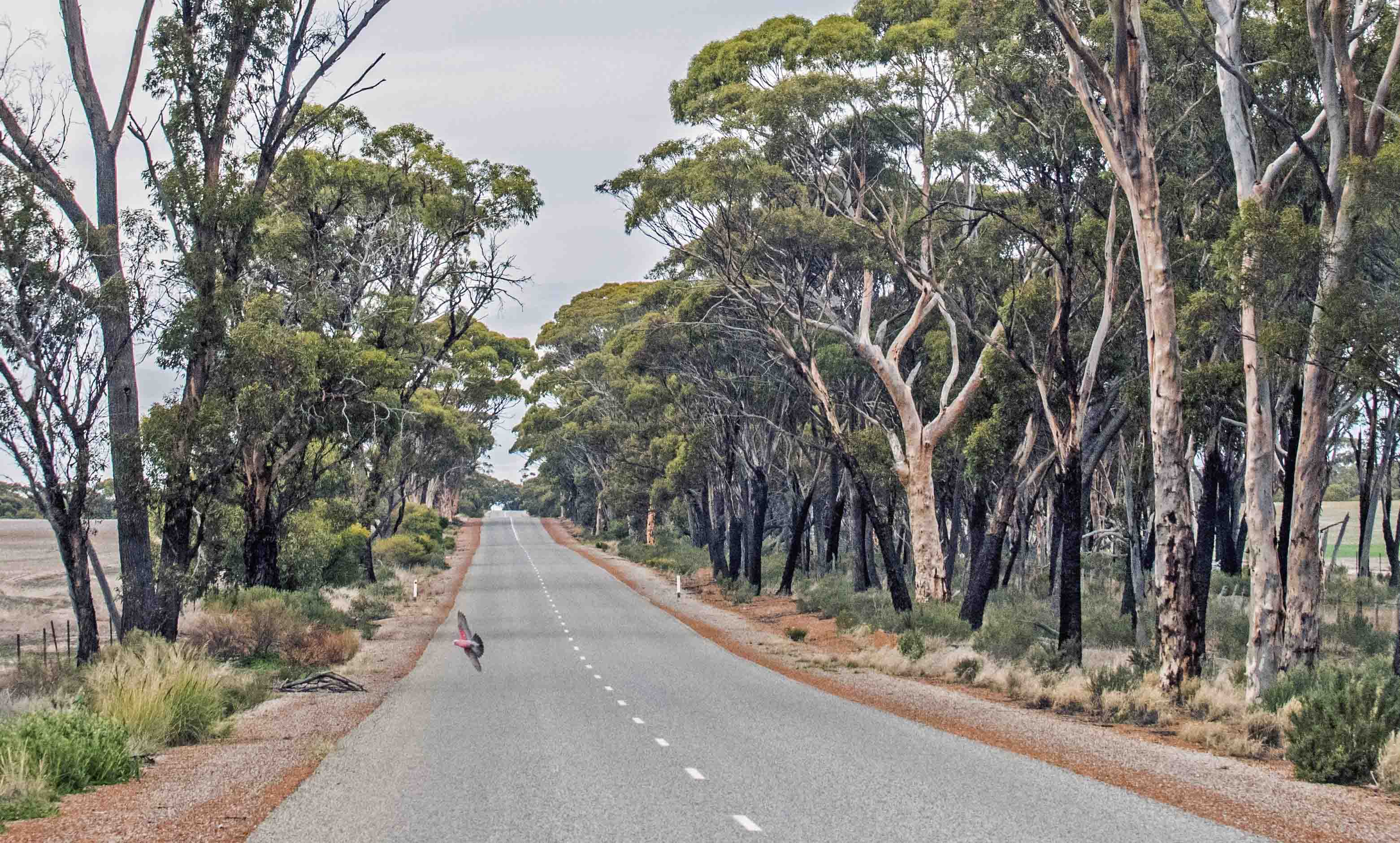
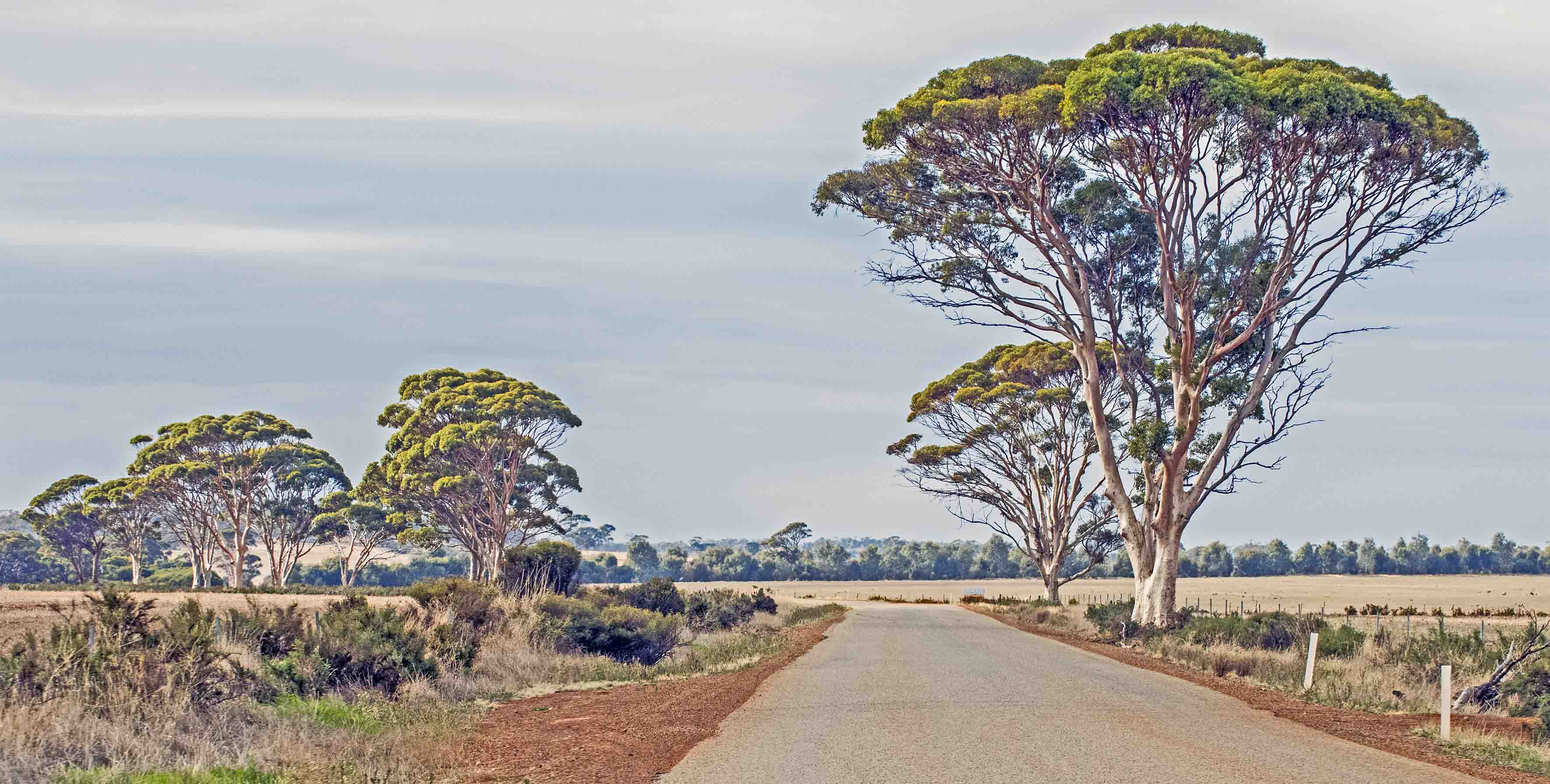
After 6 months of city dwelling, it was definitely time to get out bush for a few days – but where to go? We opened our West Australian atlas (old-fashioned but the geography doesn’t change much around here!) with the challenge of finding a place that:
• neither of us had visited before – quite hard as Ian was born and bred in WA
• within 4-5 hours travel time from Perth
Within 3 minutes we found the perfect spot in the Wheatbelt region – Wave Rock, only 326 kms away, with a caravan park 2 km away from Hyden.
And what an amazing landform it is. An enormous granite rock 15 metres high (same as a 3 story apartment) and 110 metres long. It has been beautifully sculpted over many millenia into the wave shape that makes you want to get your surfboard out!
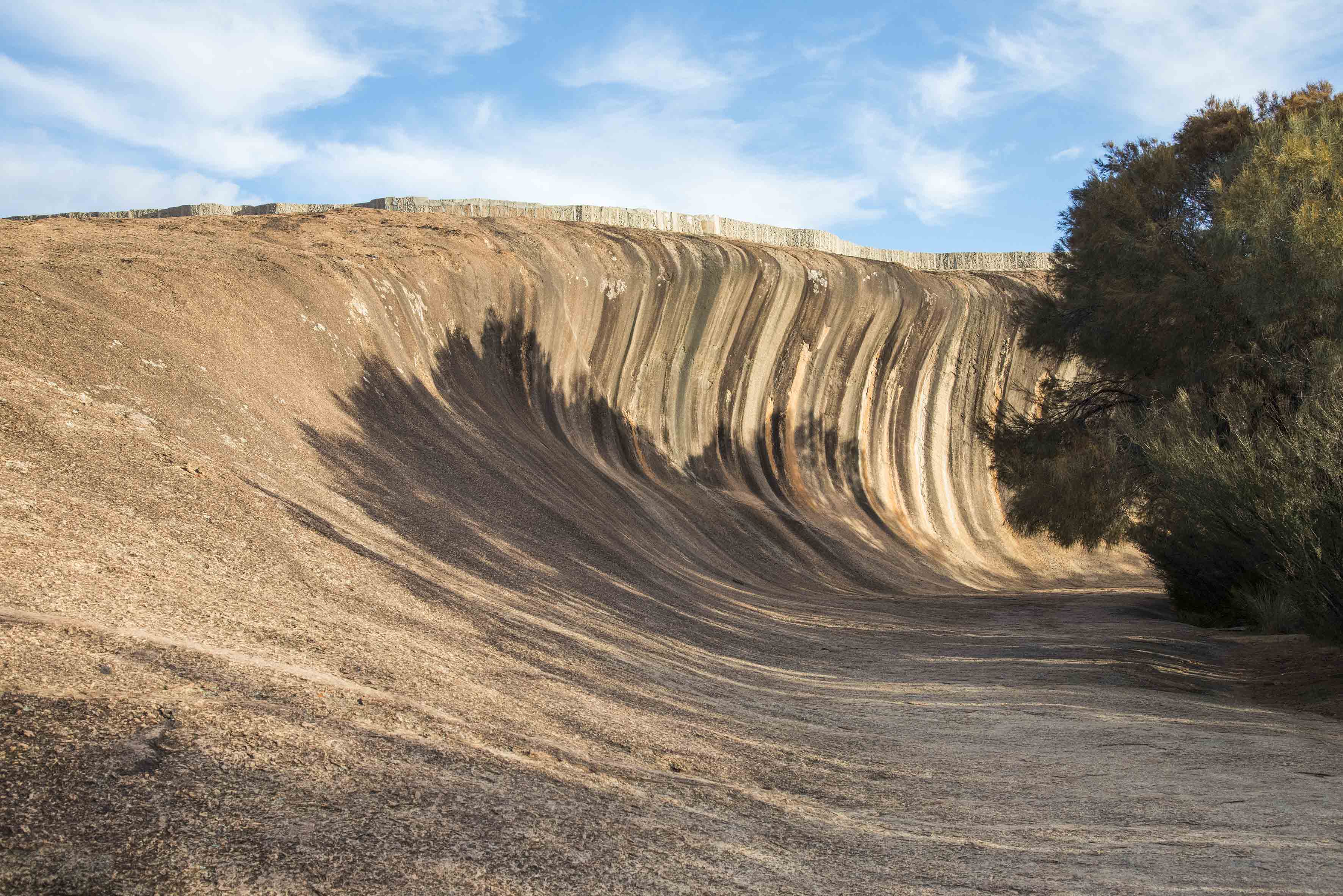
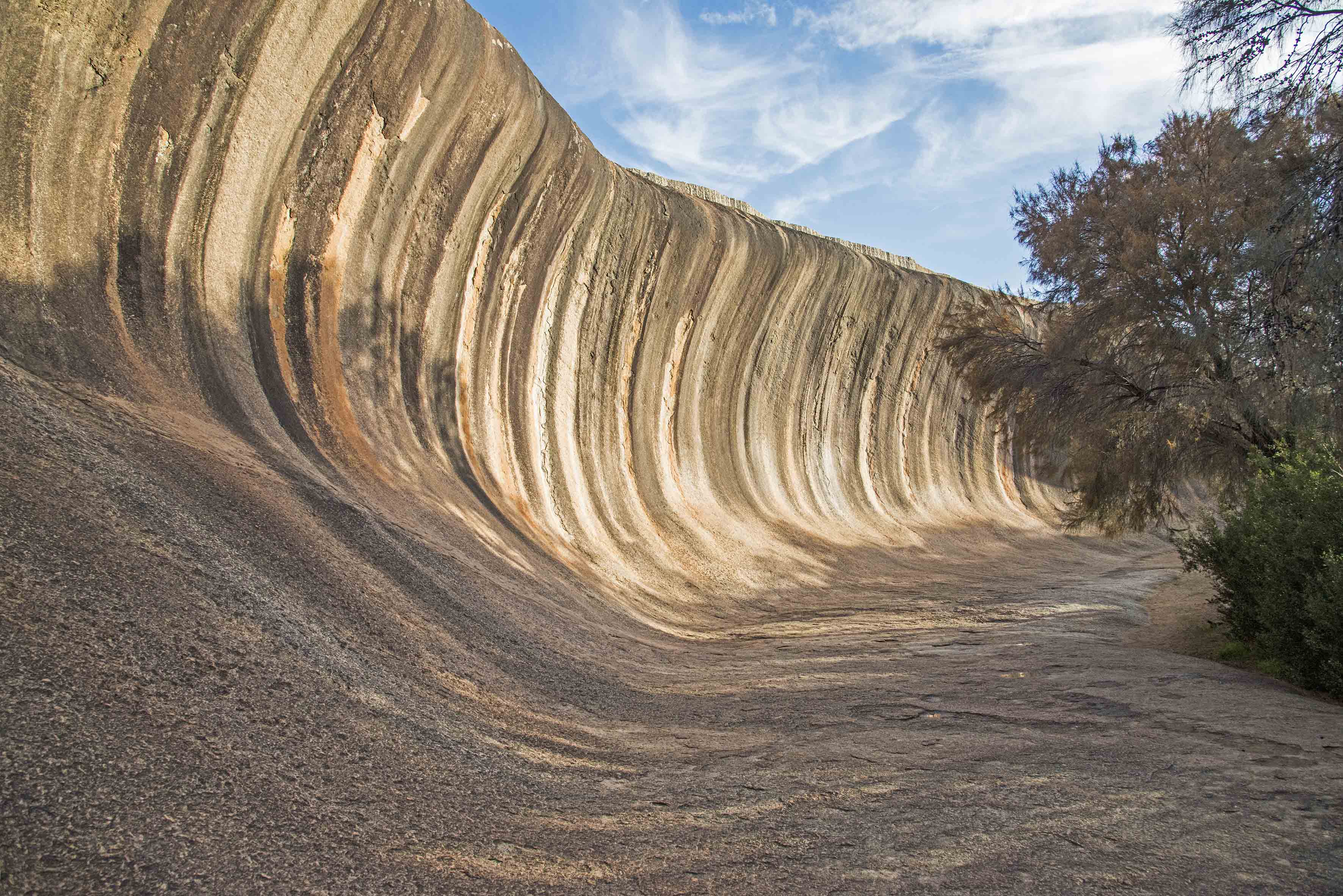
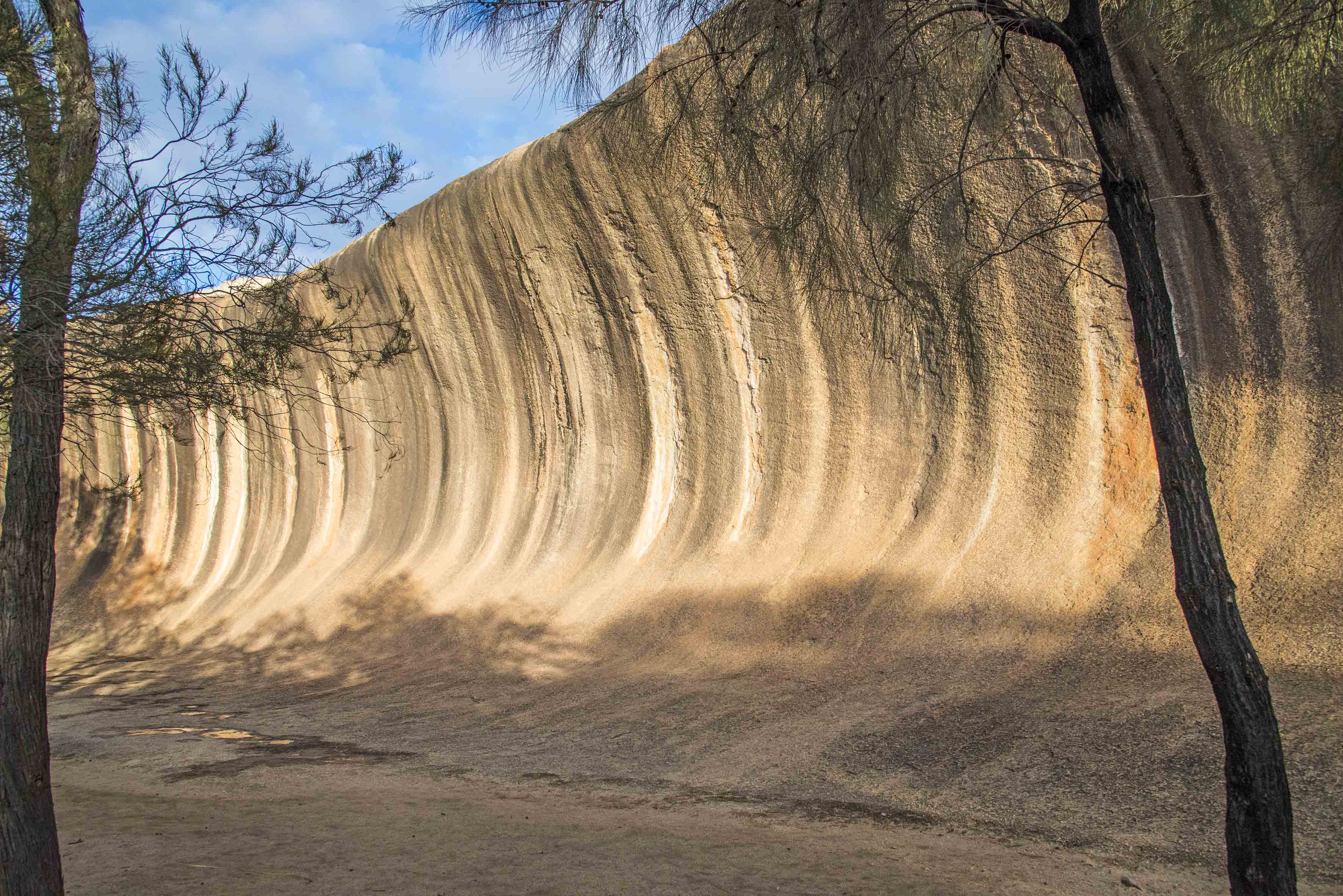
The rock walls are stained in bright orange and black from the chemical reactions caused when water drips slowly over the tiny mosses, lichens and algae on the rockface.
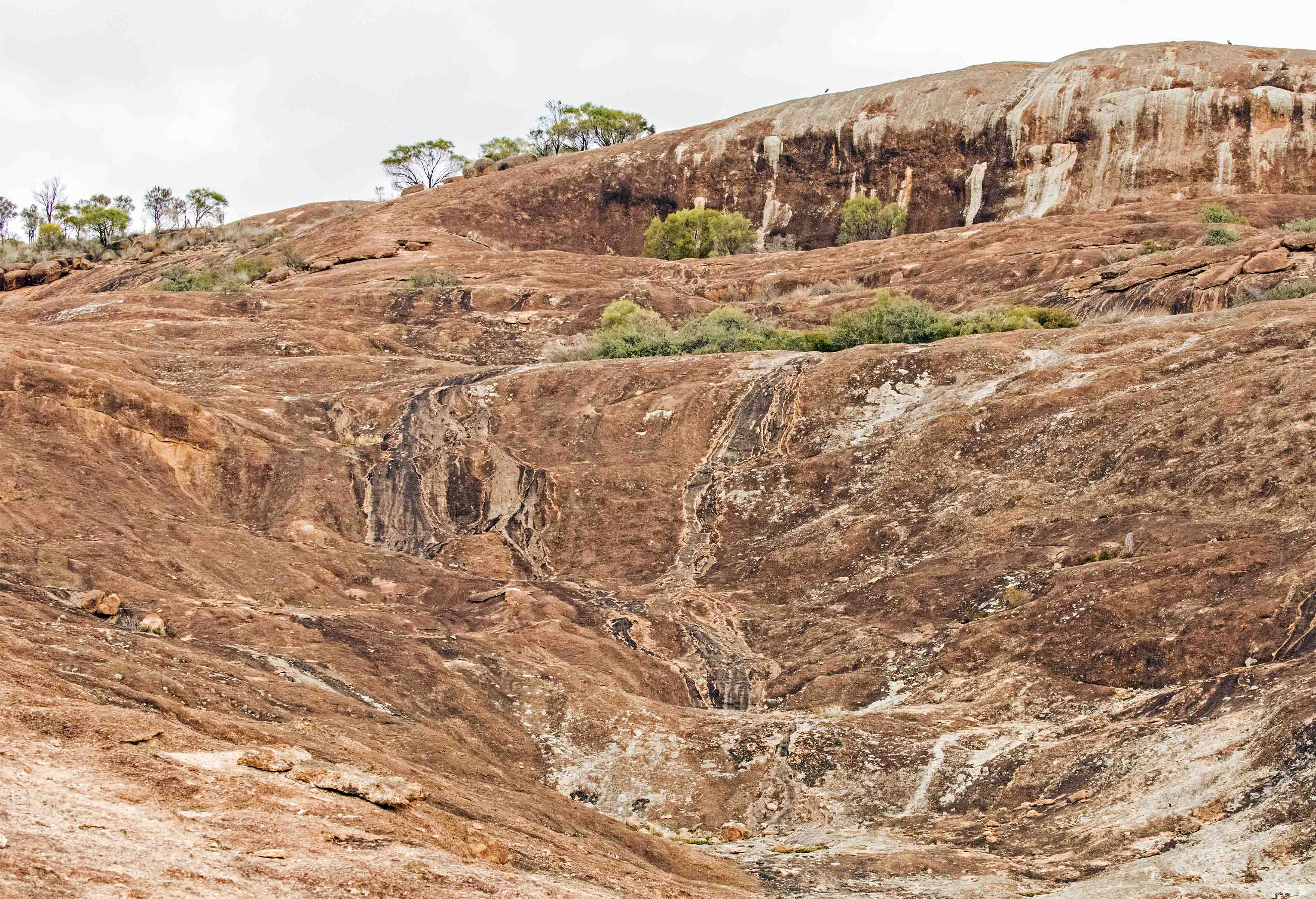
Just loved Hippo’s Yawn – perfect name!
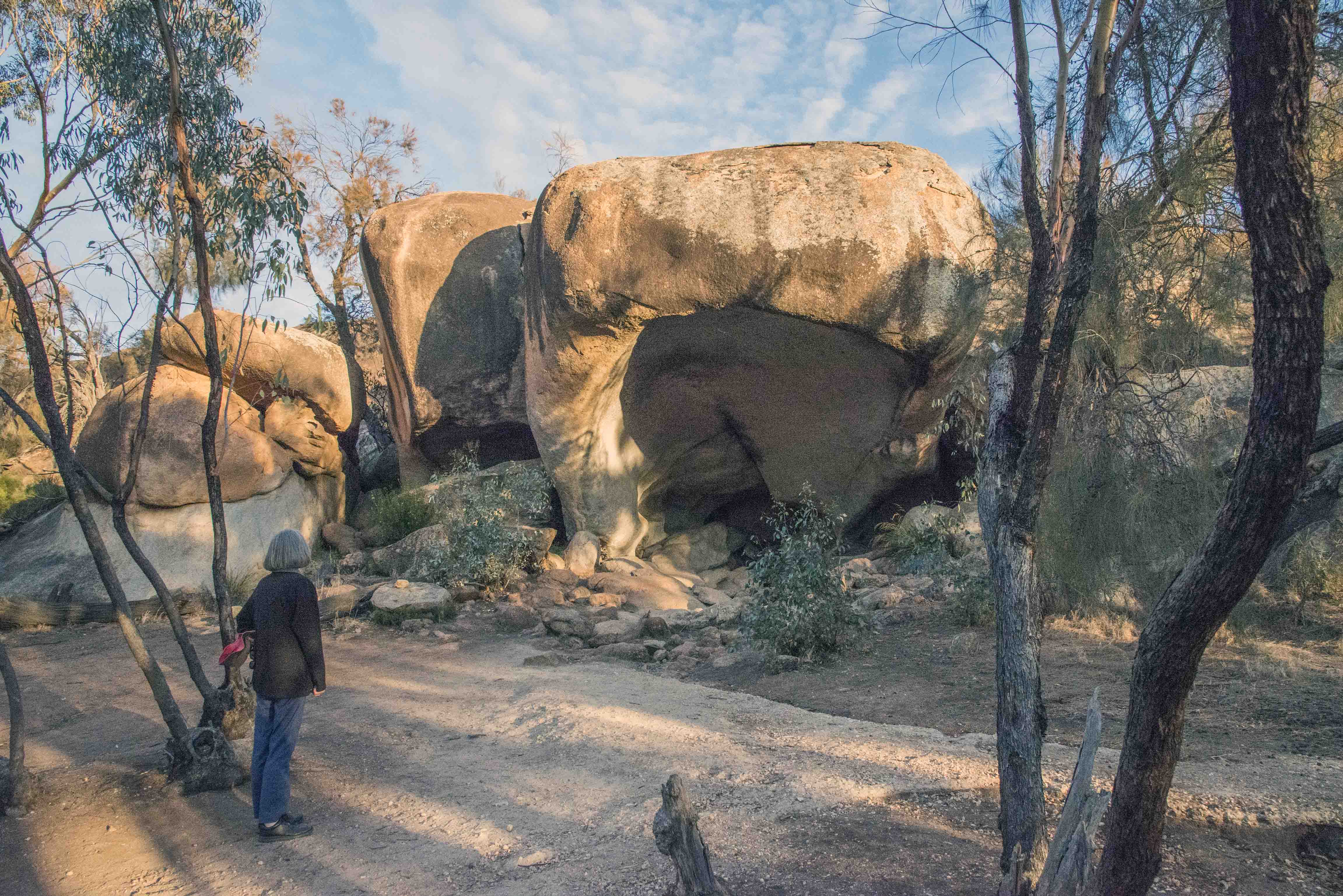
Many trips and walks have been designed to explore the area, and most of these are included in the ‘Granite and Woodlands Discovery Trail‘, a useful resource booklet for visitors.
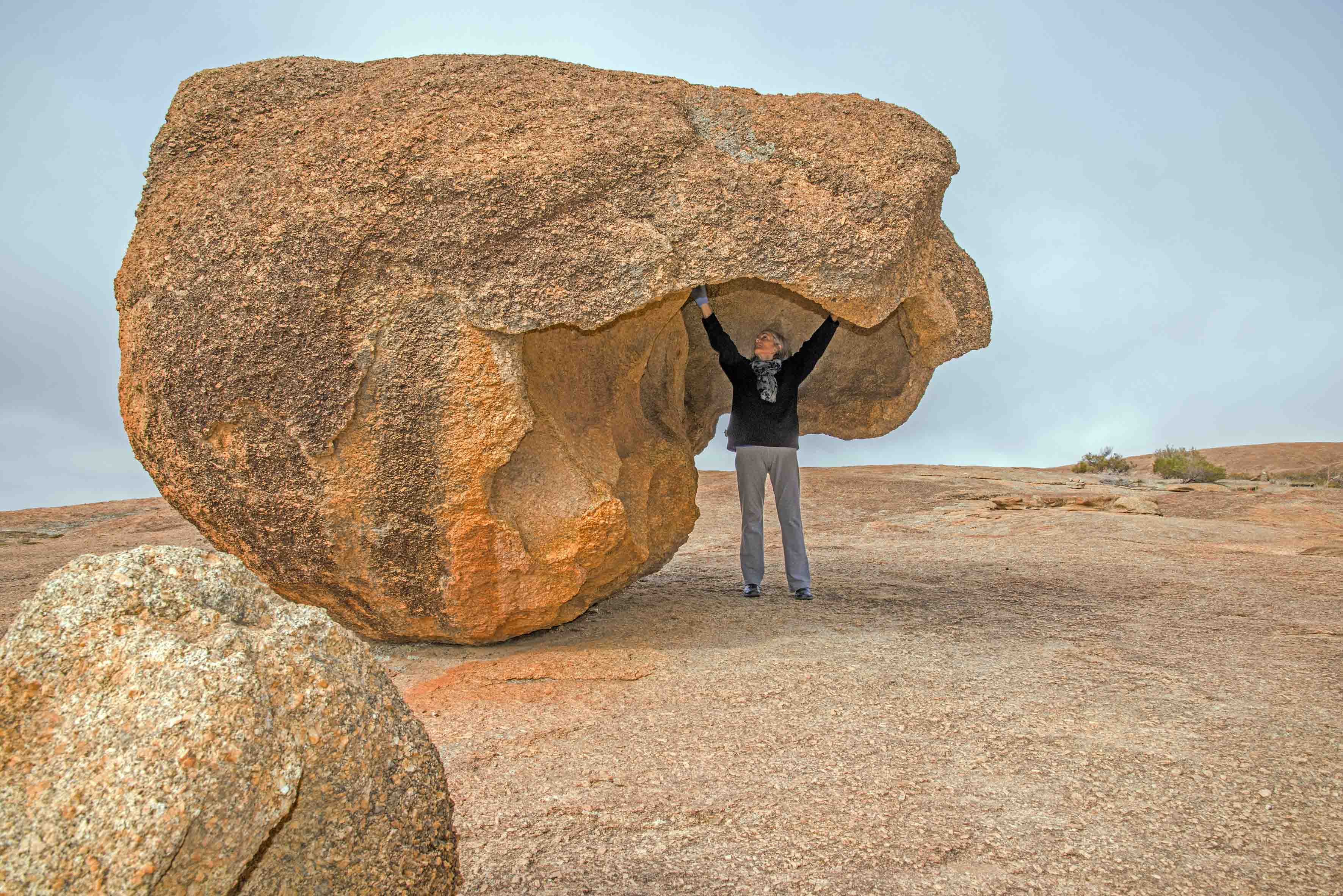
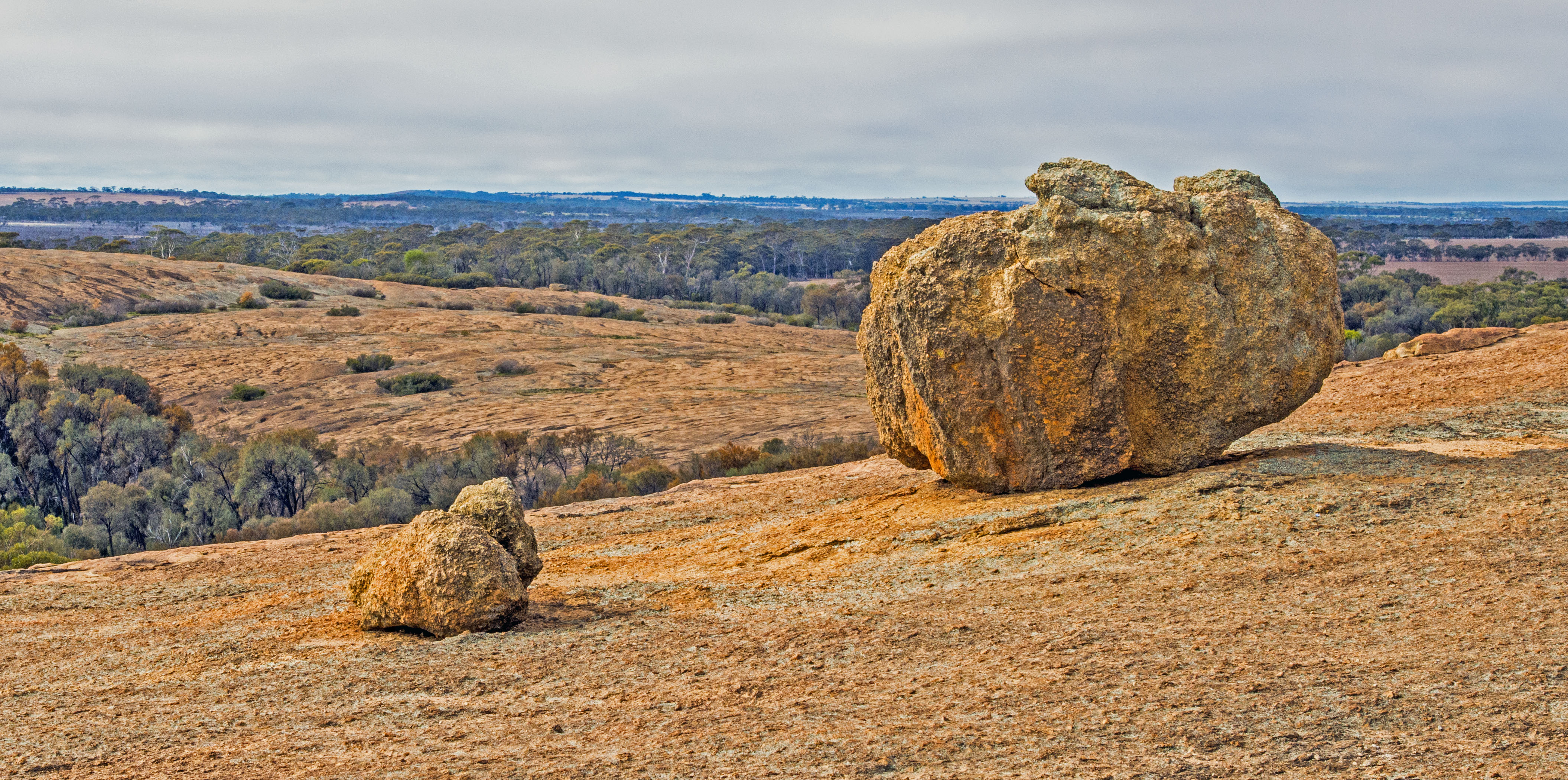
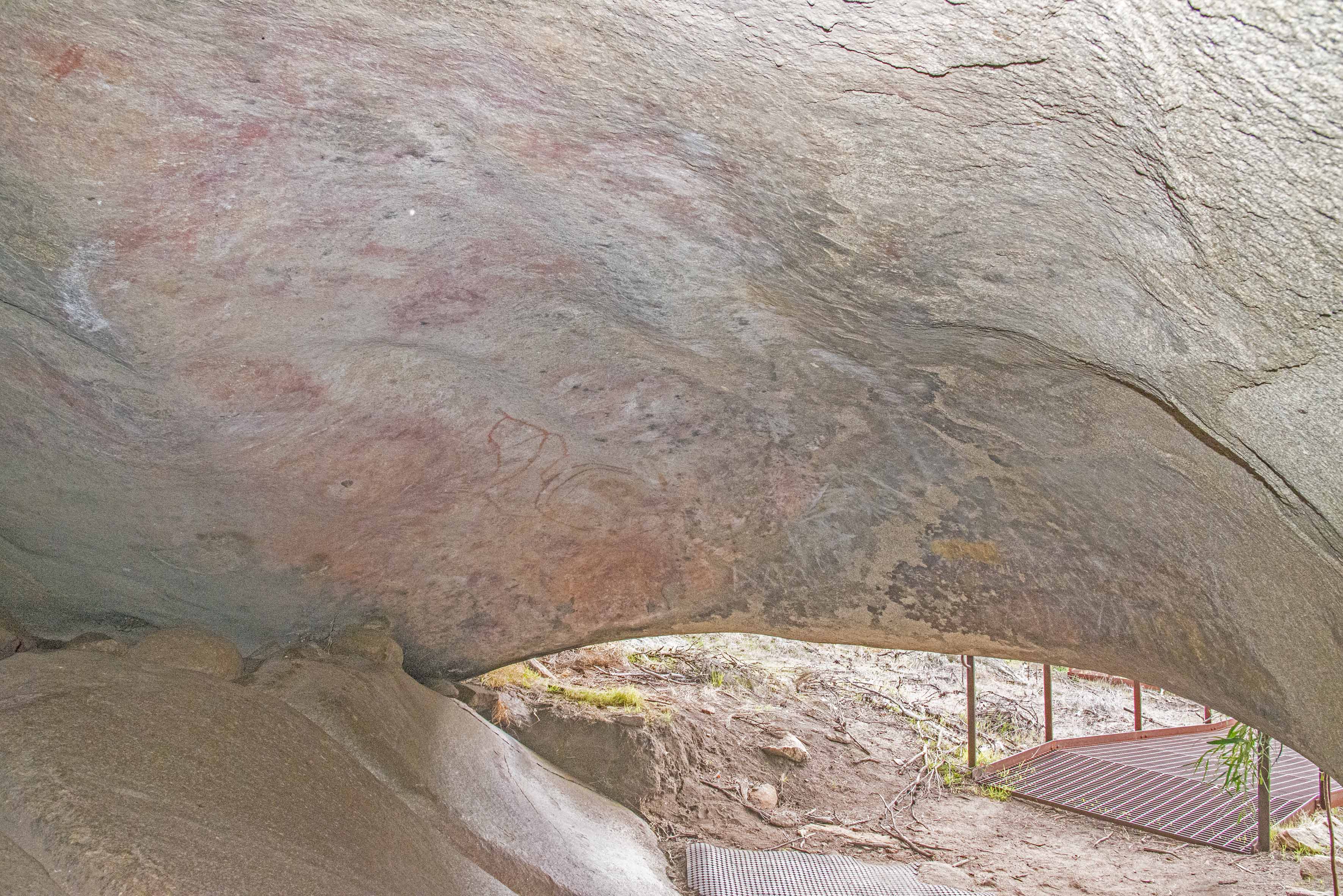
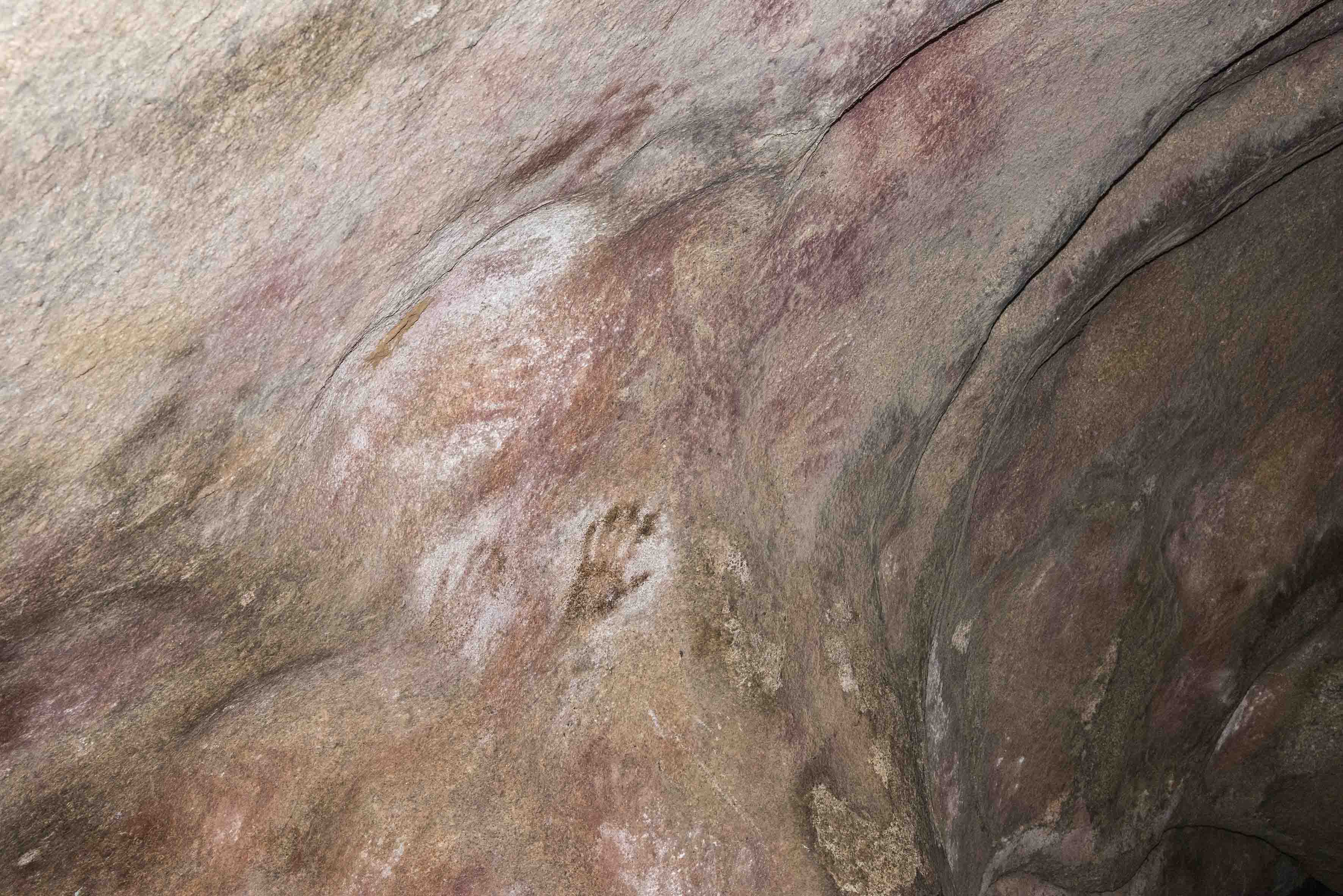
We drove out to Mulka’s Cave and The Humps…. the name Mulka’s Cave comes from an Aboriginal Legend believe to be associated with the cave. Mulka was the illegal son of a woman who fell in love with a man with whom marriage was forbidden. The legend is complicated and violent, but is there to try to stop ‘wrong-way marriages’ and also to prevent children wandering away from the group. Note the rock art on the walls below:
Hyden is a terrific town to visit
• a good pub with mallee roots on the fire, and local wines (that doesn’t happen everywhere) including a nice bottle of Shiraz from nearby Lake Grace
• excellent meat from Hyden Quality Butchers – lots of envious people were sniffing the air when we cooked our favourite lamb shank recipe for dinner on Saturday evening out at the caravan park!
• the Living Art Sculptures were inspirational. This is a clever ‘walk through history’ created by local people, using old machinery and metal junk to tell the story of Hyden.
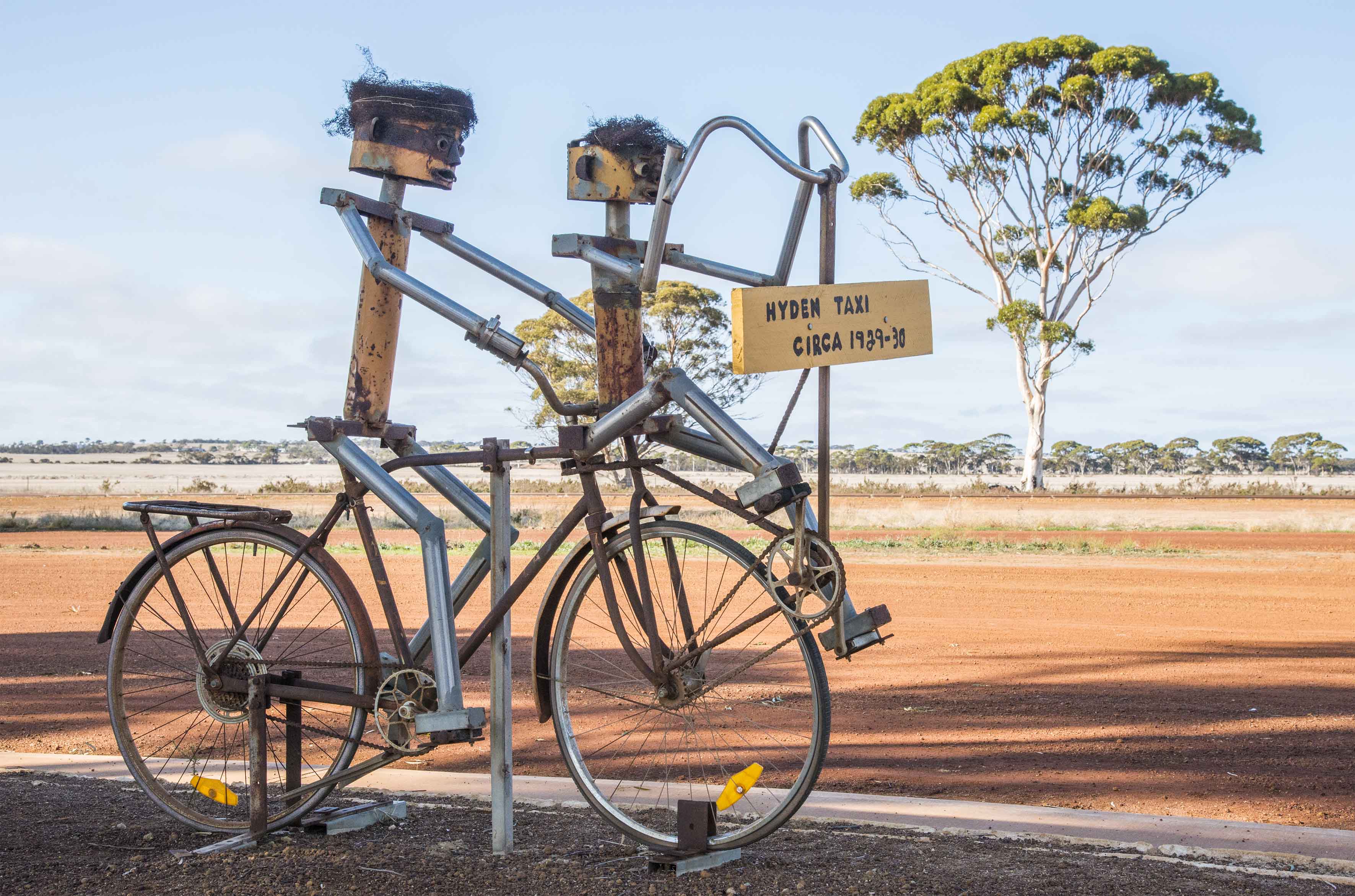
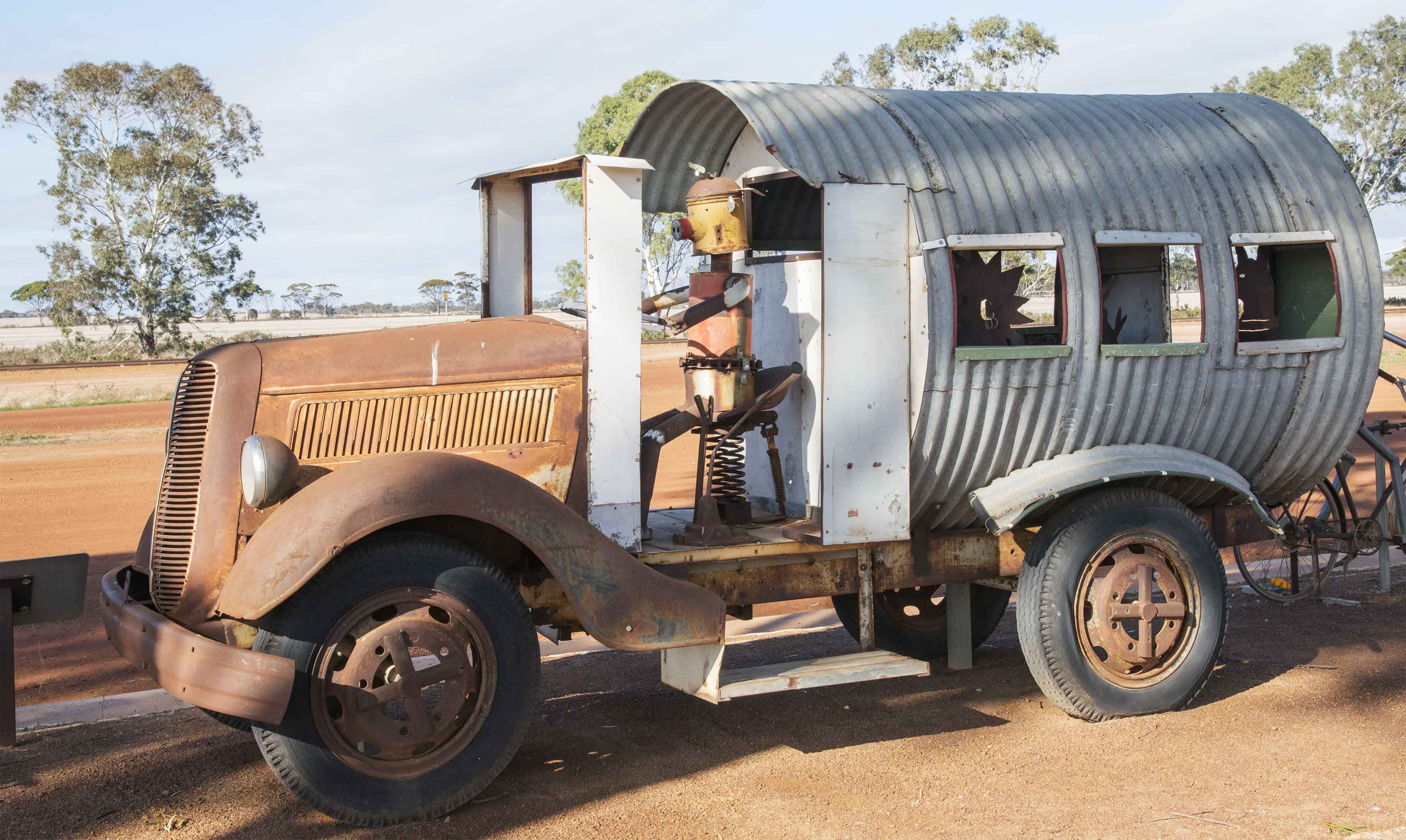
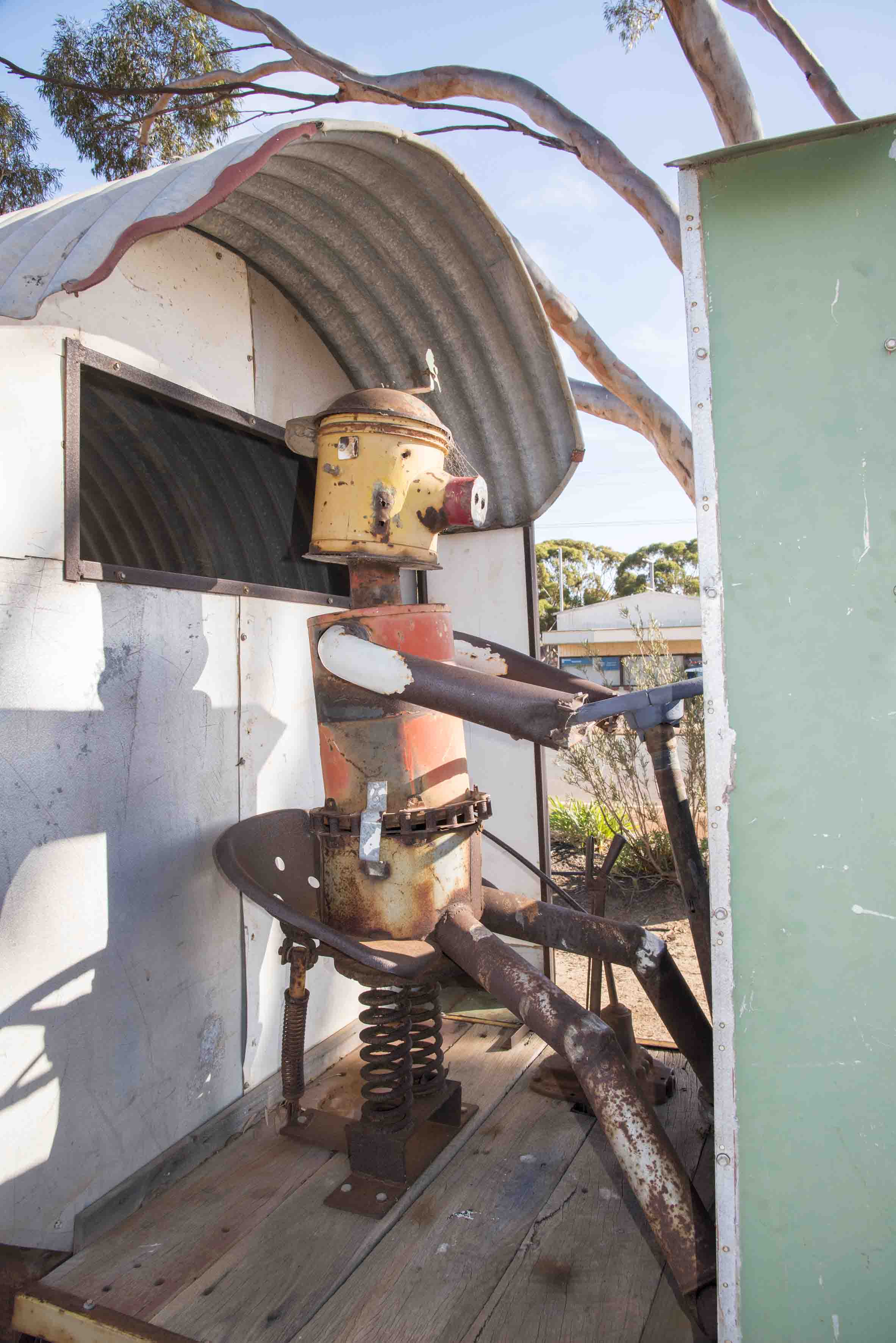
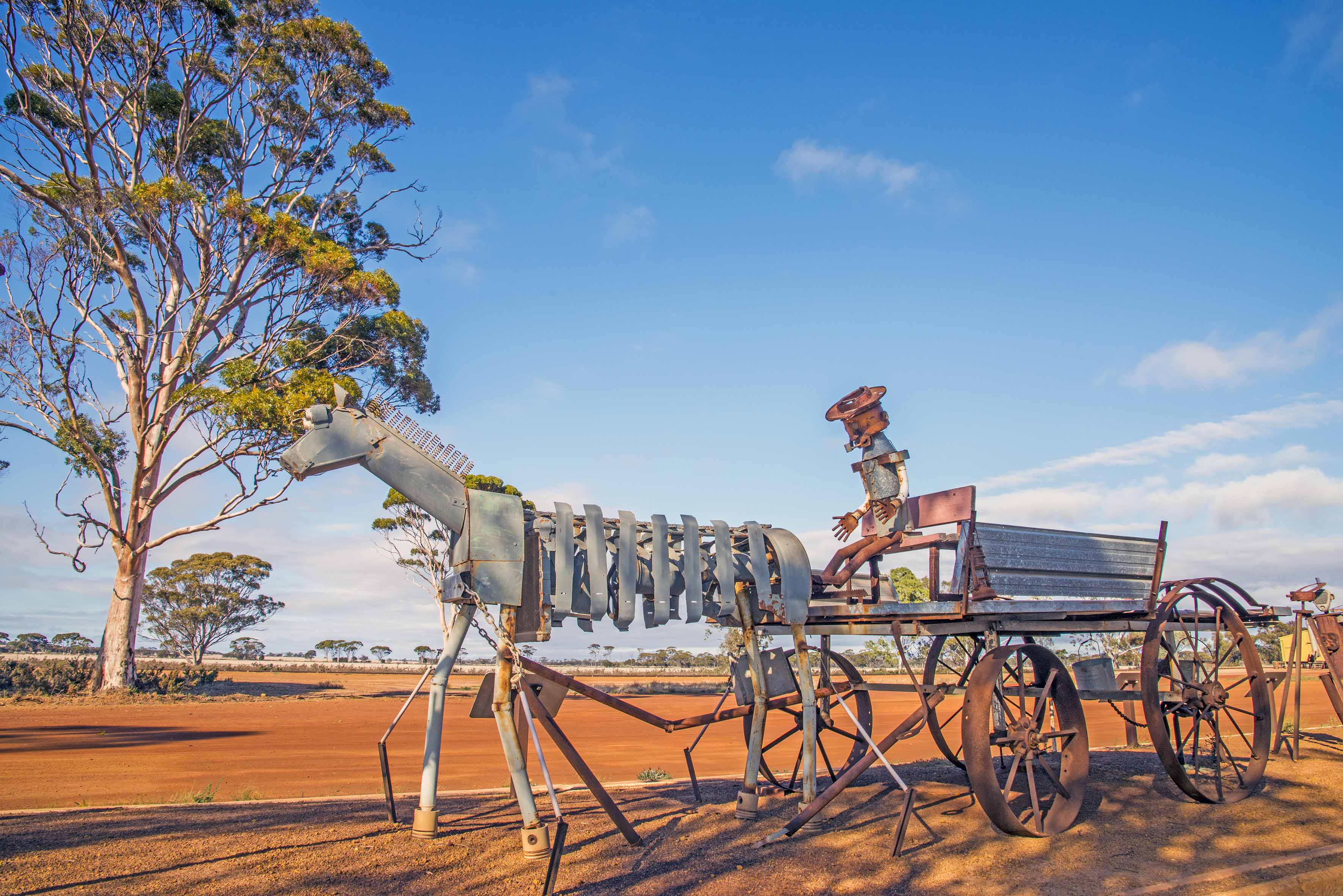
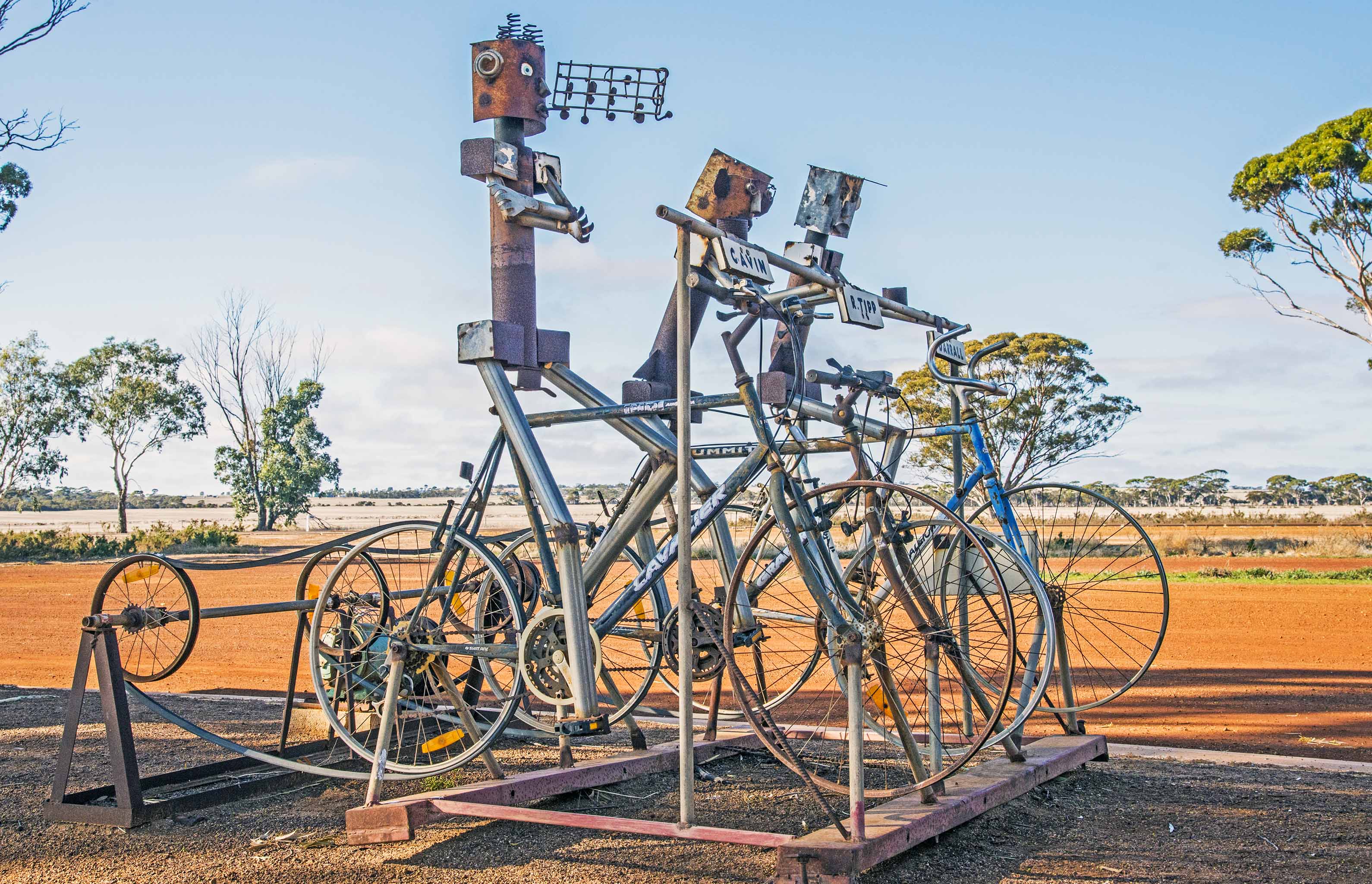
As in most country towns, shops are not open on Saturday afternoon or Sunday so that local people can ‘get a life’.
All in all it was a very refreshing break and great to get back on the road again! Happy to answer any questions people may have about this region, or hear your own stories.
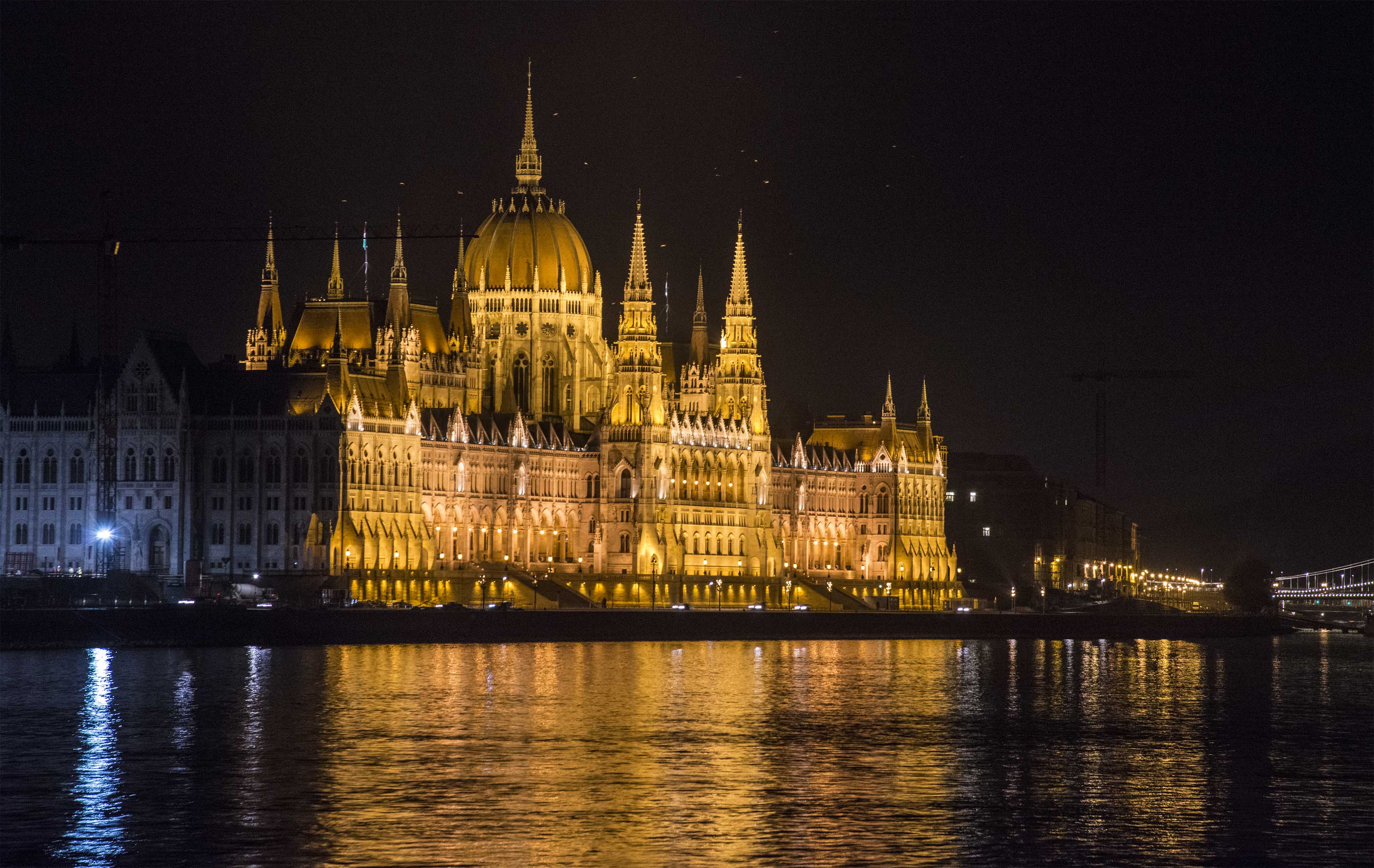
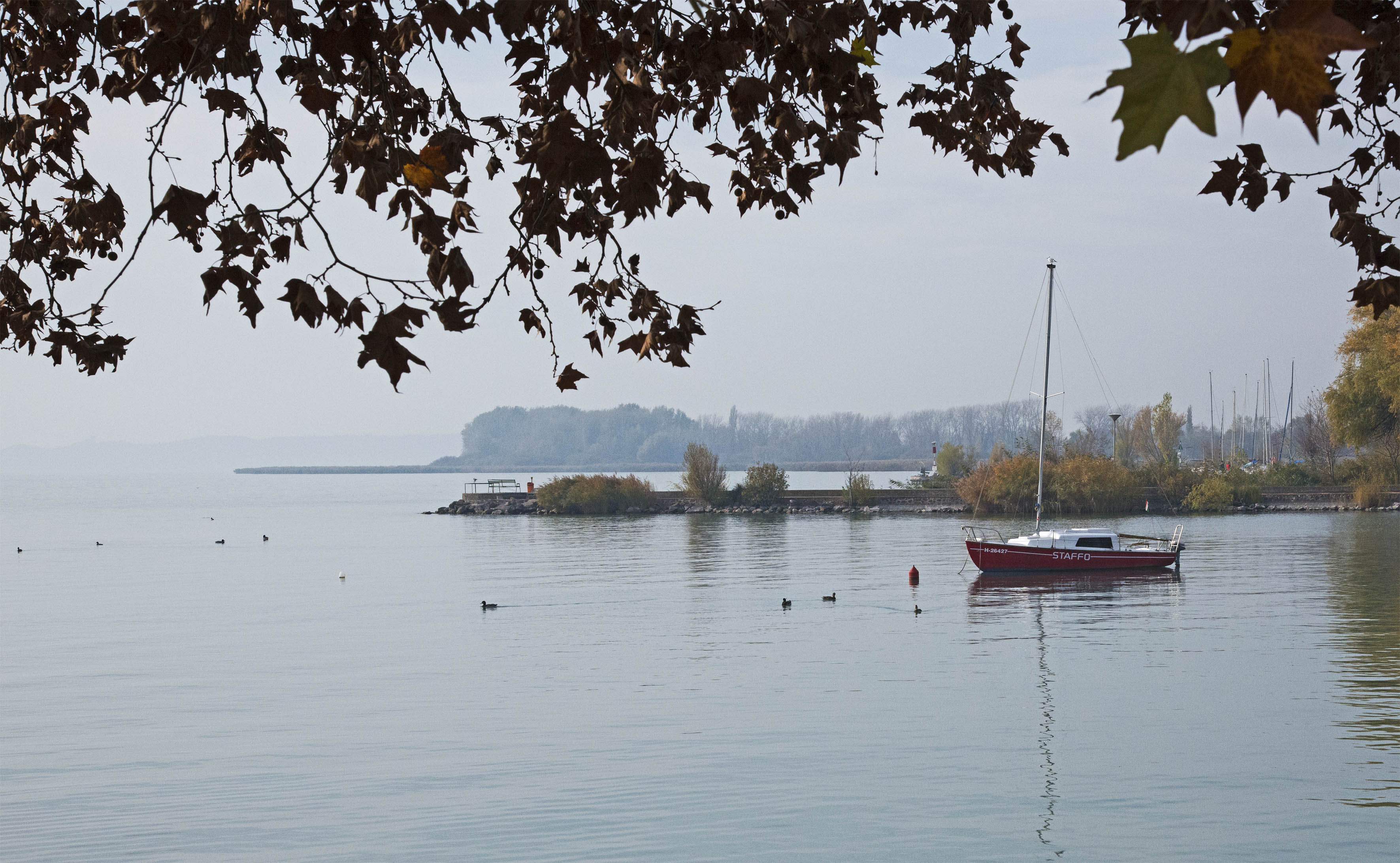
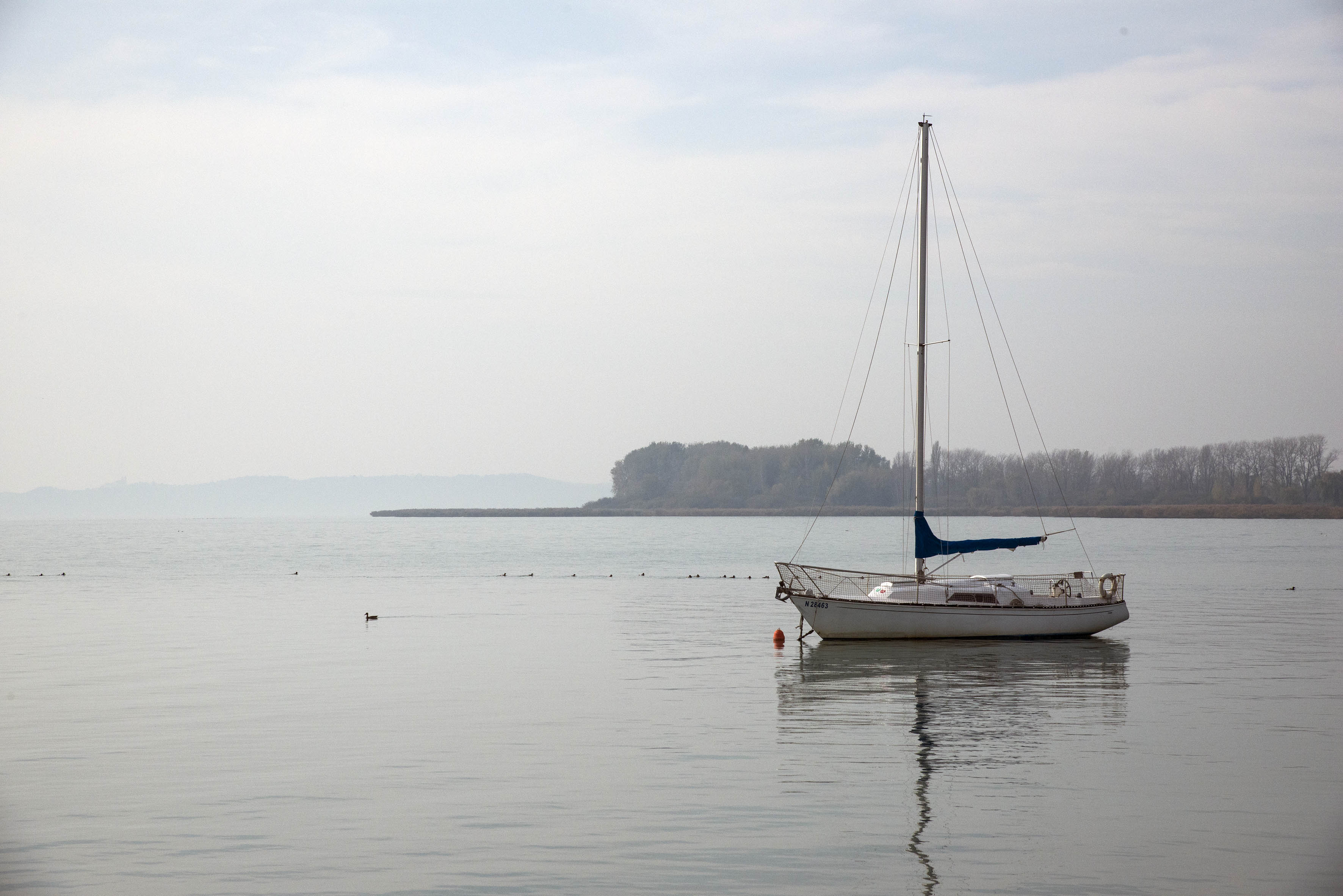
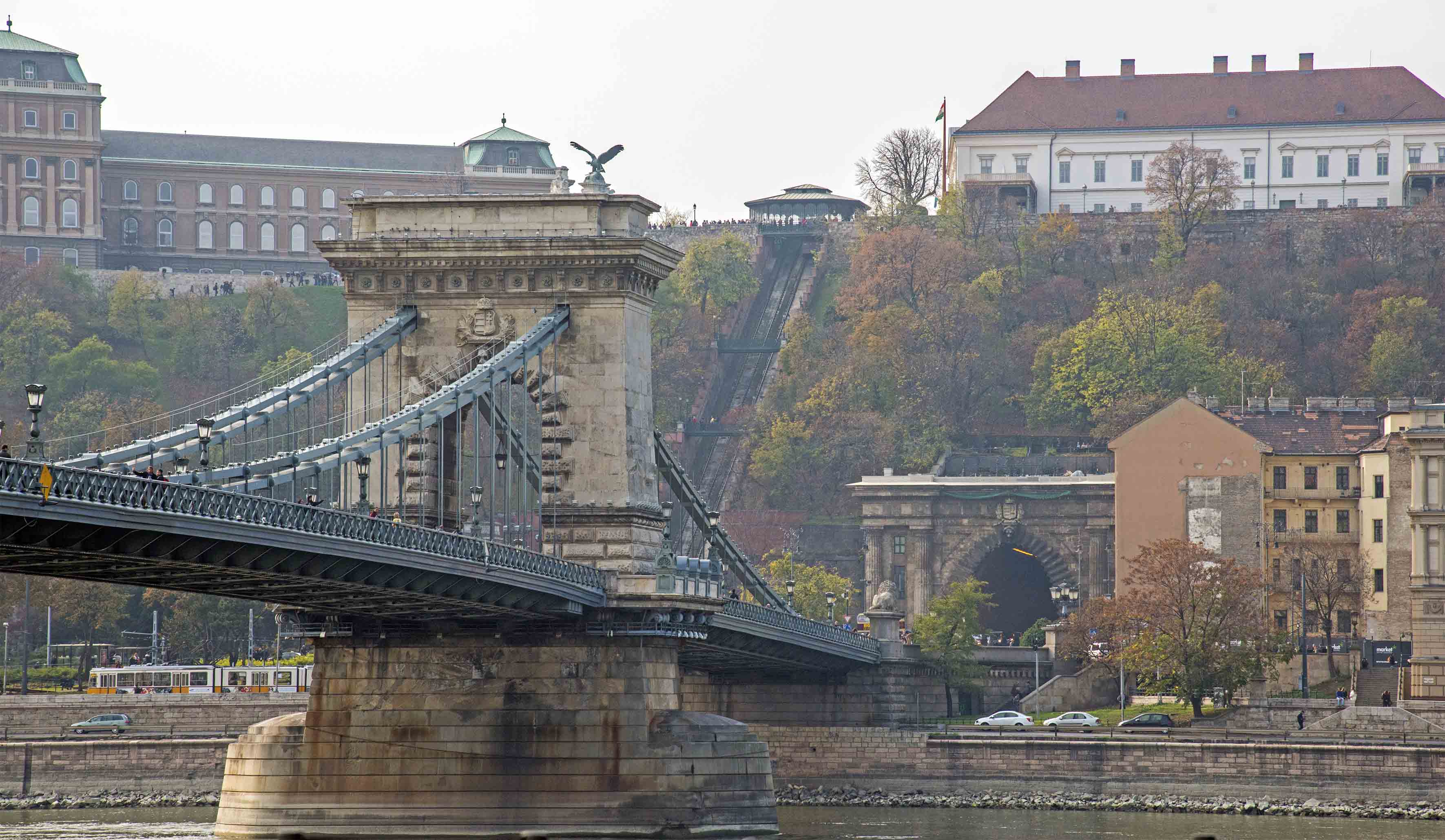

Ieper – or Ypres back in 1918 – was immediately christened as ‘Wipers‘ by Allied soldiers, with even a ‘Wipers Times’ newspaper being written by the British!
During the Middle Ages, Ypres was a prosperous Flemish city renown for its textile industry – they were trading linen with England way back in the 14th century. It is located in Belgium north of the Somme River. Sadly this was right in the pathway of Germany’s planned sweep across the rest of Belgium and into France during WW1 so it became the scene of some savage battles. Shelled into ruins, the town ramparts were solid enough to endure the pounding of artillery and in fact were used by troops to shelter from the onslaught.
The people of Ieper were devastated at the destruction of their ancient town, but they have rebuilt it magnificently. Check out these before and after pictures of the amazing ‘Cloth Hall‘ below. This building featured in many photographs taken of allied troops moving through the town and the Menin Gate to the battlefields beyond. It is now home to the modern In Flanders Field Museum which commemorates the futility of war and includes a new World War I research centre.

The Menin Gate Memorial to the Missing is also the centre of a painting made by Will Longstaff (Menin Gate at Midnight) showing ghostly troops moving by the gate – a very moving depiction that is in many RSL halls around Australia.
The town’s fire brigade has a group of buglers who play ‘The Last Post’ at 8pm each evening as part of a ceremony to honour the Allied soldiers who lie in unmarked locations throughout the surrounding battlefields. Traffic is halted while the large numbers of visitors attend this very moving experience. 54,000 names grace the walls of the Gate and we defy anyone not to shed a tear about the overwhelming horror and barbarity of war.
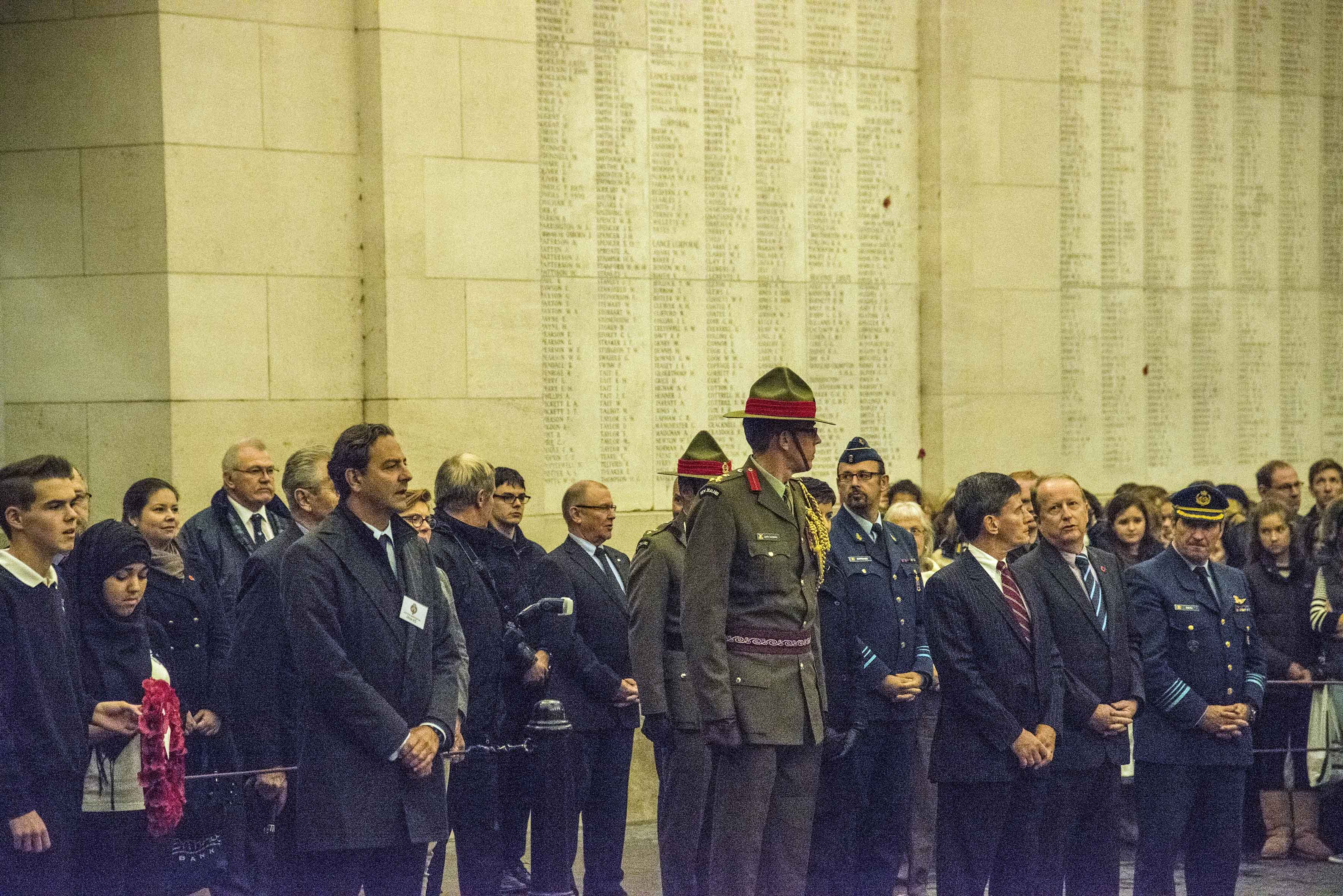


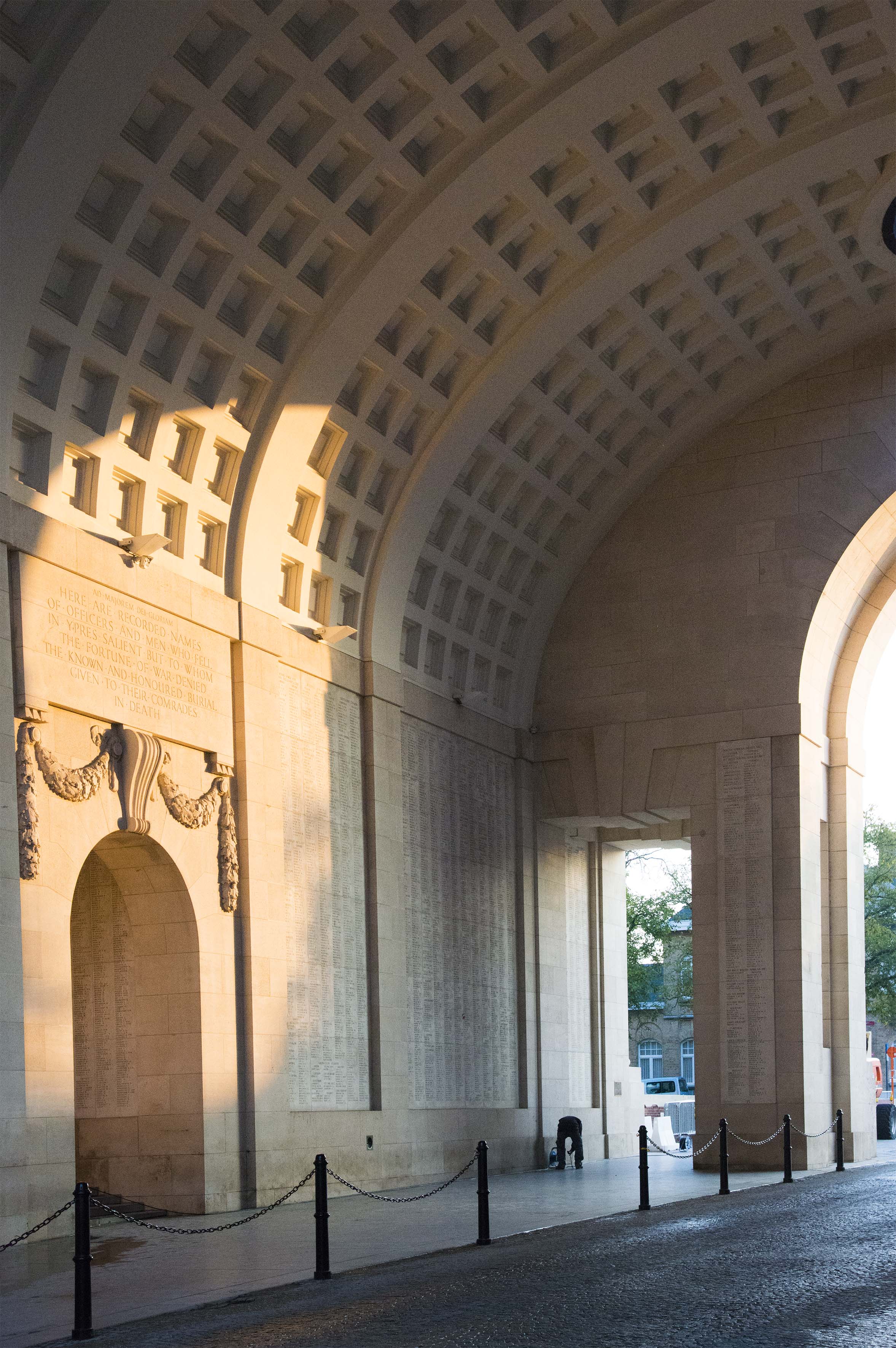

This ceremony started at the end of WWI and has been a feature of the town ever since, except for a brief break during WWII when the town was occupied by German troops. A similar ceremony has been adopted for the close of our Australian War Memorial in Canberra each day.
We stayed at the very nice Ariane Hotel in Ieper while we toured the battlefields. A lovely blend of old architecture with modern interior and facilities.

Ieper is a delightful place as you can see from the photographs and has many beautiful buildings – and wonderful window displays of cakes and sweets!


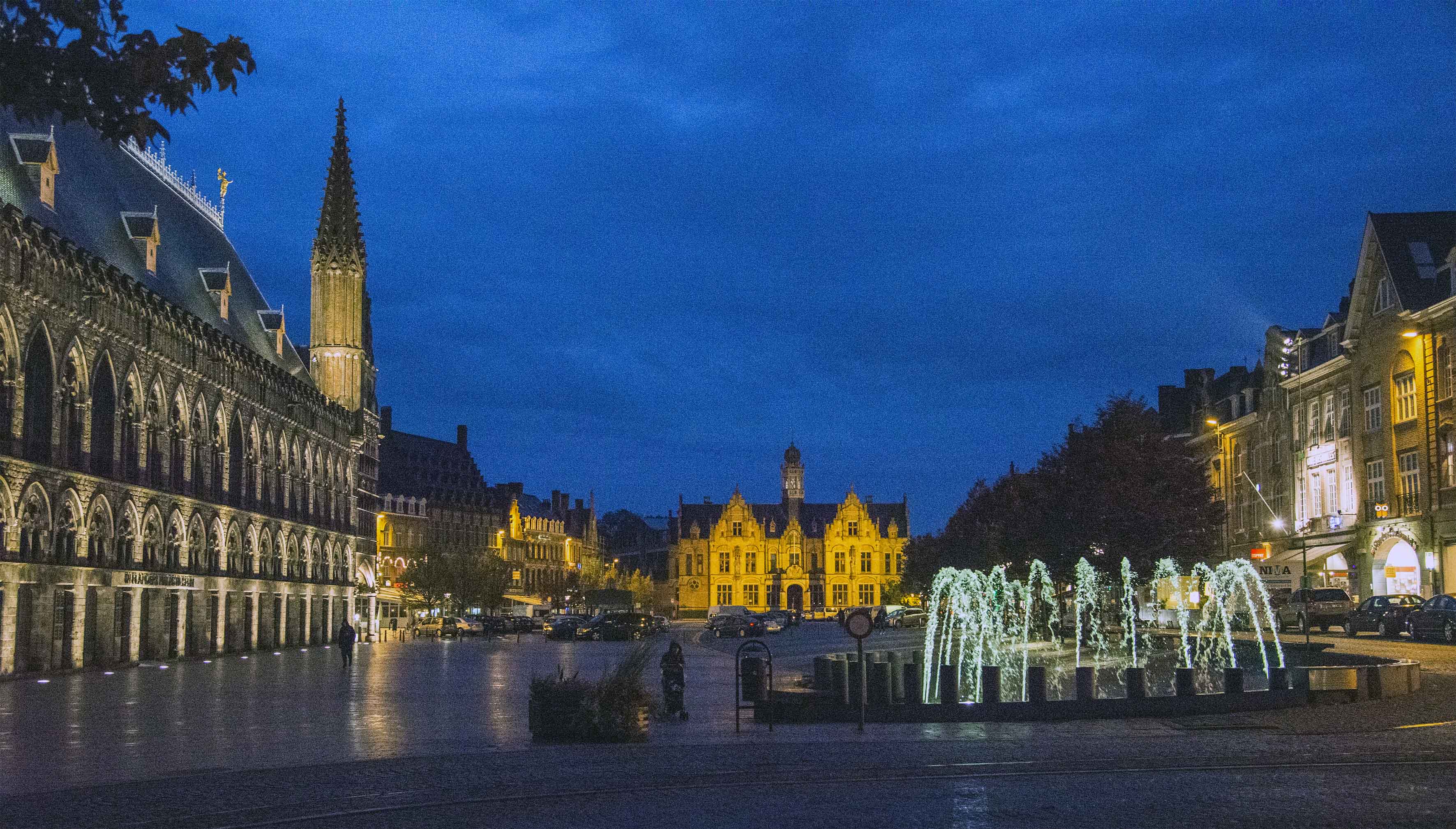
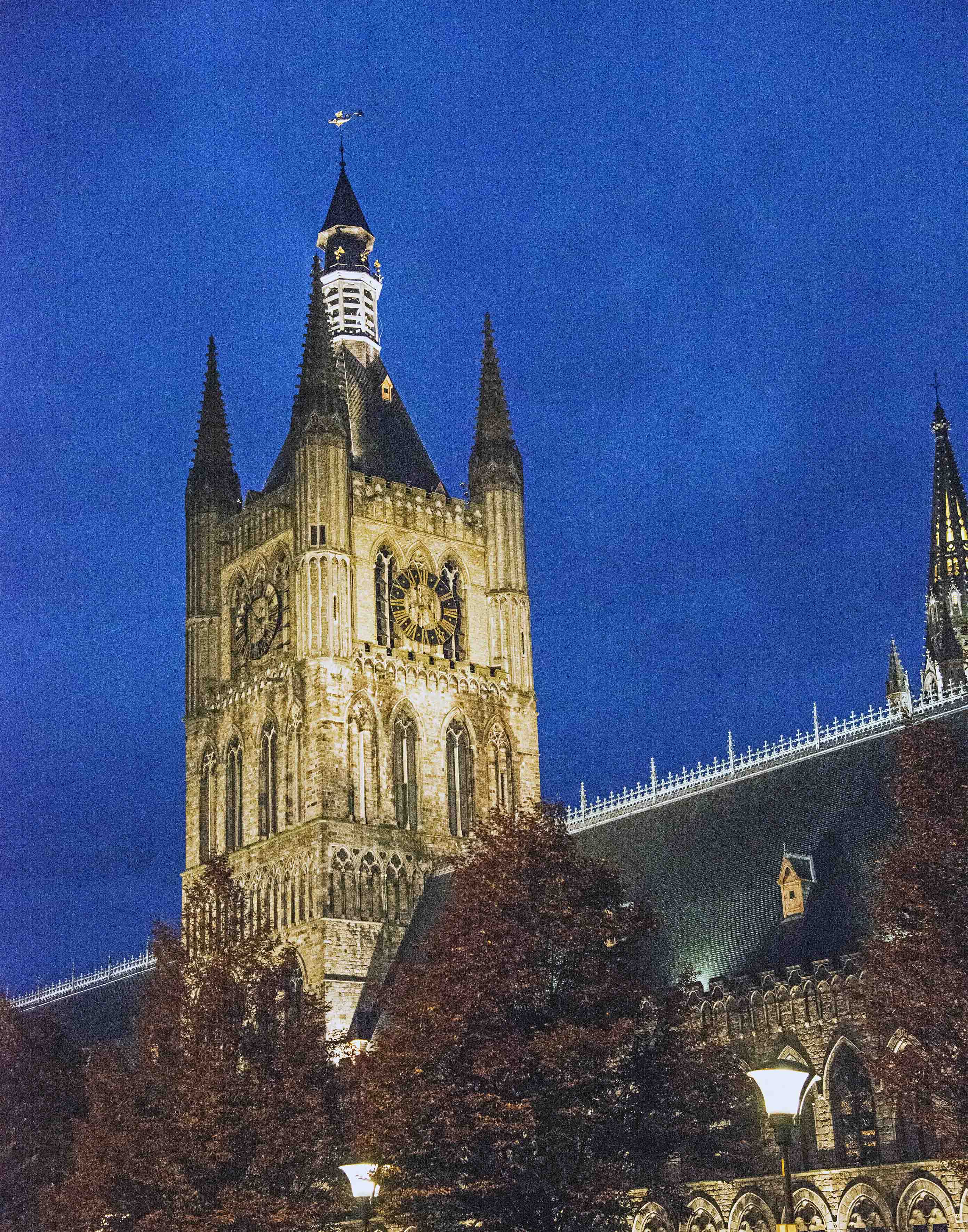
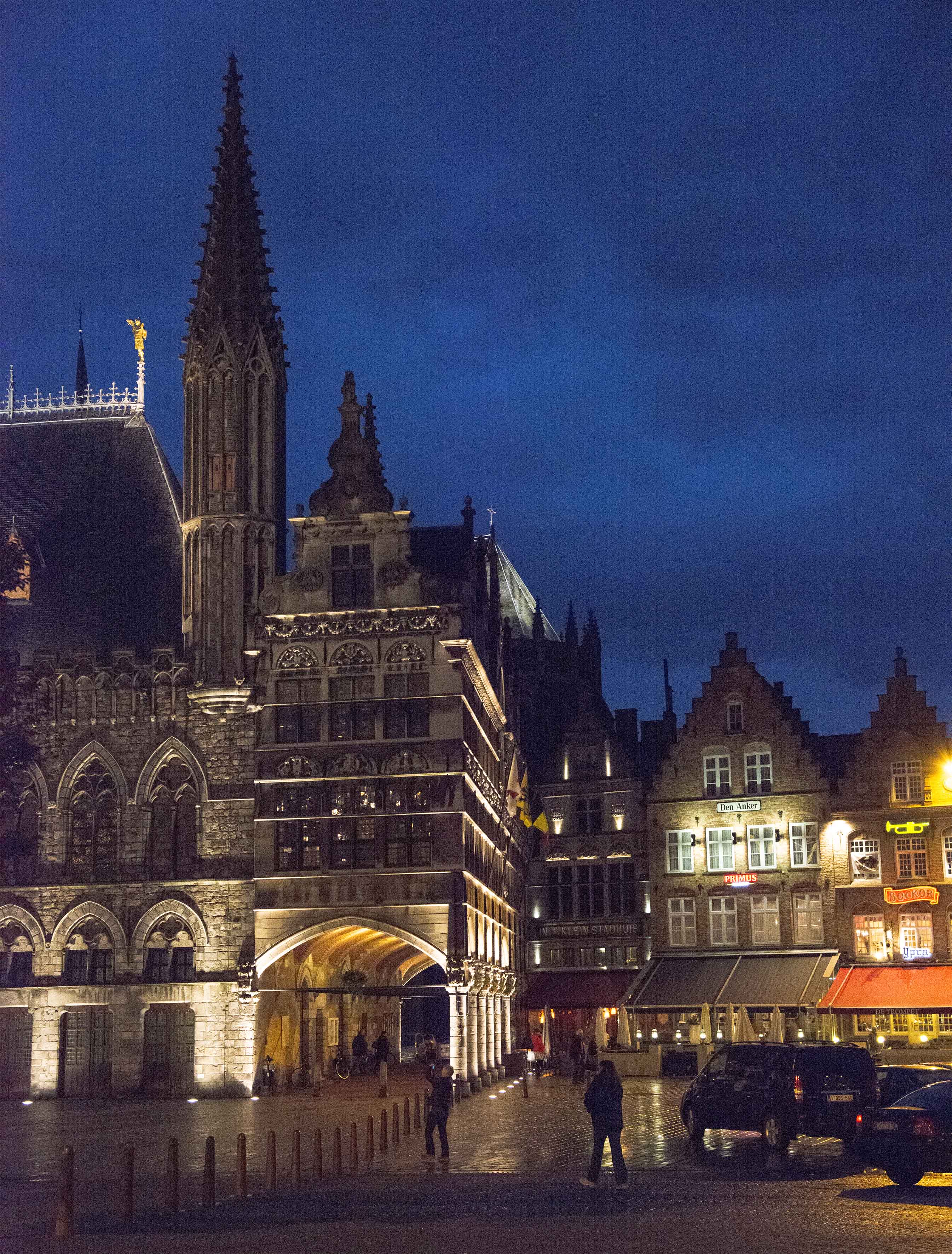

The town has cobblestone streets and we found them a little hard on our legs after a day walking round taking in the sights. The ramparts almost circle the town and are a lovely place to walk and take in the buildings.
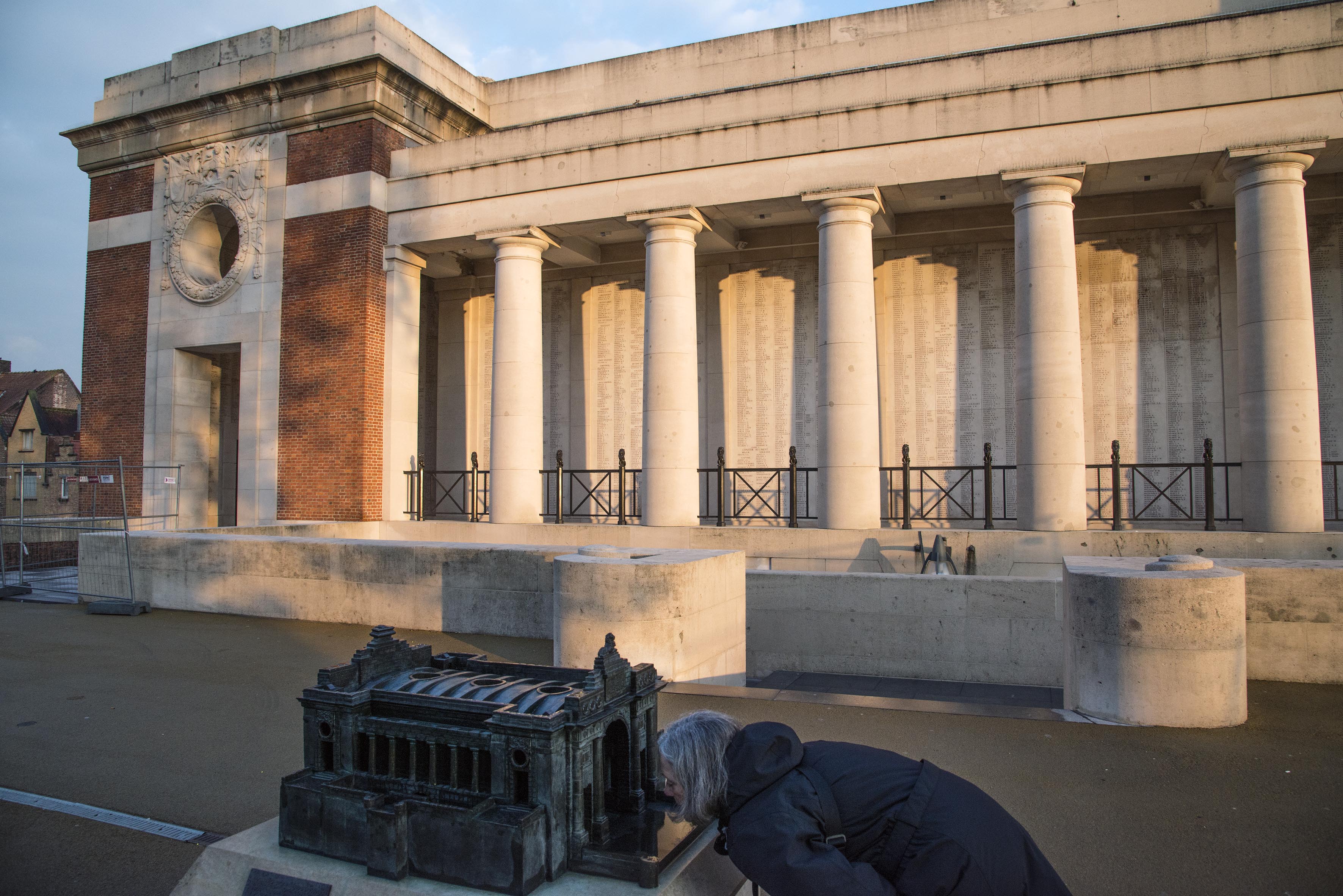
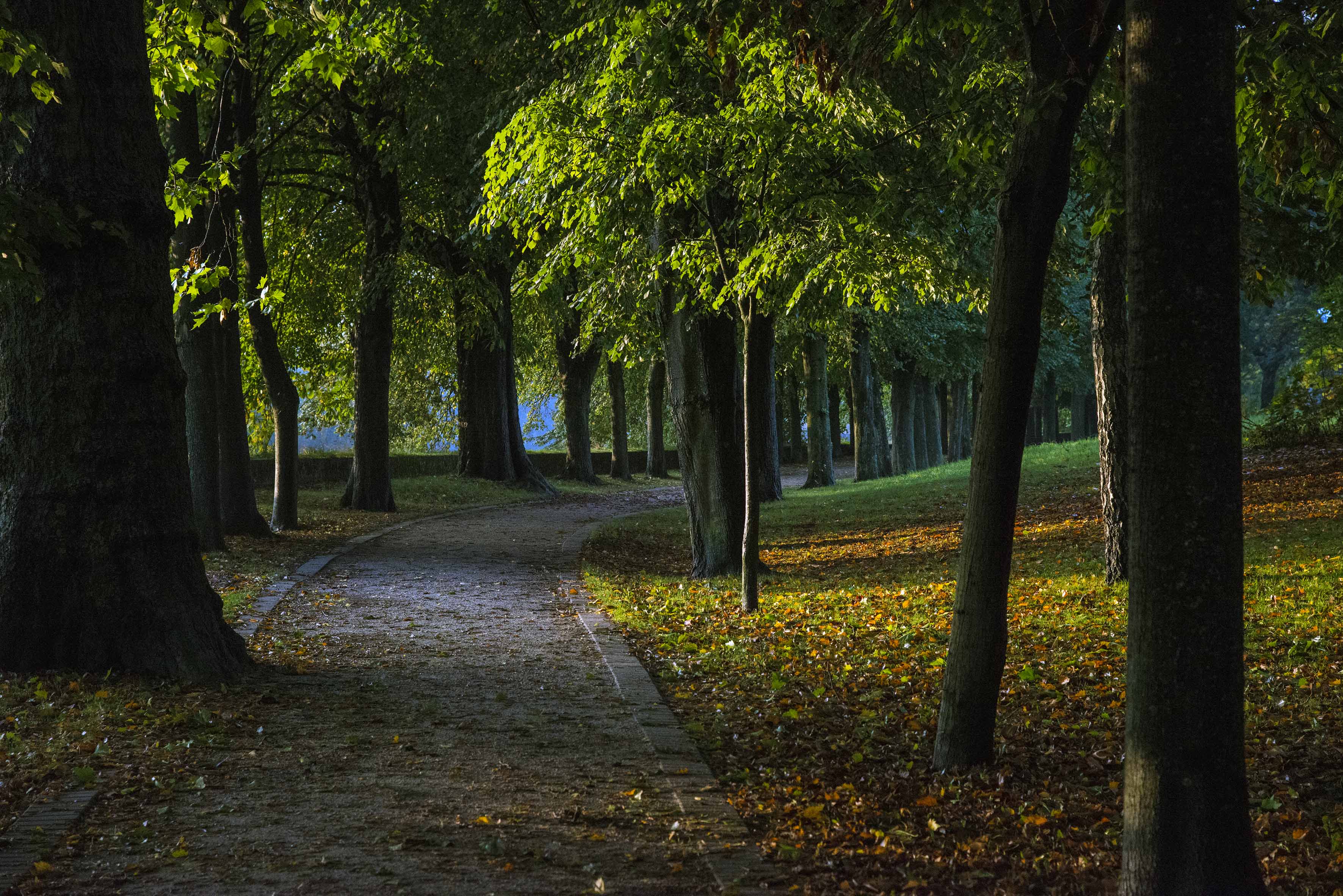
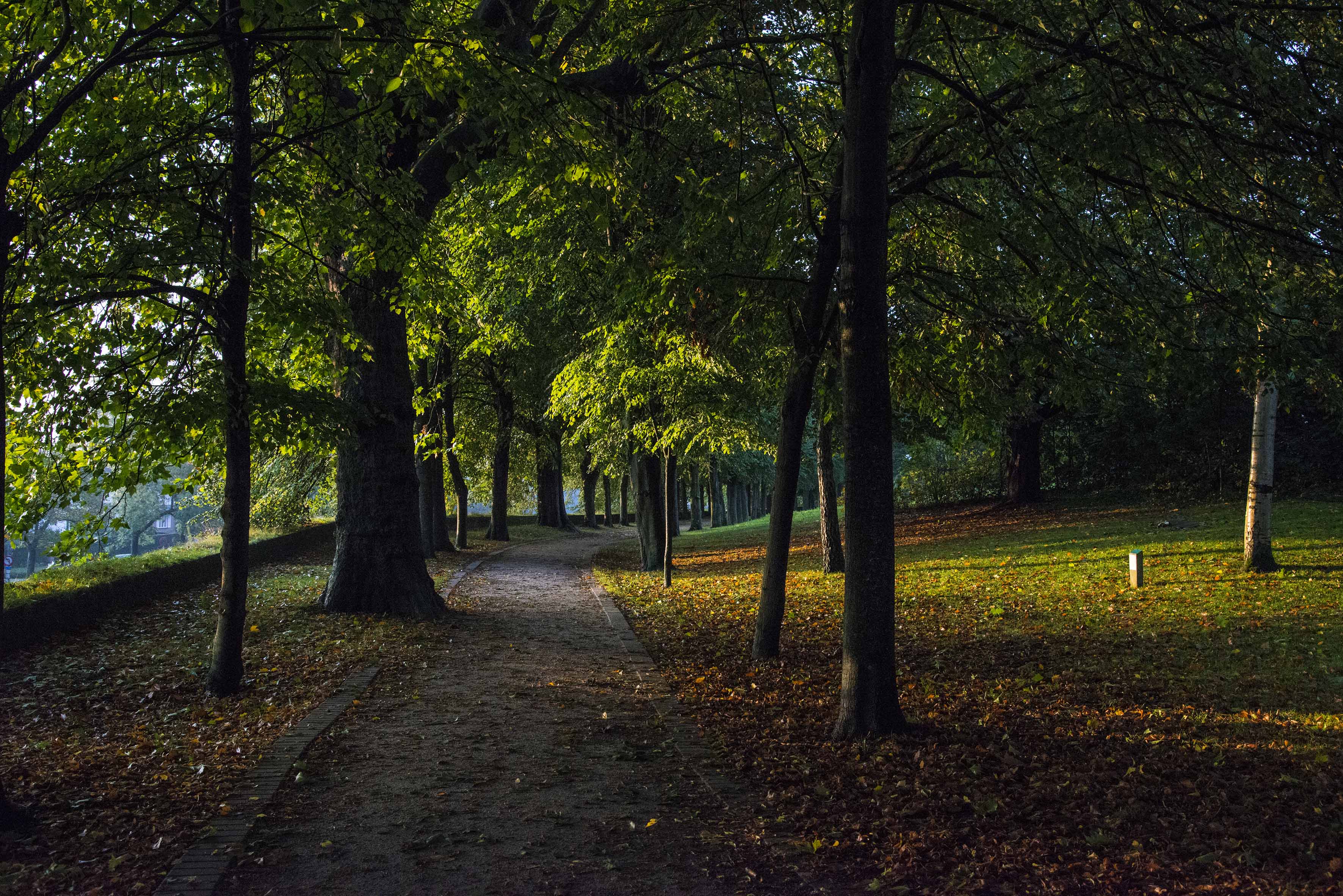
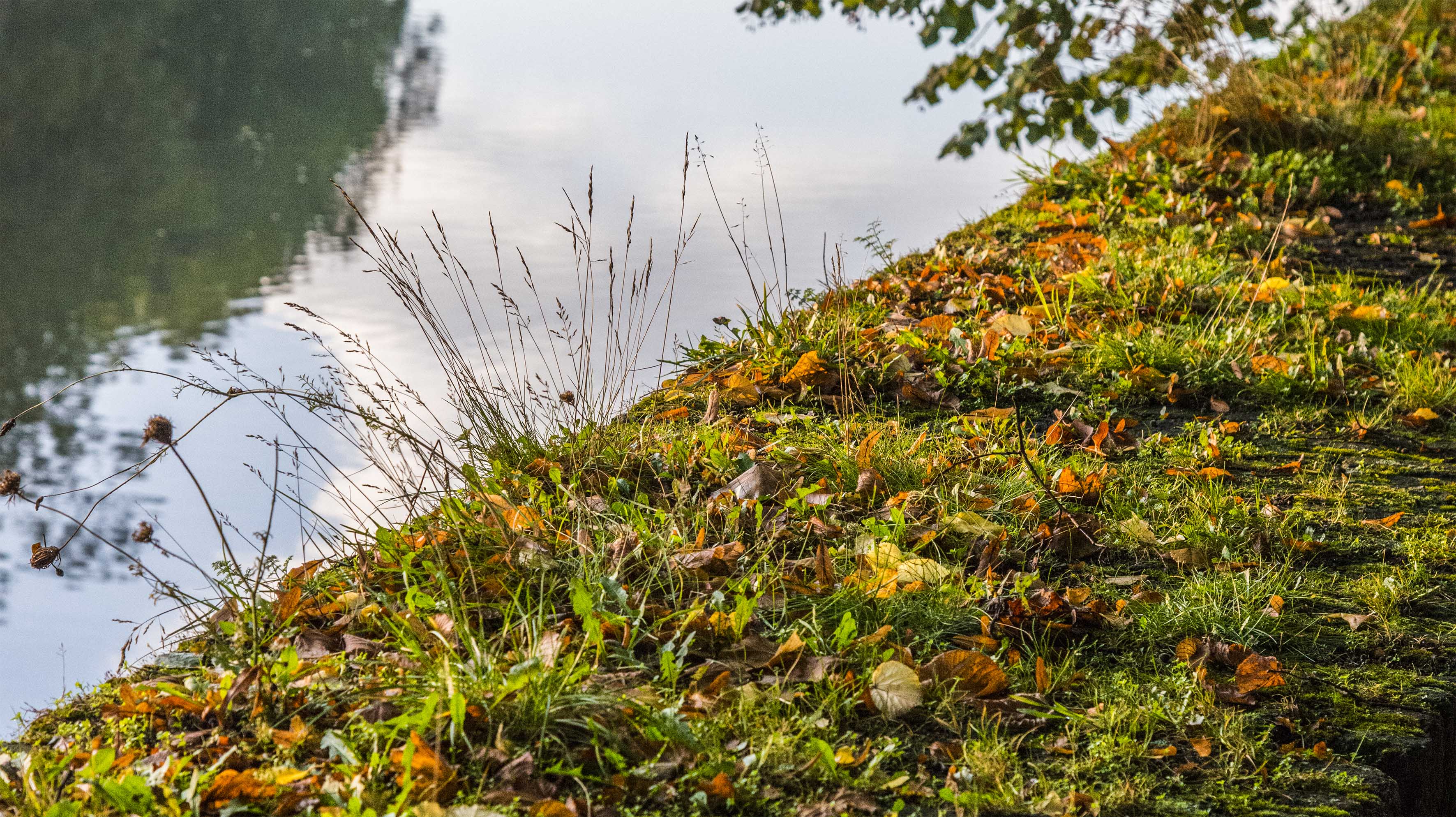
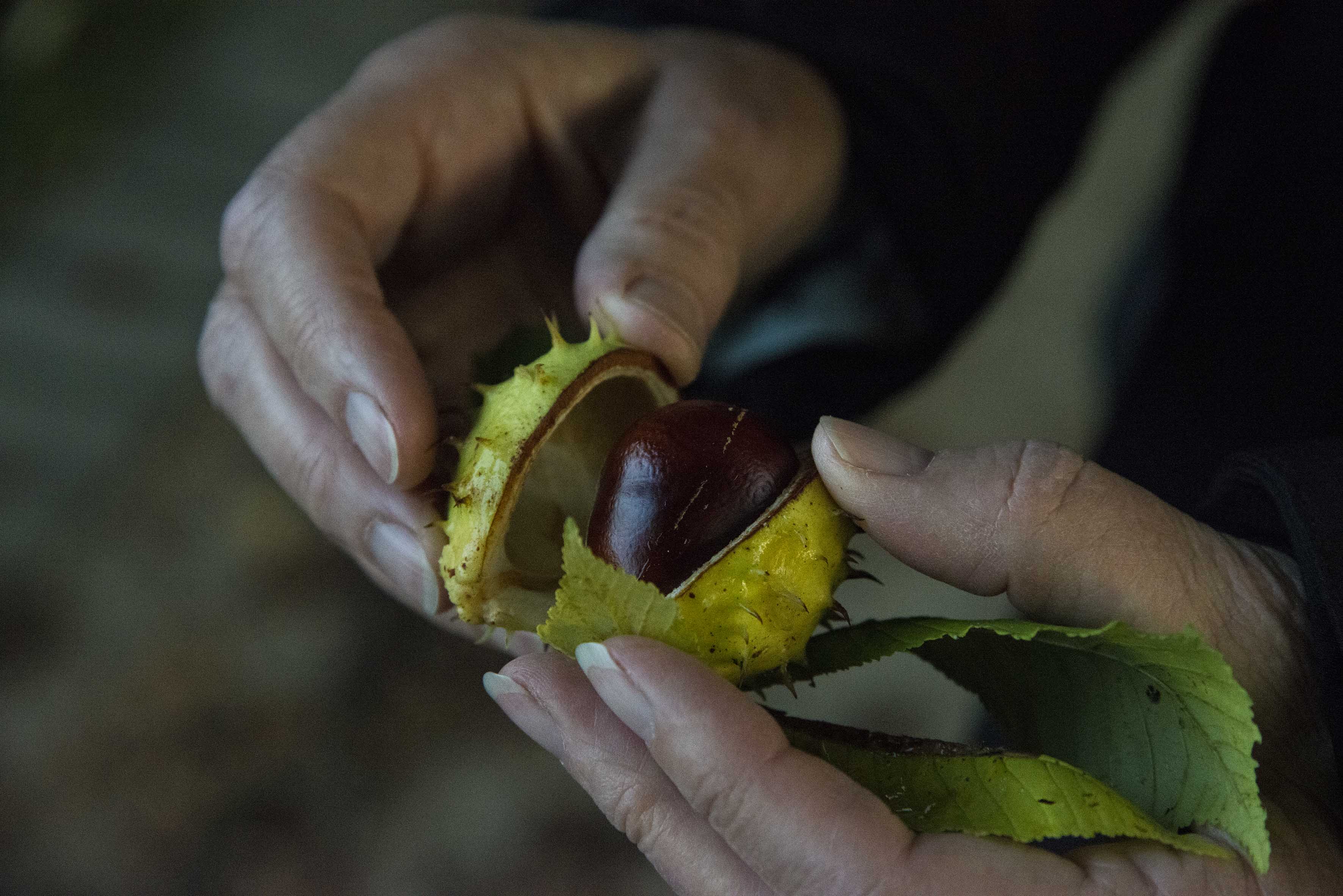
 We really had a good time and were intrigued by Belgium and in particular beautiful Ieper with such interesting and relevant history. We intend returning for a longer stay next time… and we would love to hear from anyone else who has also enjoyed visiting this region!
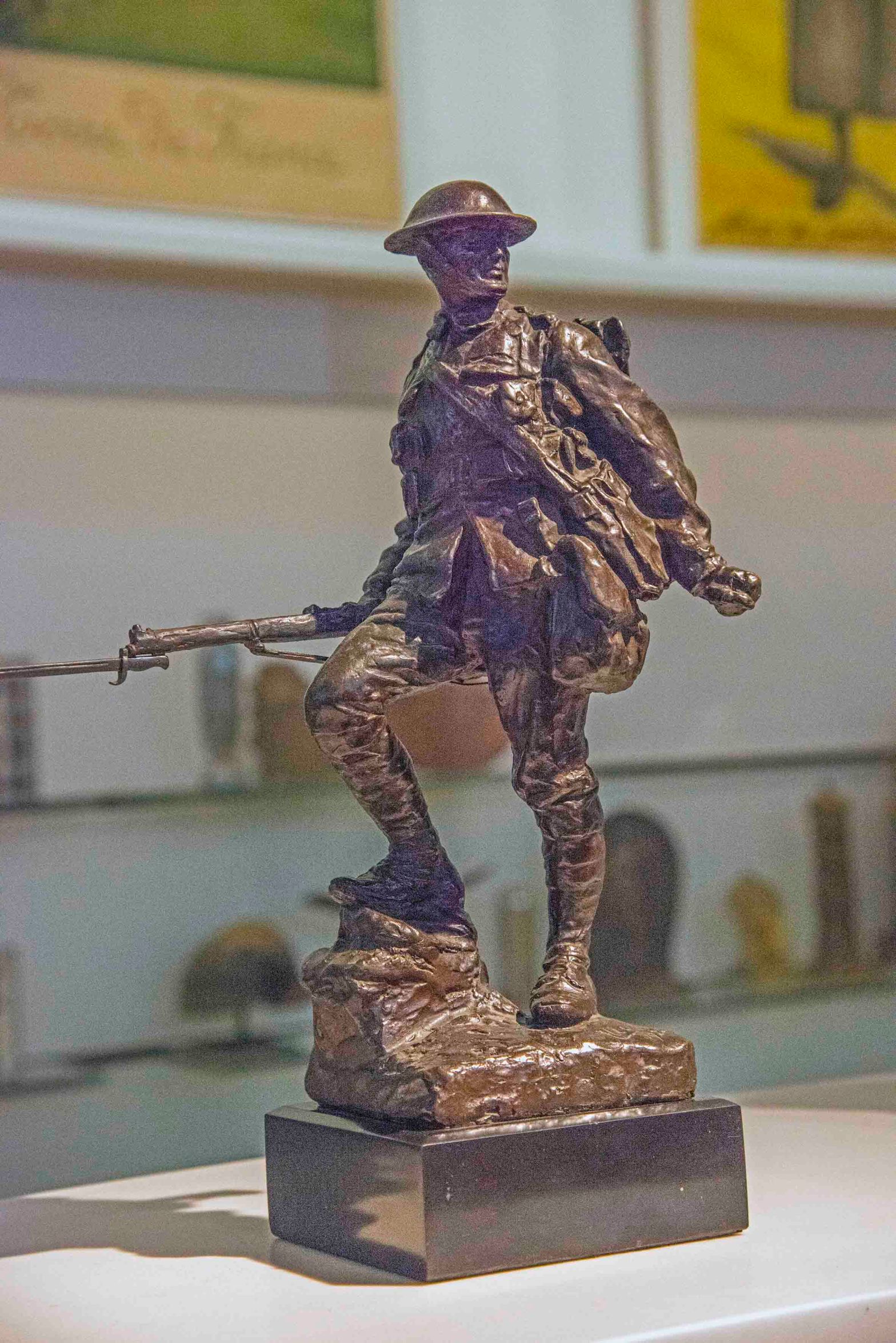
You may like to refer to our previous blog which focused on Villers Bretonneux and the Australian War Memorial. On our second day tour with Jacques, we took in Mont St Quentin. This was a significant objective for Australian troops to take. It is elevated terrain where the Germans could see and direct artillery and machine gun fire with devastating effect and it dominated the old fortress town of Peronne. There is a diorama in the Australian War Memorial in Canberra showing this action.
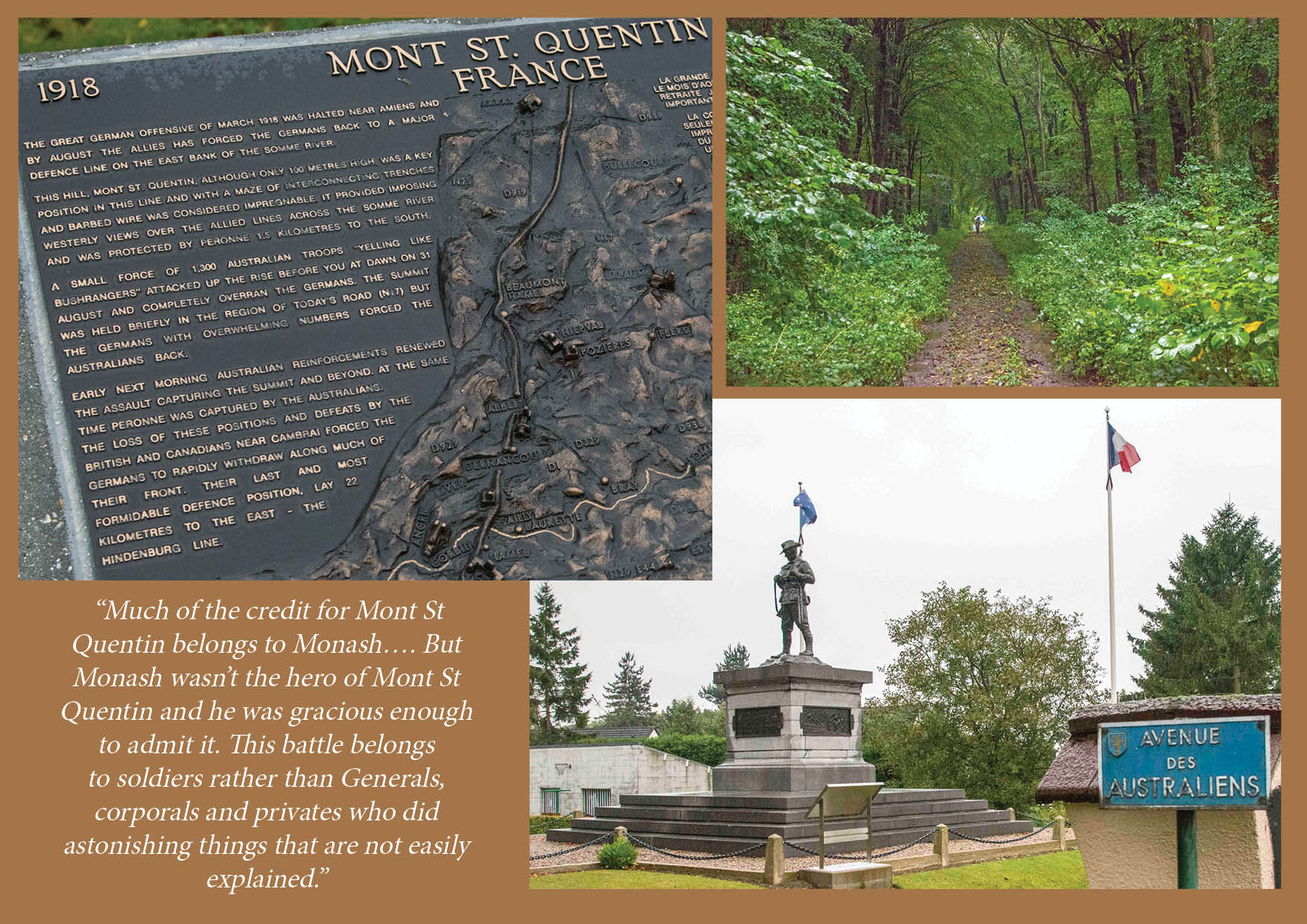
Les Carlyon in his book The Great War has described Mont St Quentin: “Much of the credit for Mont St Quentin belongs to Monash…. But Monash wasn’t the hero of Mont St Quentin, and he was gracious enough to admit it. This battle belongs to soldiers rather than Generals, corporals and privates who did astonishing things that are not easily explained.” Six Victoria Crosses were awarded in one day – the first of September…
This area is forested now with a road leading up and through it – roughly running in the direction the troops moved against it. Ian has visited this place twice and found it to have an atmosphere that is difficult to describe. It is such an important place for Australians. During the 2008 tour one of the experienced guides told a story about a tour he had led with some WWI veterans. When they were boarding the coach he did a quick head count and there was one missing. He eventually found this old Digger sitting on the edge of the road near the cemetery in tears. He said he was at the exact spot where he had been trying to patch up his mate when he died… All very sad.
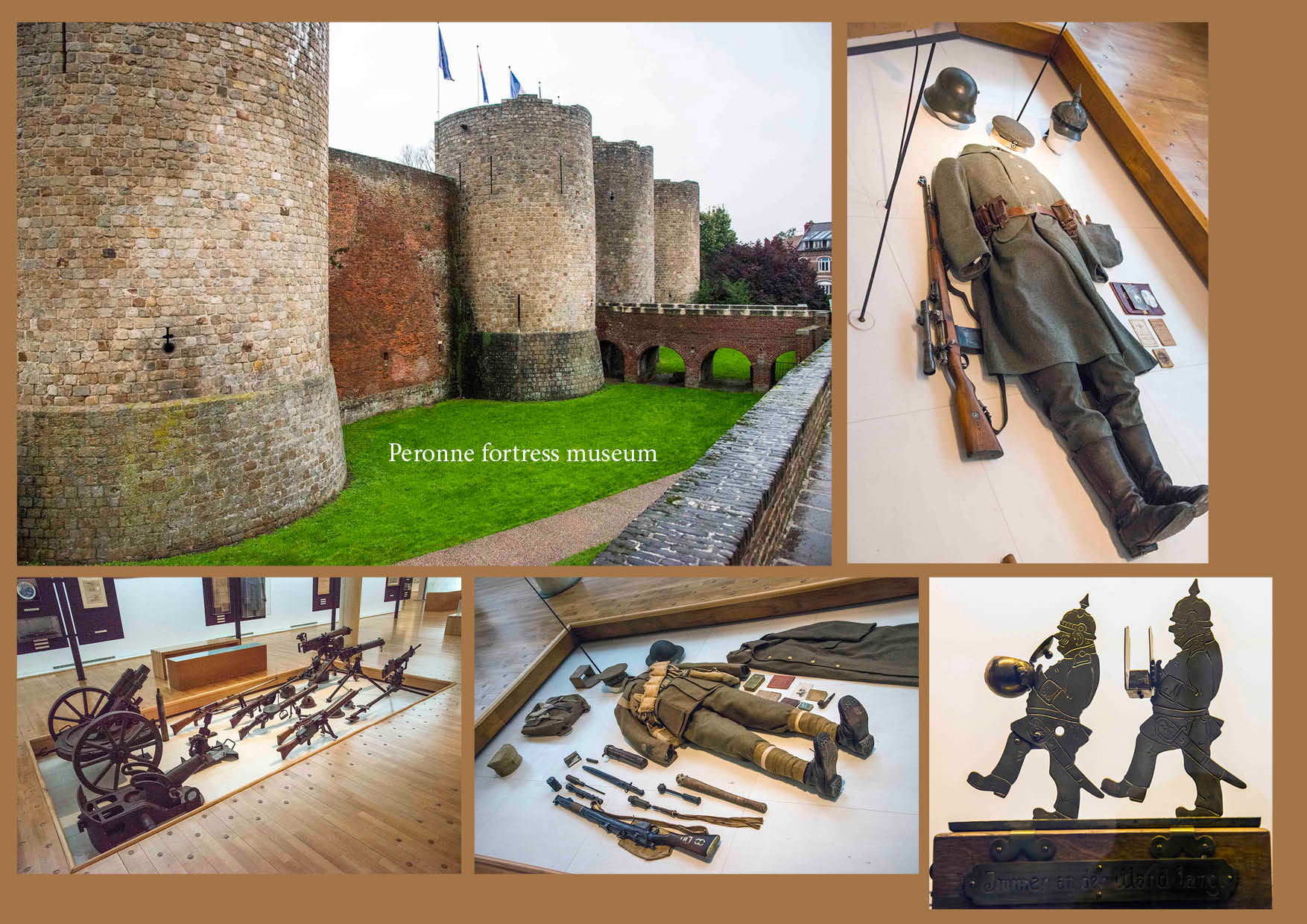
The old Peronne fortress is now an excellent museum with lots of interesting items displayed very well. It is worth spending some time there. They have a cafe in there so you can get something for lunch and a coffee or two.
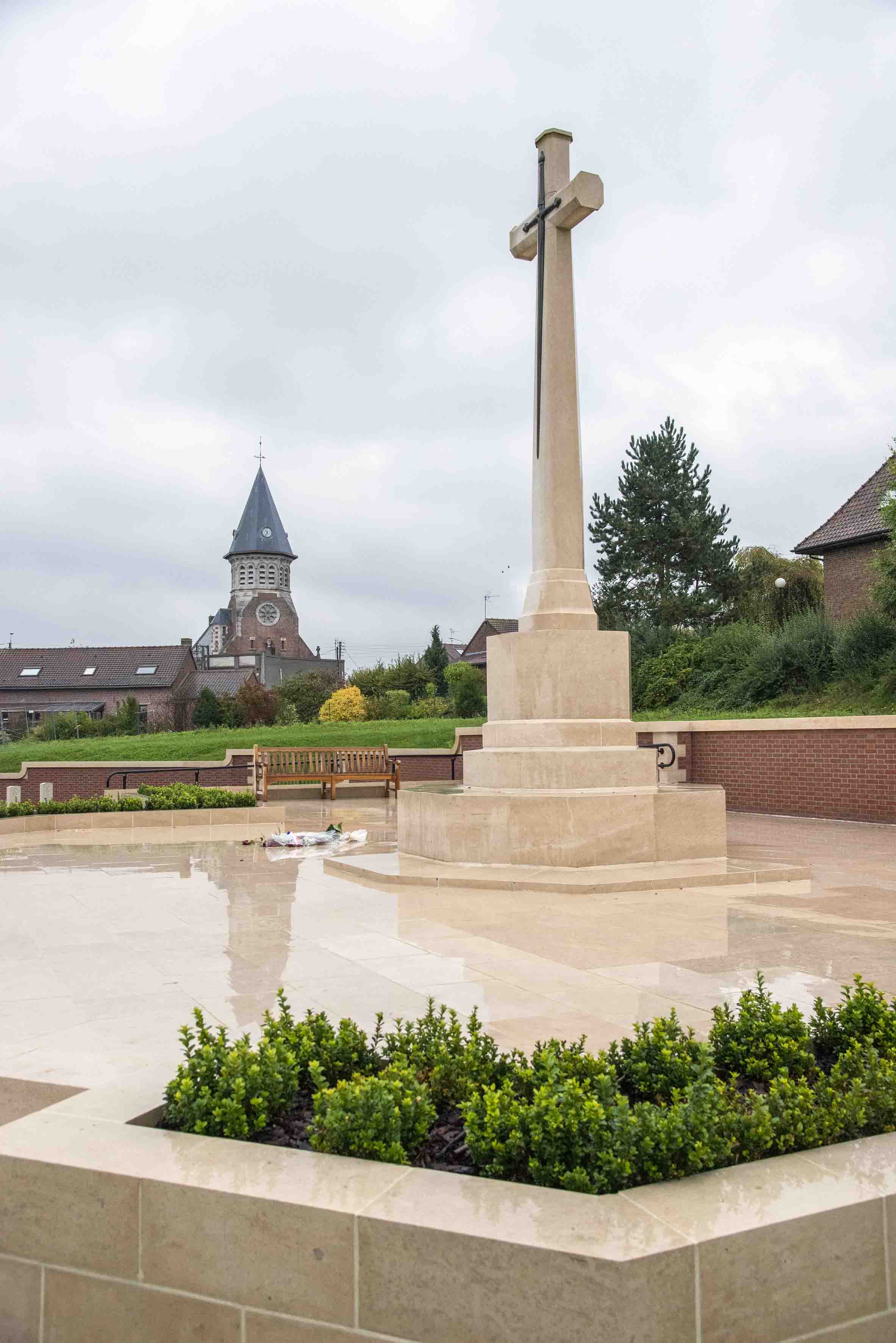
Jacques, our amazing guide, continued to divert to interesting places during our second tour, so we were able to see the new Memorial Cemetery in Fromelles where a mass grave was discovered recently. The location was finally found after a lot of sleuthing by a couple of individuals including the use of some old aerial photographs in their quest. A great job and DNA has been used to identify some of the diggers there.
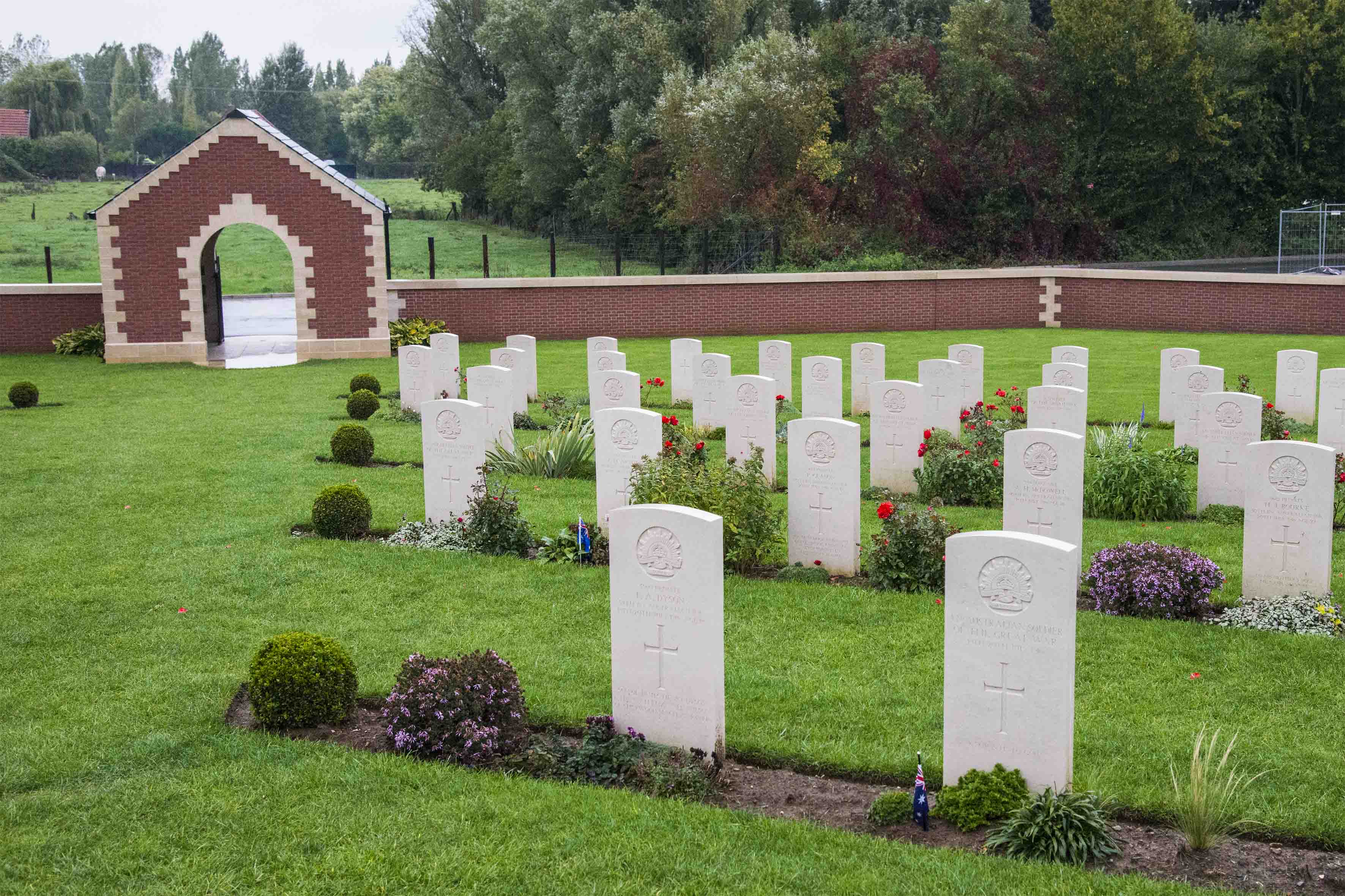
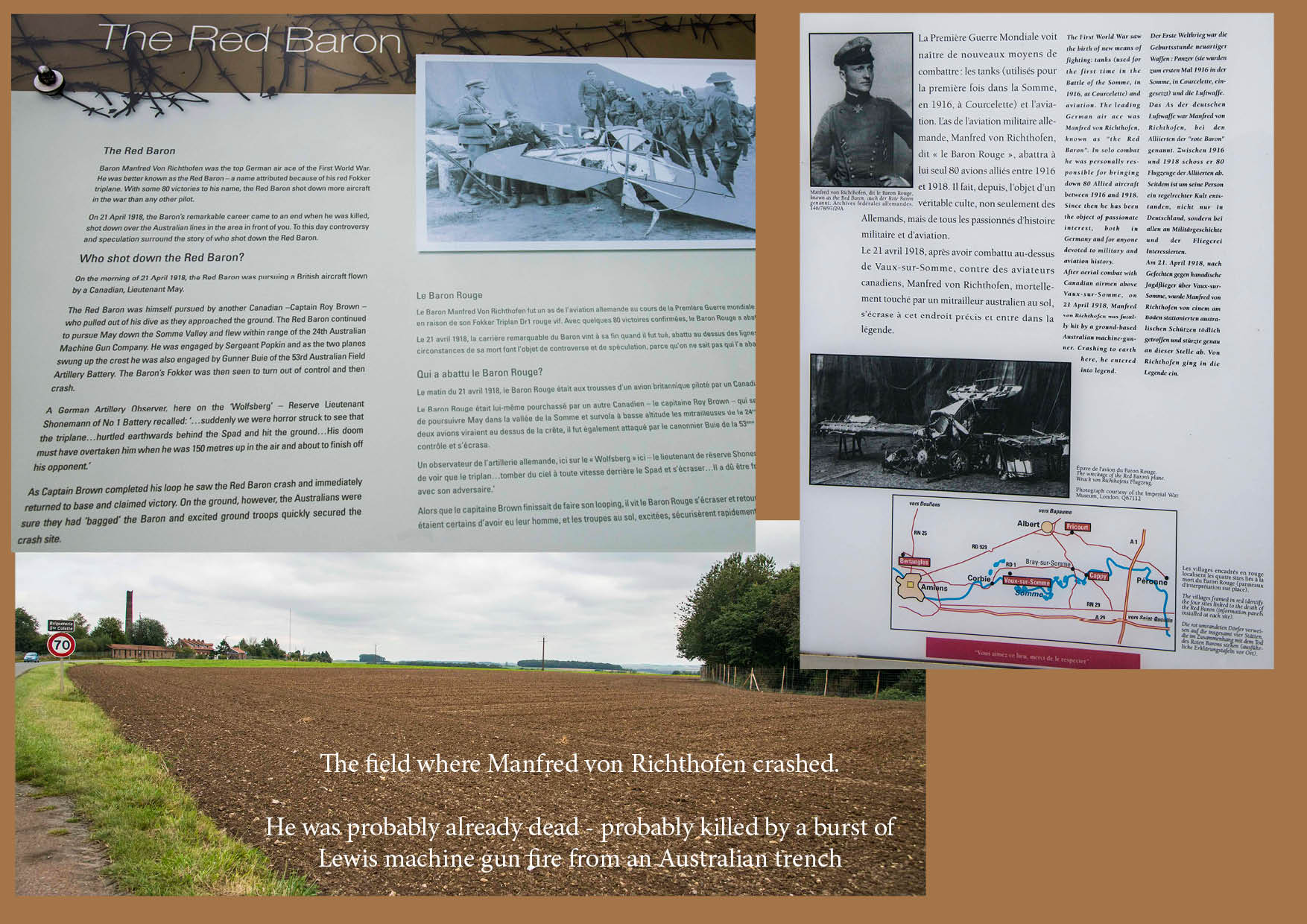
As well we were shown the field where “The Red Baron” came to grief. Von Richthofen was shot down over an area where Australian troops were entrenched and they may have actually fired the shot that killed him. It is a little controversial and probably will never be settled.
We have only shown a tiny fraction of the interesting places in this important battlefield region. Some of you may find this ‘war tourism’ a little ghoulish but we found it so inspiring to understand what had happened here, both for our ANZACs and the local communities. It is a way of honouring those soldiers who have now lain dead for a 100 odd years, and we hope it will inspire you to do a little research of your own and pay the Somme a visit. You may feel sad, but you won’t regret it.
Next blog: Fabulous Ieper and the Menin Gate

This year marks the centenary of Australia’s involvement in World War 1, a very important part of Australia’s history and something that profoundly affected the nation. It also was a defining point for Australia and Australians.
Reflecting on these events has reminded us of our travels through the battlefields of Europe. Back in 2008 Ian attended the first Dawn Service on ANZAC Day at Villers Bretonneux on the Somme River in northern France. The local people were so happy to have so many Australians visiting their region as their efforts during the WW1 were greatly appreciated.
This great event has continued each year, and Ian was keen to return to that area for a more intensive look over some of the significant battlefields. This was where General Sir John Monash demonstrated his outstanding ability to command ANZAC forces and win battles with a minimum of casualties, something that had not been demonstrated by the majority of allied field officers up to that time…
So while planning our trip to Europe in 2013 we started researching the many battlefield tours available in Belgium. Our choice (highly recommended by TripAdvisor) was the Flanders Battlefield Tours run by Jacques Ryckebosch and his wife Gen. We organised two day tours well in advance, and they recommended that we stay in the lovely town of Ypres or Ieper as it is now known. This is a very pretty and historic town which was terribly damaged during WWI.
This was an outstanding decision as Jacques was very familiar with Australia’s efforts in WWI; was a Monash fan as well and to top it off was an aviation nut too… Ian was in hog heaven! Ginny threatened to go shopping at one stage while they nattered away about their joint passions, but in the end she enjoyed the tours very much.
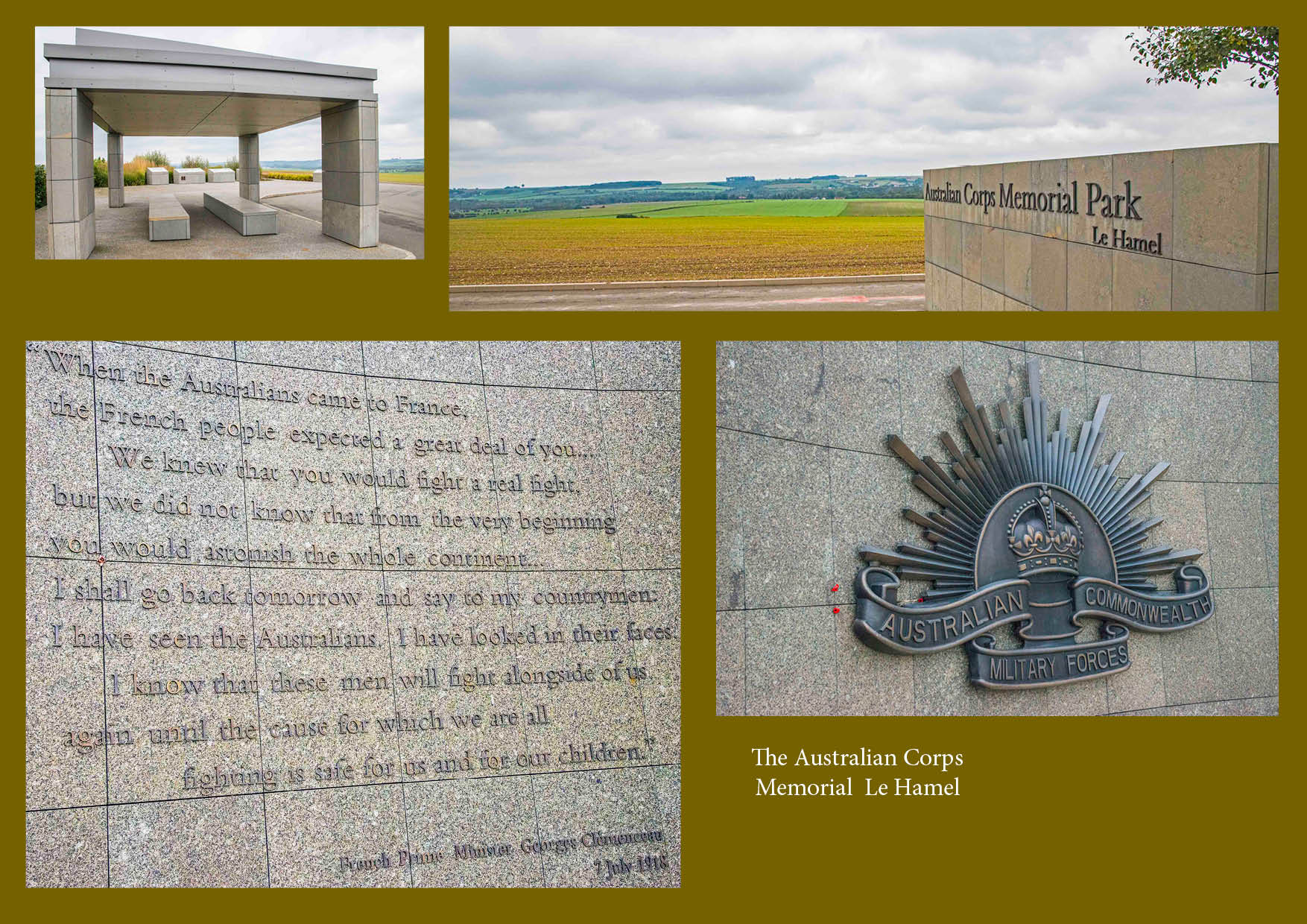
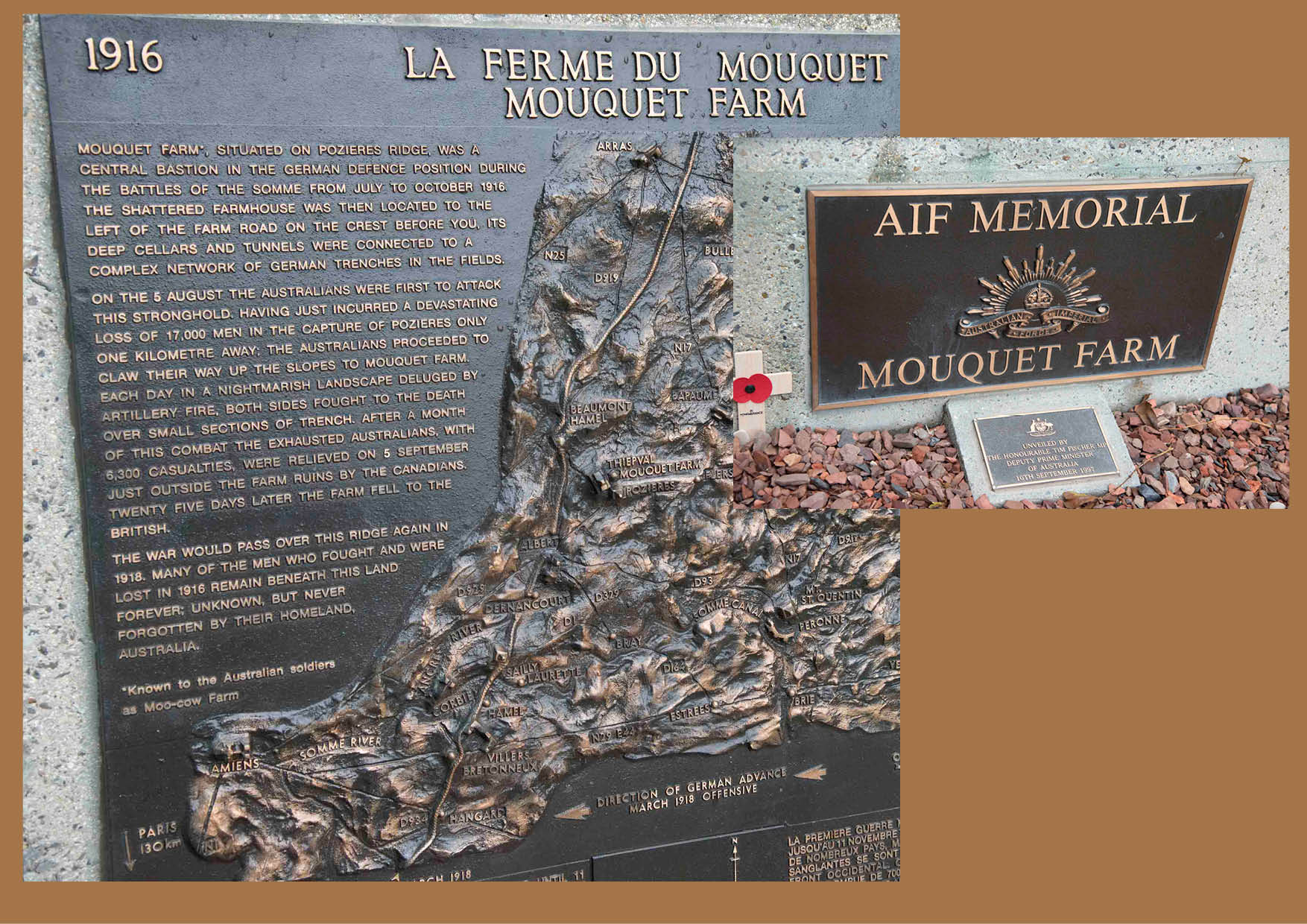
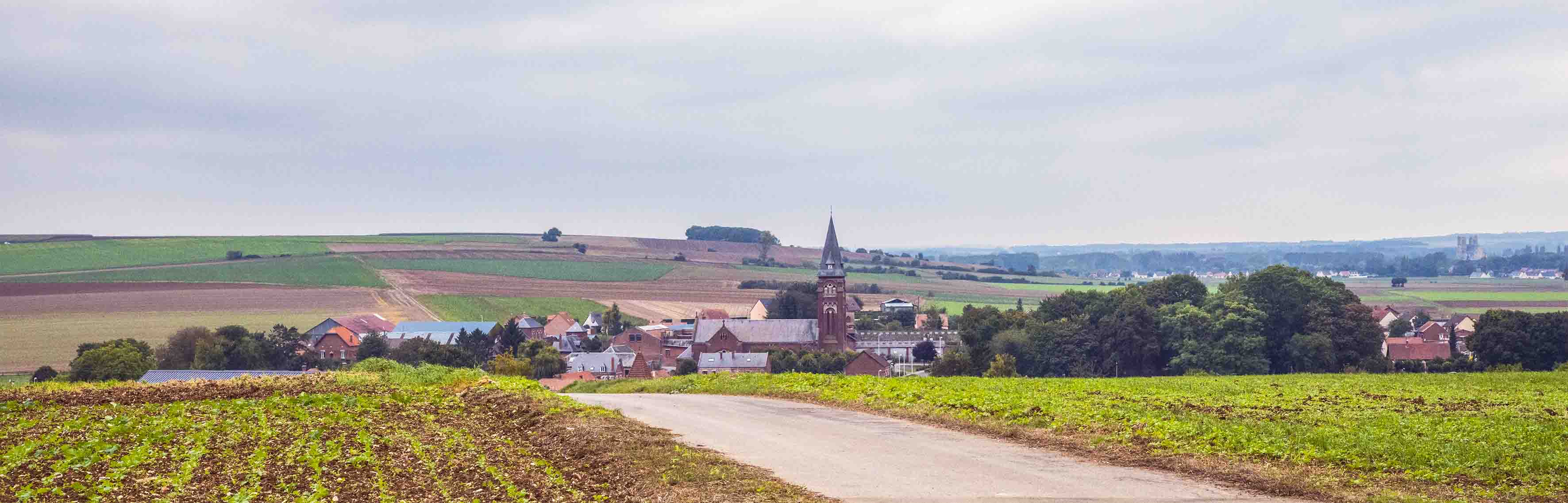
Ian really wanted to see two separate areas of the Somme that were involved in significant battles, so our first tour focused on Le Hamel and Villers Bretonneux. It was hard to envisage the carnage that took place in what is a lovely rolling countryside today – very green and pleasant. However the many cemeteries and memorials that dot the countryside indicate that this was not always the case…
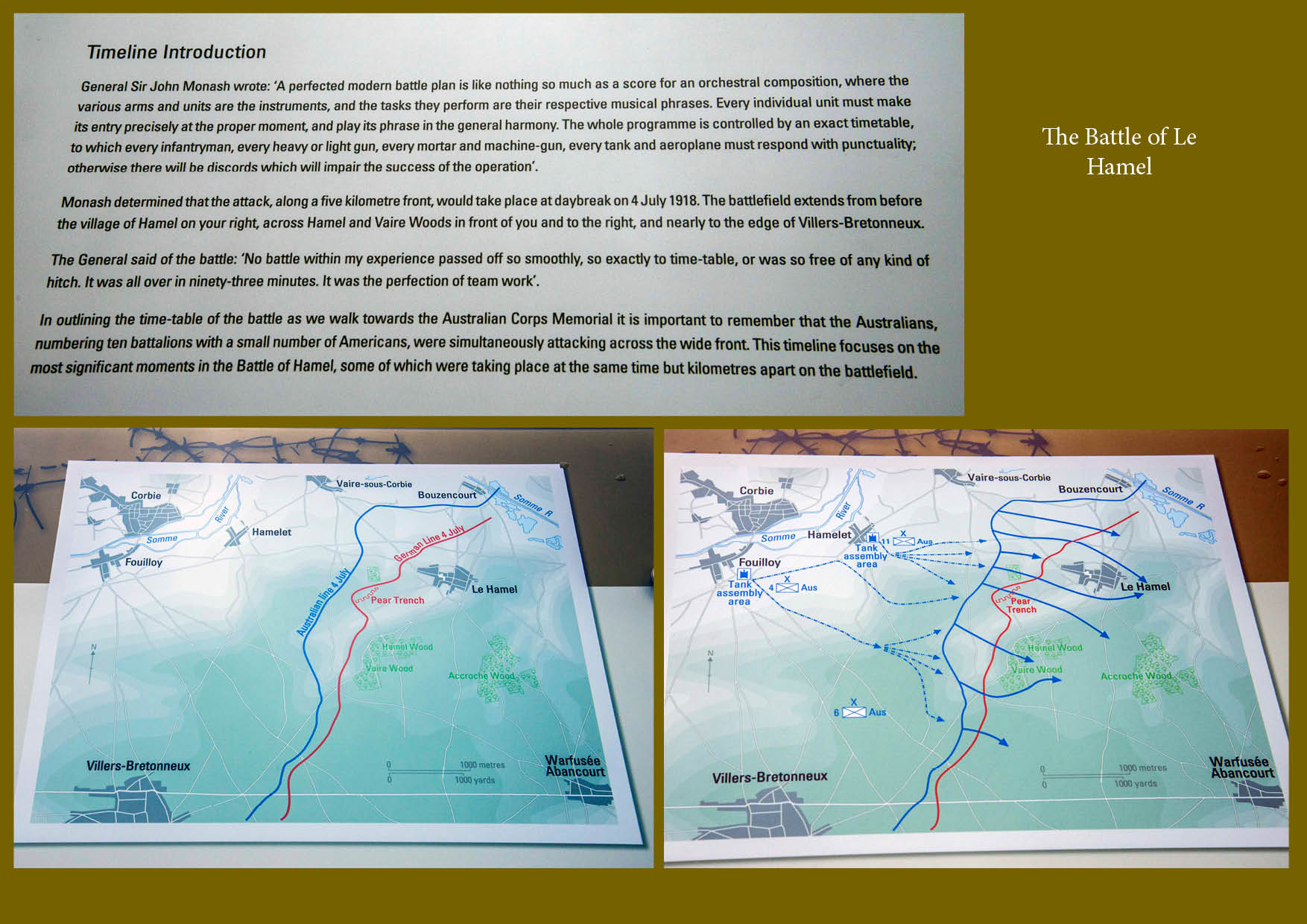
The little town of Villers Bretonneux was hammered by artillery and has been reconstructed. The Victoria School was rebuilt after the conflict with money sent from school kids back in Victoria, Australia. The famous sign in the playground “Never Forget Australia” brought a lump to our throats and their wartime museum was a great display.
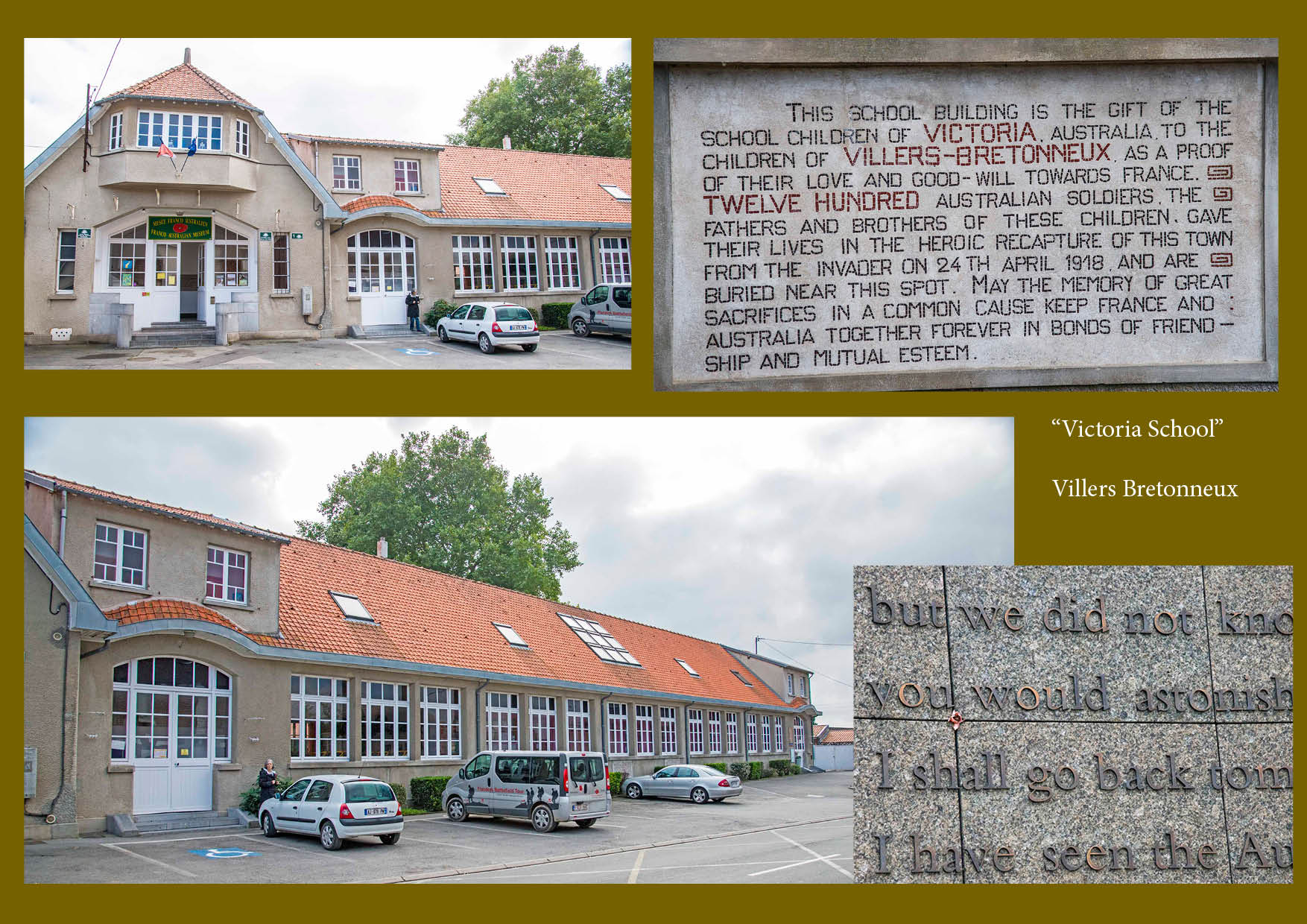
The Australian War Memorial just down the road is also outstanding and is the site of the Dawn Service on ANZAC Day.
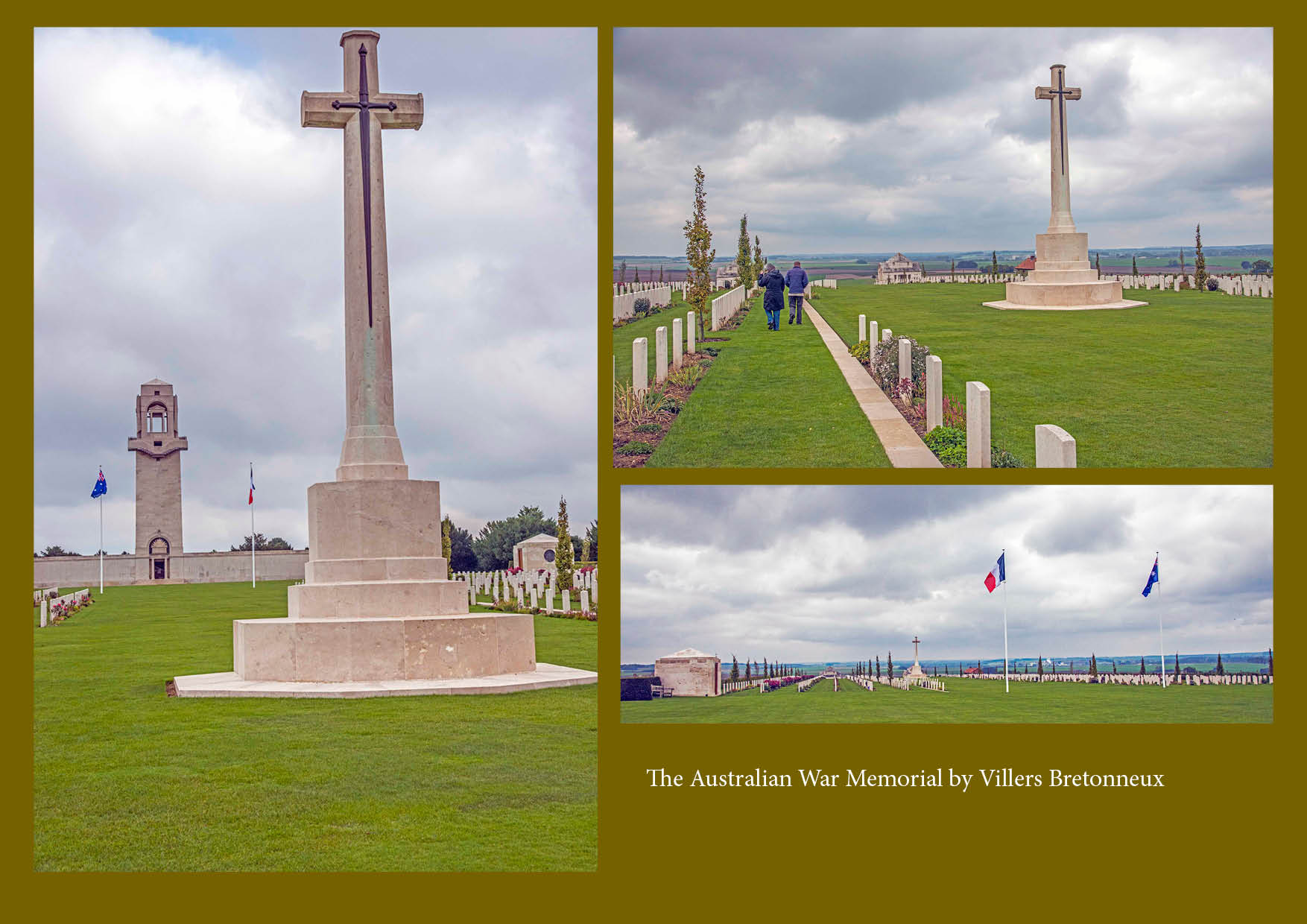
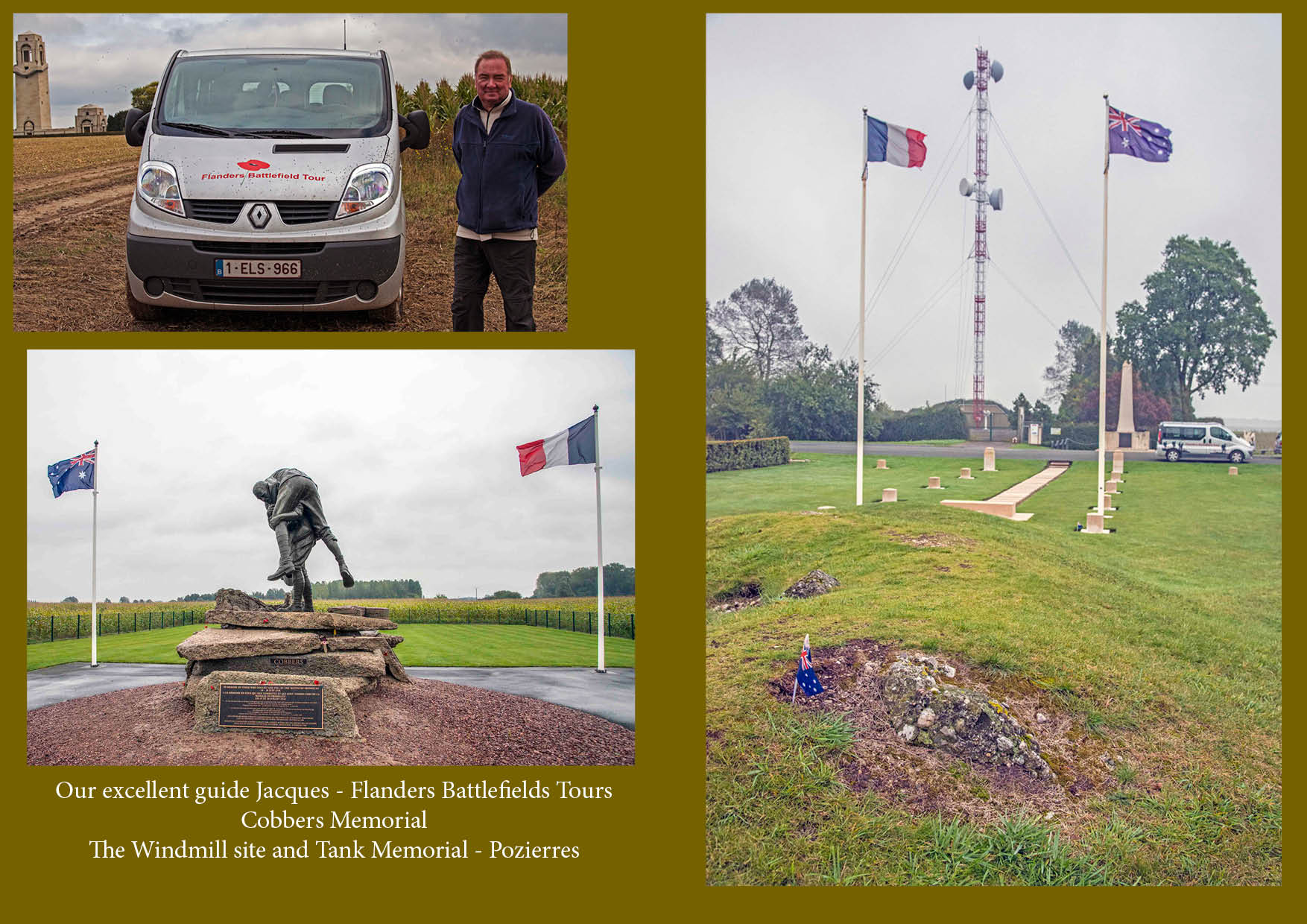
Jacques organised our tour perfectly and included visits to many other interesting artefacts and historical sites as well. We can really recommend his and his wife Gen’s very professional tours.
Next blog: Our tour of the Mont St Quentin and Peronne region

Back in 2008, we googled ‘beautiful places to visit in America’ and found Sedona on every list, so clearly a visit to the state of Arizona was necessary! You can read about fabulous Sedona here, but another favourite place in Arizona was Taliesen West.
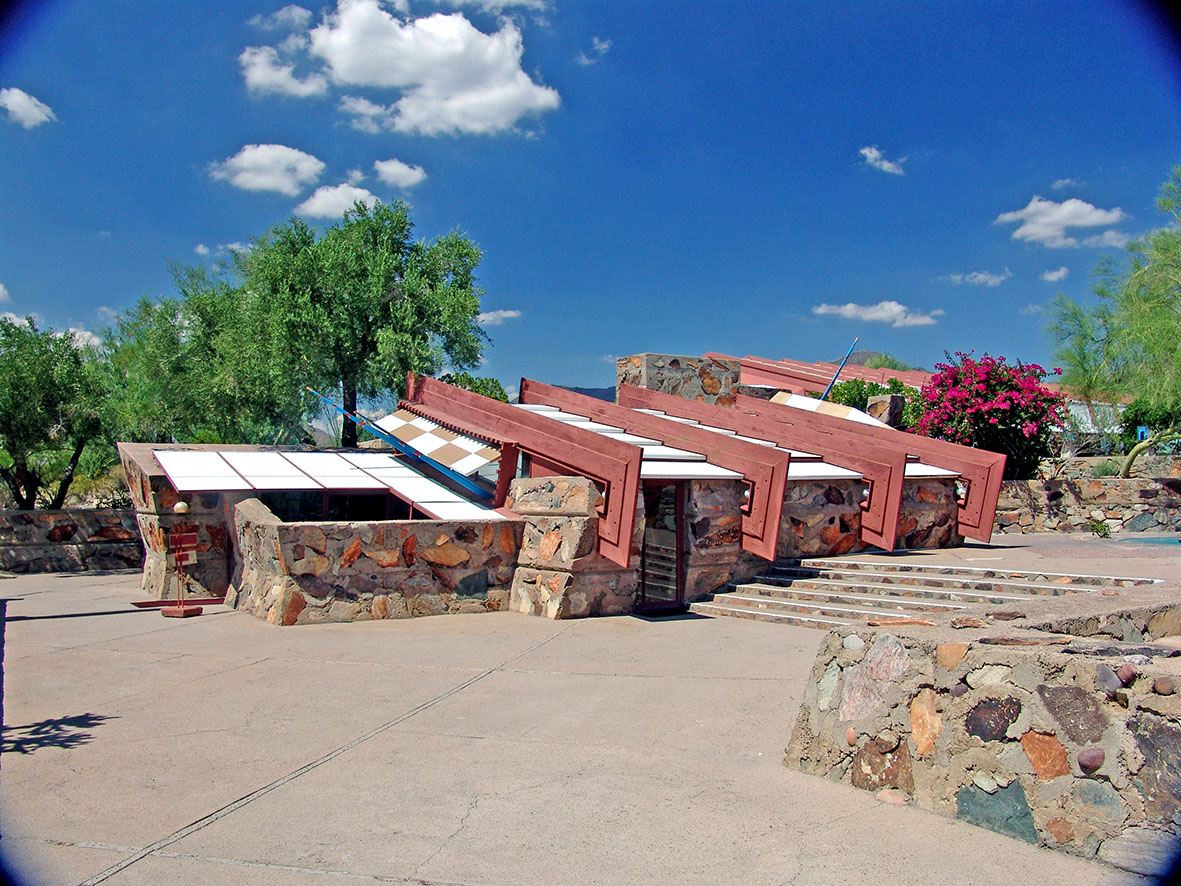
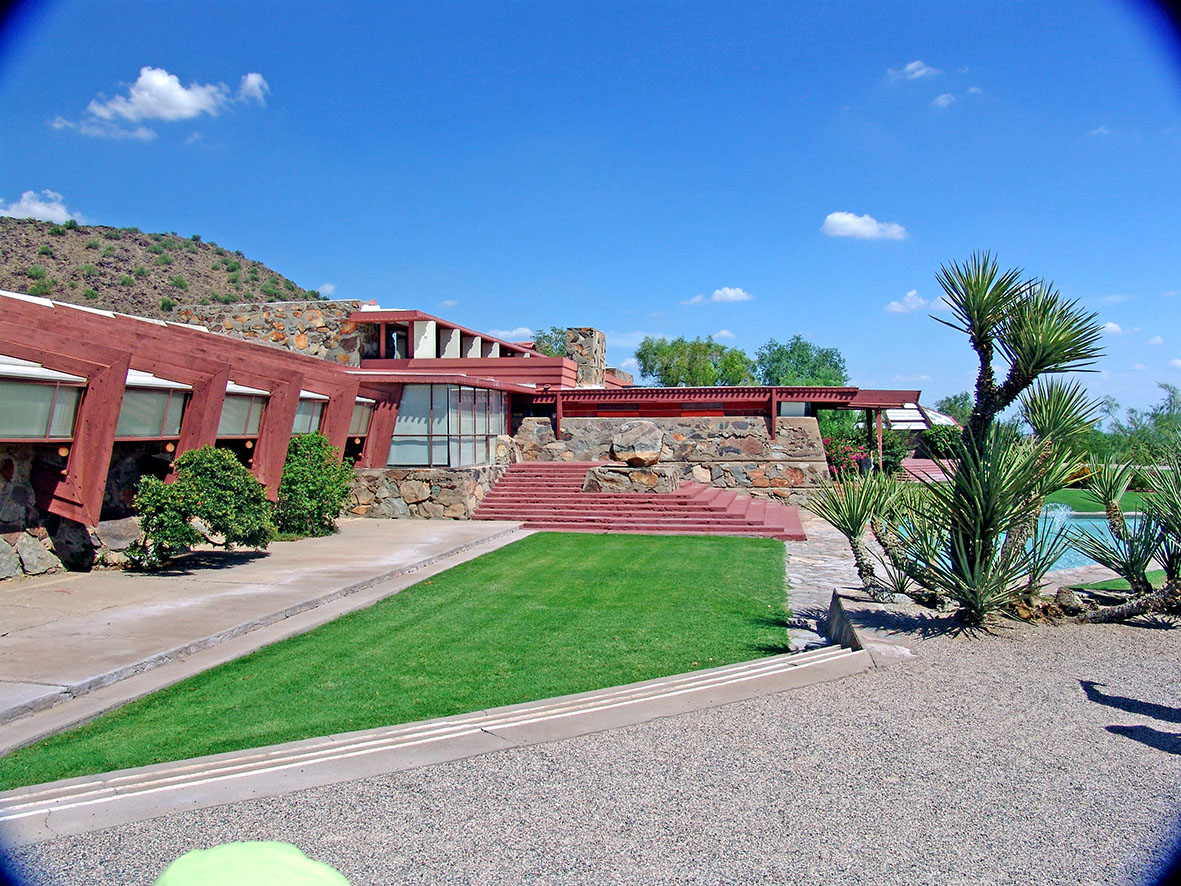
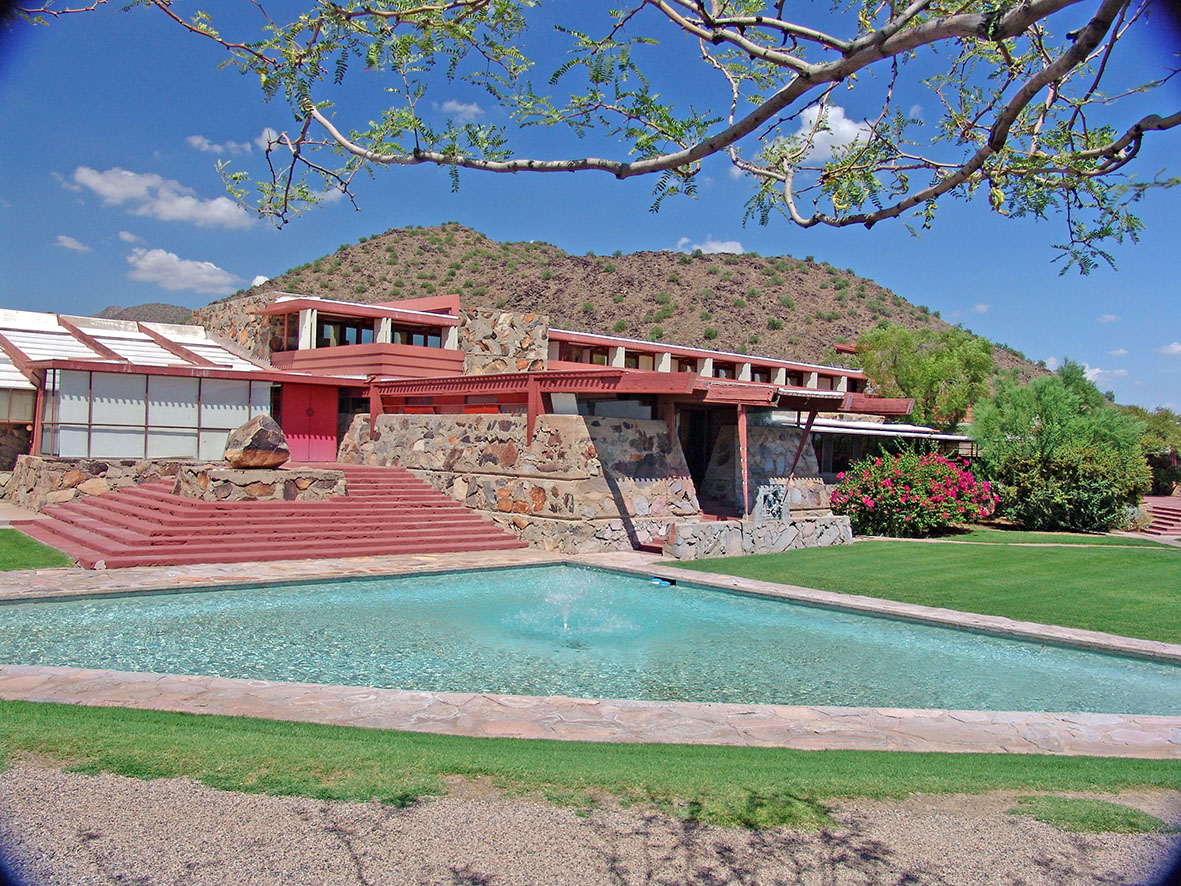
Previously we had not associated the famous architect Frank Lloyd Wright with Arizona as most photos of his beautiful buildings are in cool leafy green landscapes. However in 1927 he was invited to design the still fabulous Biltmore Hotel in Phoenix and the warm climate and desert scenery obviously got his creative juices flowing. As well it was a warm alternative over the winter months.
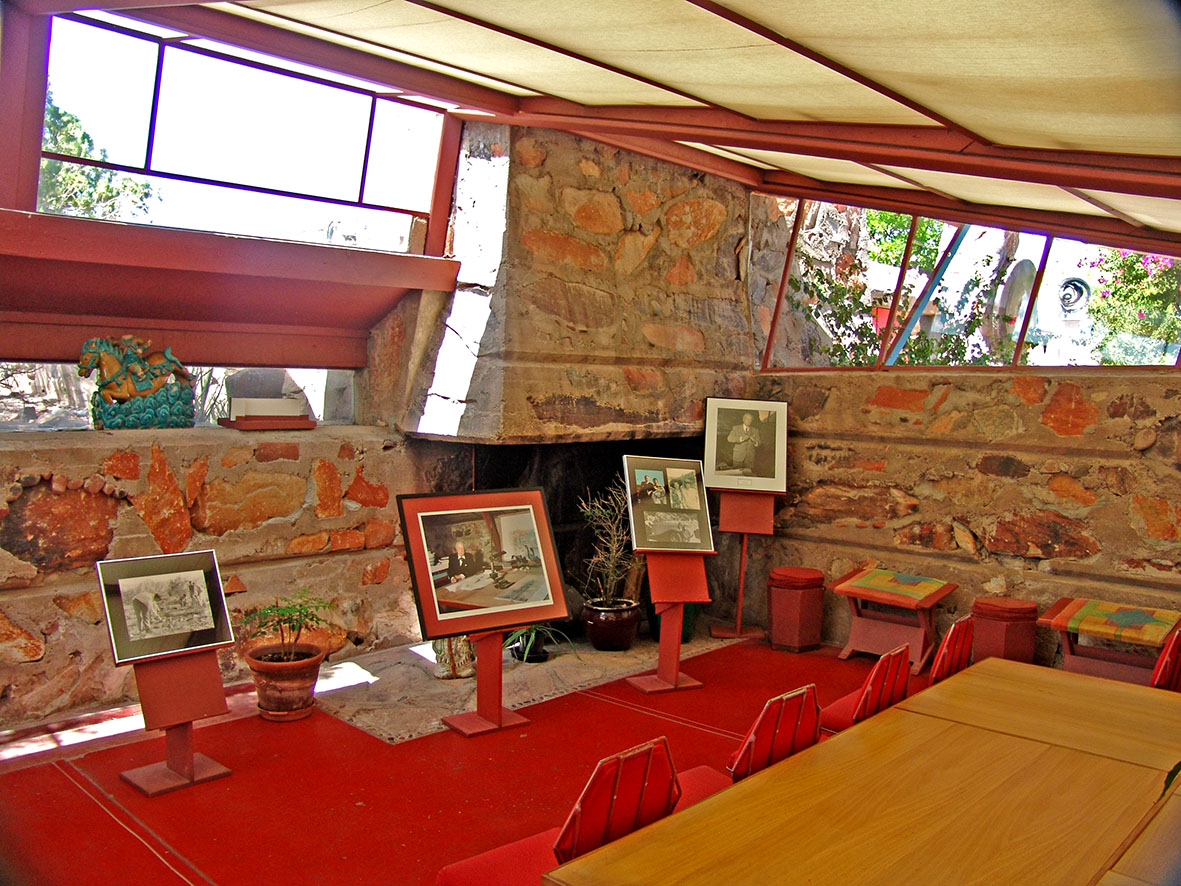
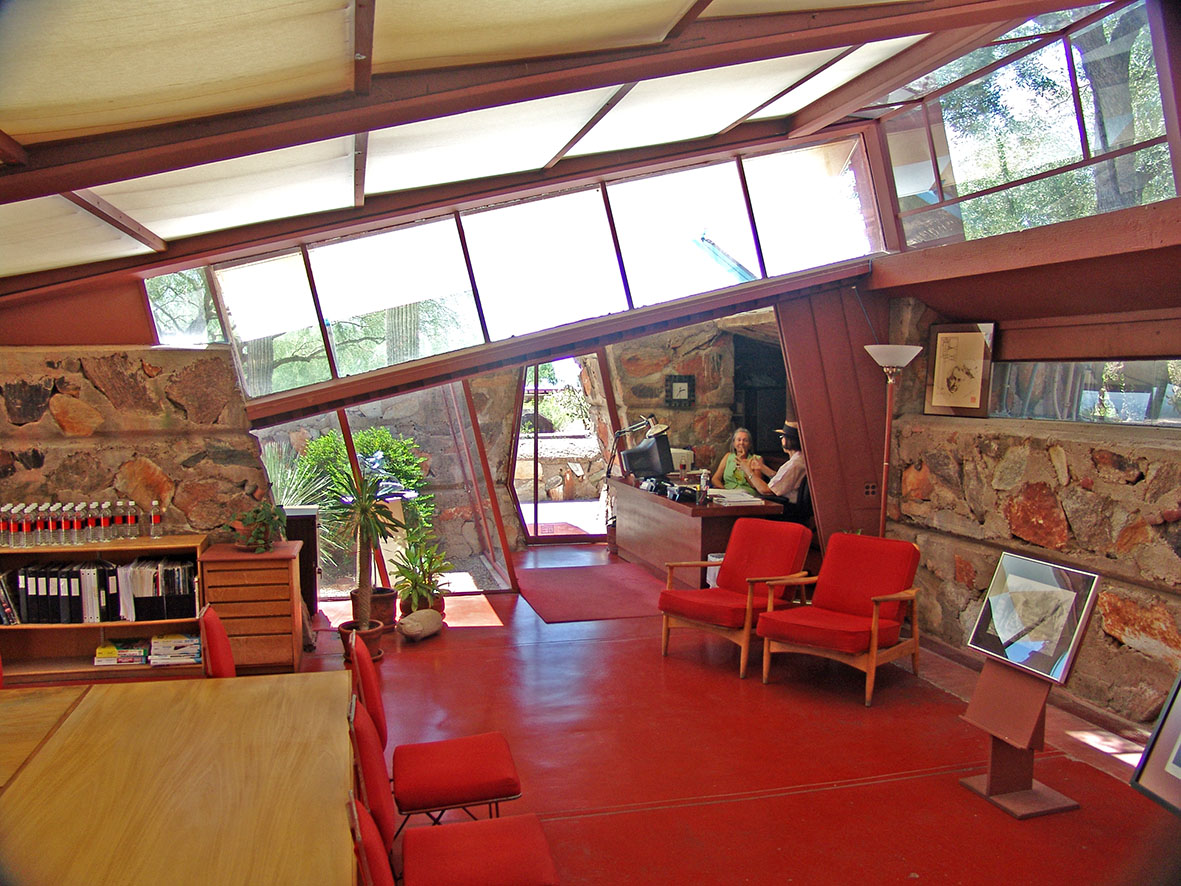
The Master Architect later returned with his third wife Olgivanna to establish the Taliesen West Summer School of Architecture on the outskirts of Phoenix. (It should be noted that he was slightly infamous in terms of his marital ‘agility’ but that’s a whole other story!)
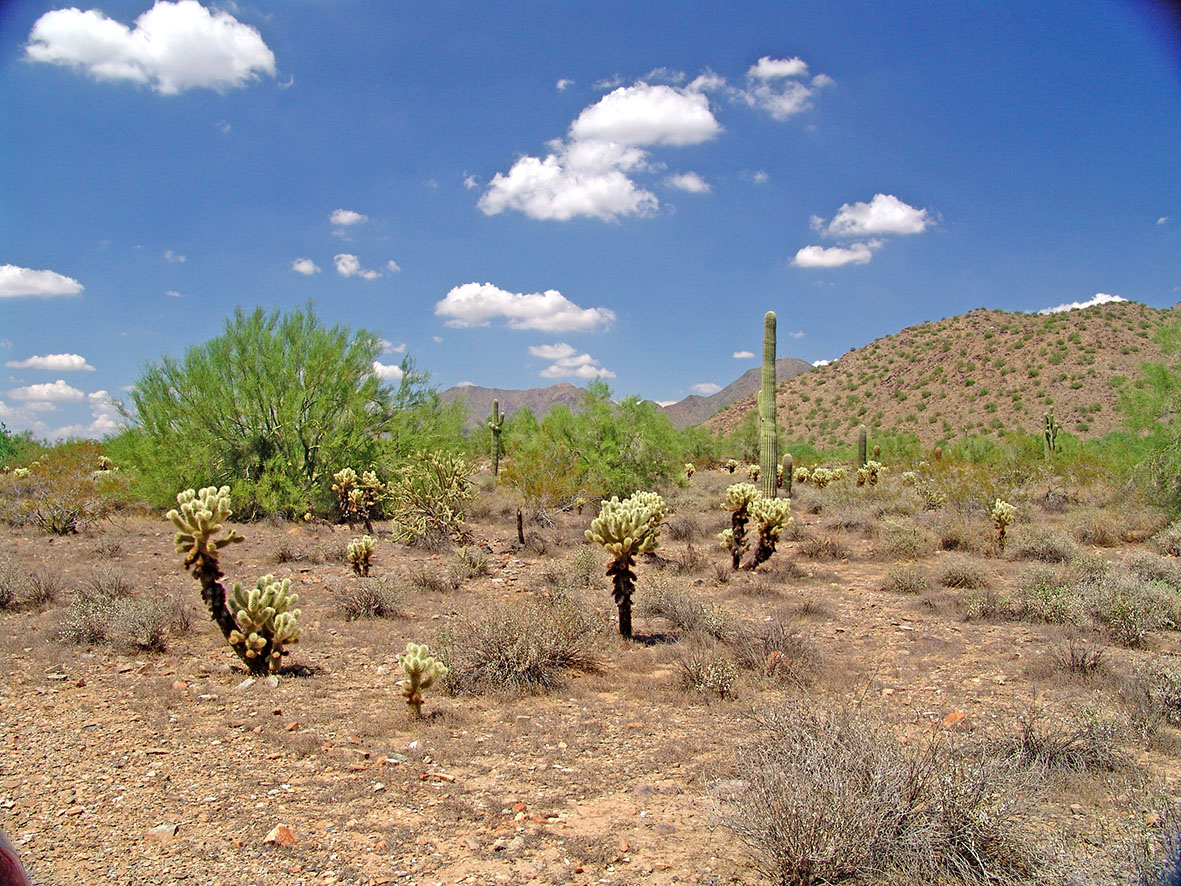
Back then their 600 acres in the foothills of the McDowell Mountains was really ‘outback’ territory. The students gathered desert rocks and sand over many years to create these amazing buildings for the next 20 years, and the sculptures by Heloise Crista are also beautiful works of art.
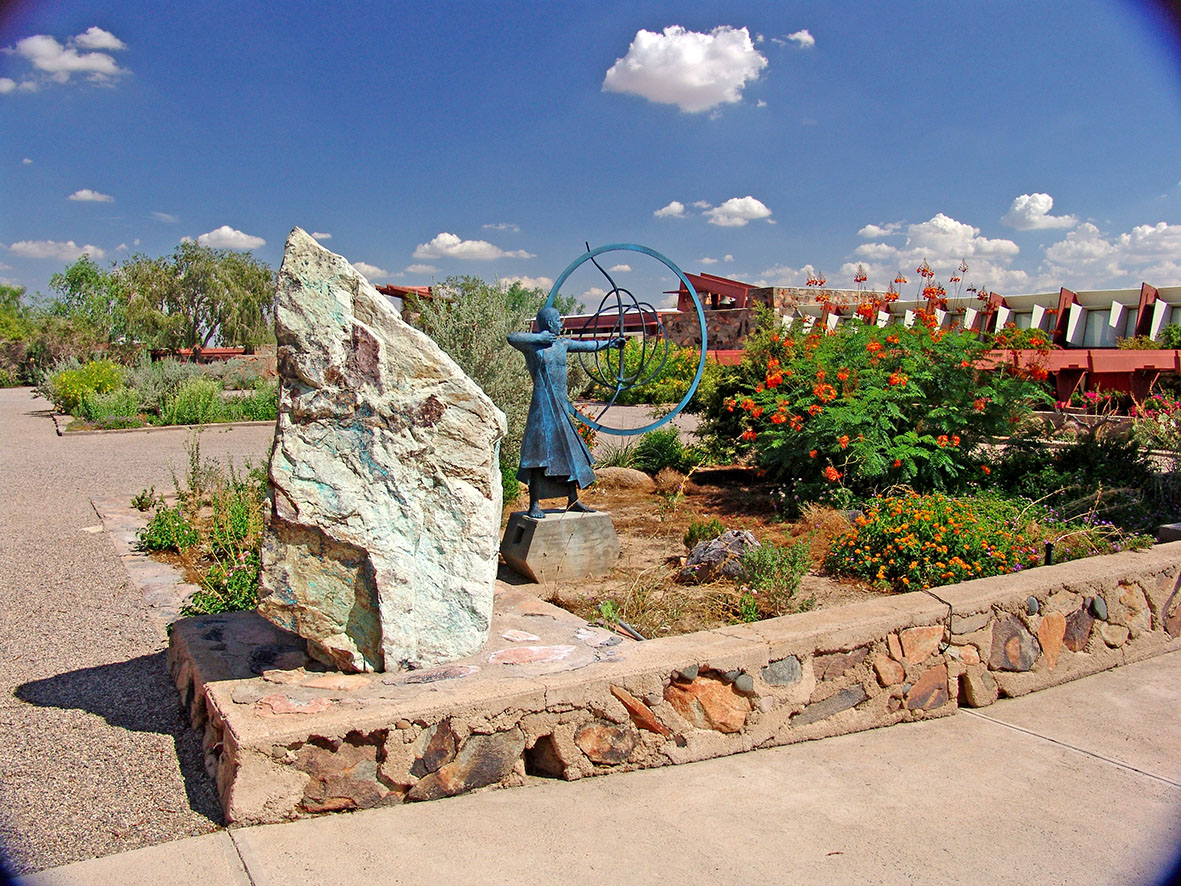
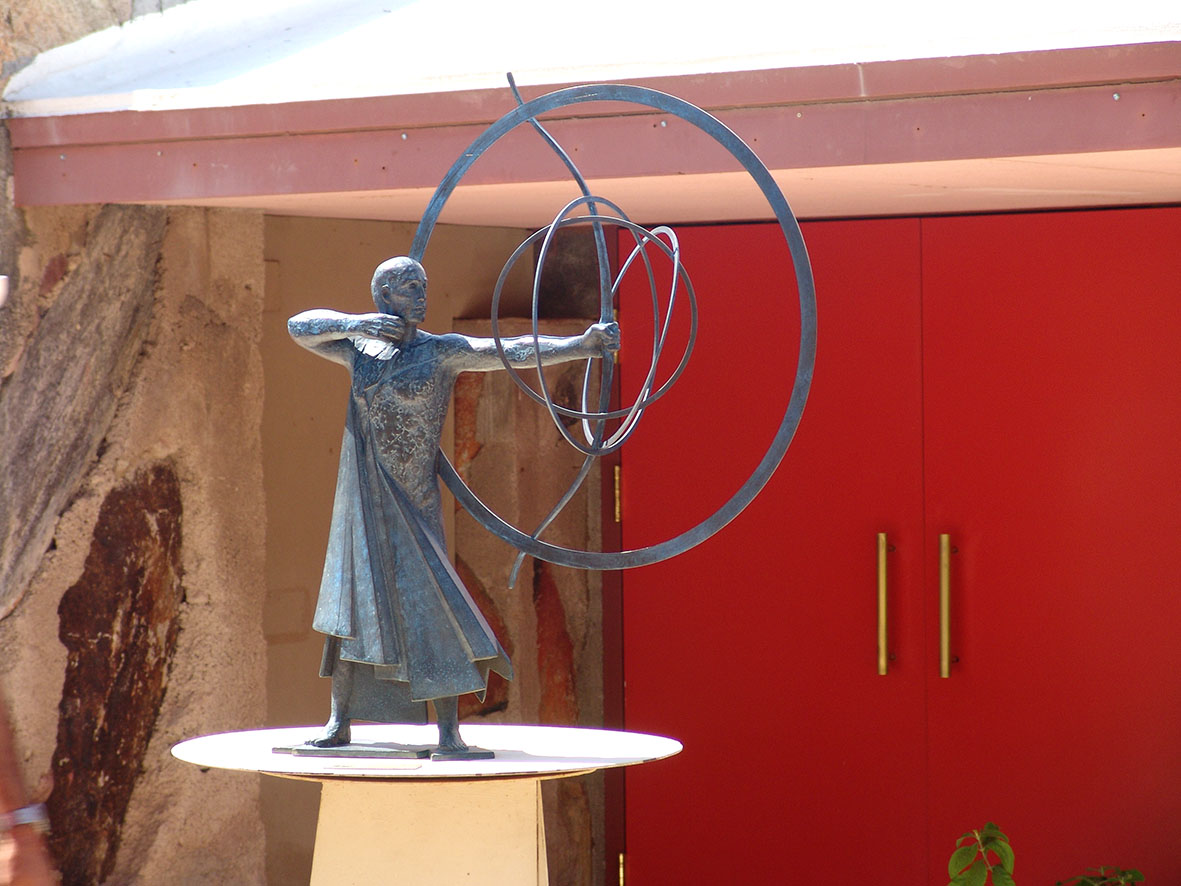
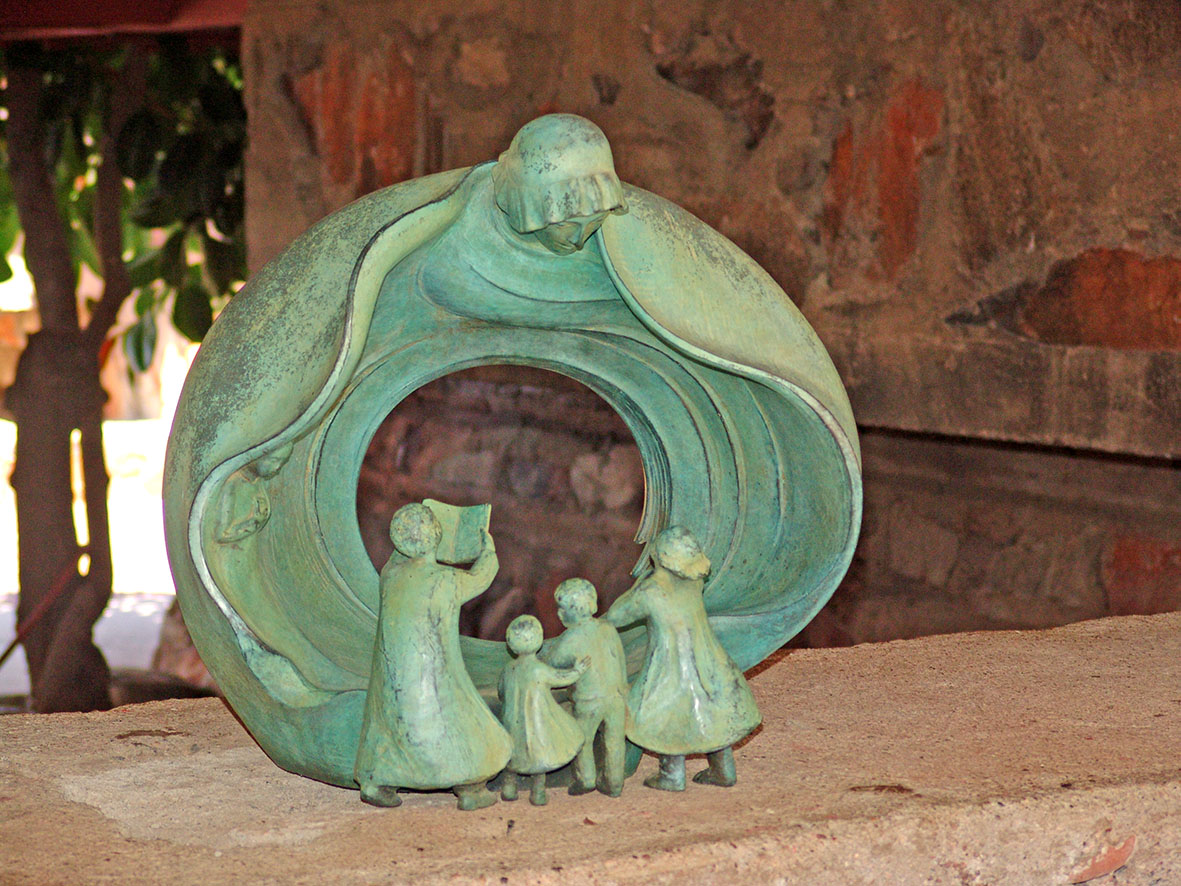
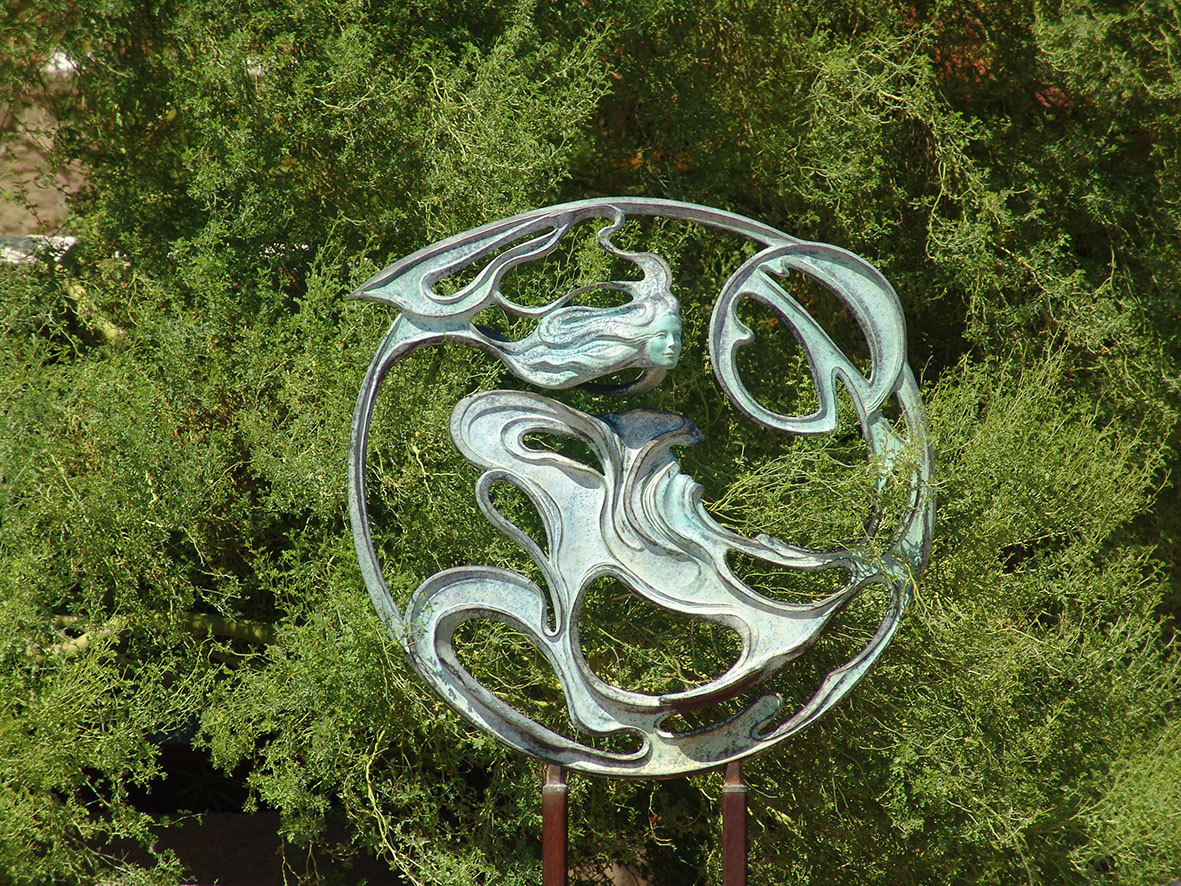
You can’t see much until you get right up to the door as everything blends in so beautifully with the desert.
Of course now it’s a piece of paradise among the surrounding new Phoenix suburbs. Wright wrote that Taliesin West would be “a look over the rim of the world” and that was exactly how it felt to us. The fabulous colours – 50 shades of red dirt – and magic landscapes reminded us of the Kimberley and Pilbara regions where we both met, worked and lived for several years. A very special place.
For more on Frank Lloyd Wright and his works see Artsy’s Frank Lloyd Wright website.
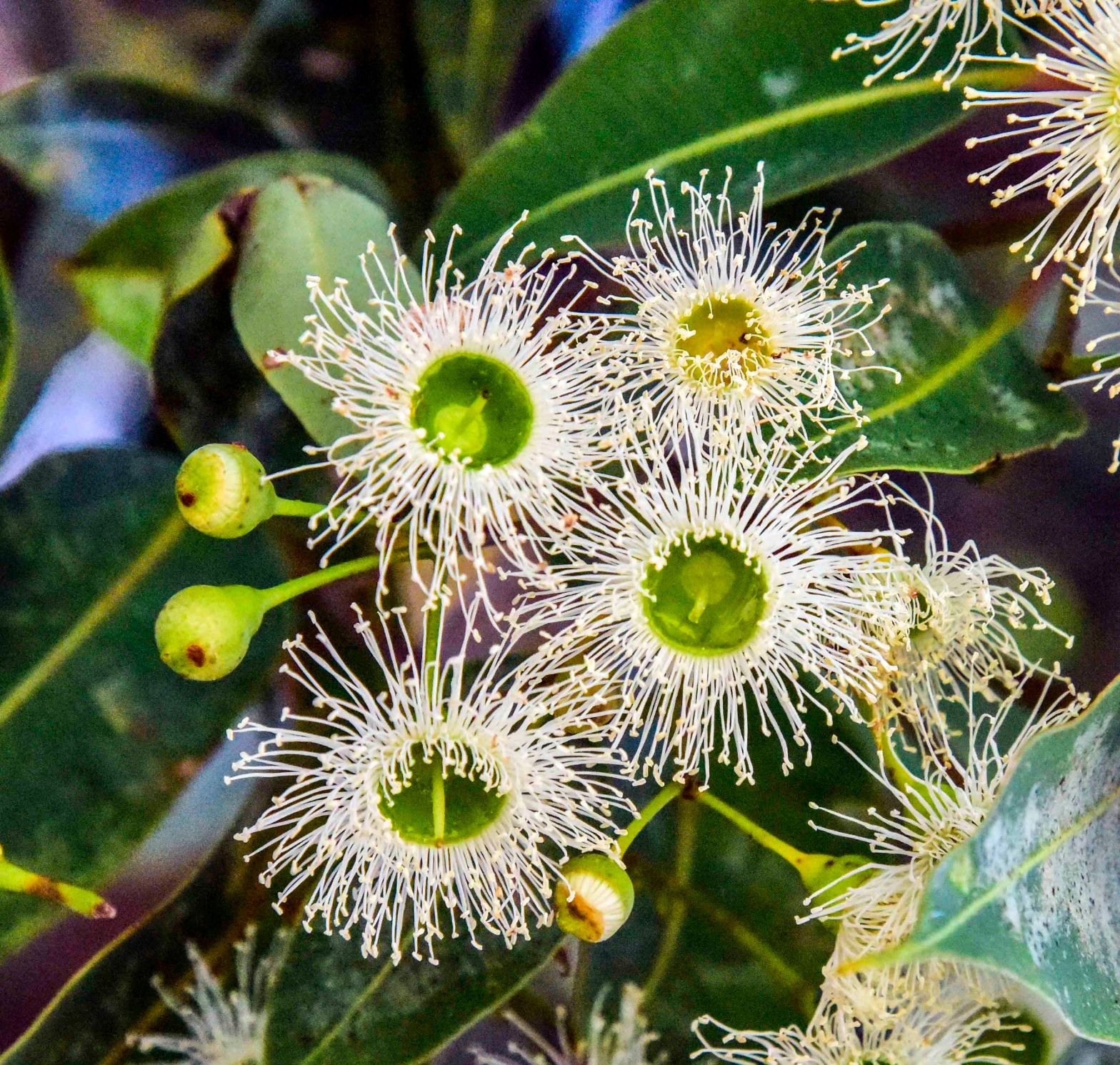
We would like to share some of Western Australia’s beautiful flora with you, as our state has such a huge variety of wildflowers, bushes and trees.
It’s mid February so we will start with the magnificent Marri trees (Corymbia calophylla) which are in full flower. It reminds us of a time in New Zealand when we saw snow on the forests midway down the North Island… They contrast so beautifully against the other eucalypts that are not flowering, such as the Red Flowering Gums and the River Red Gums along the creek beds. The large stands are very beautiful and the honeyeaters and bees are in hog (or bee!) heaven.
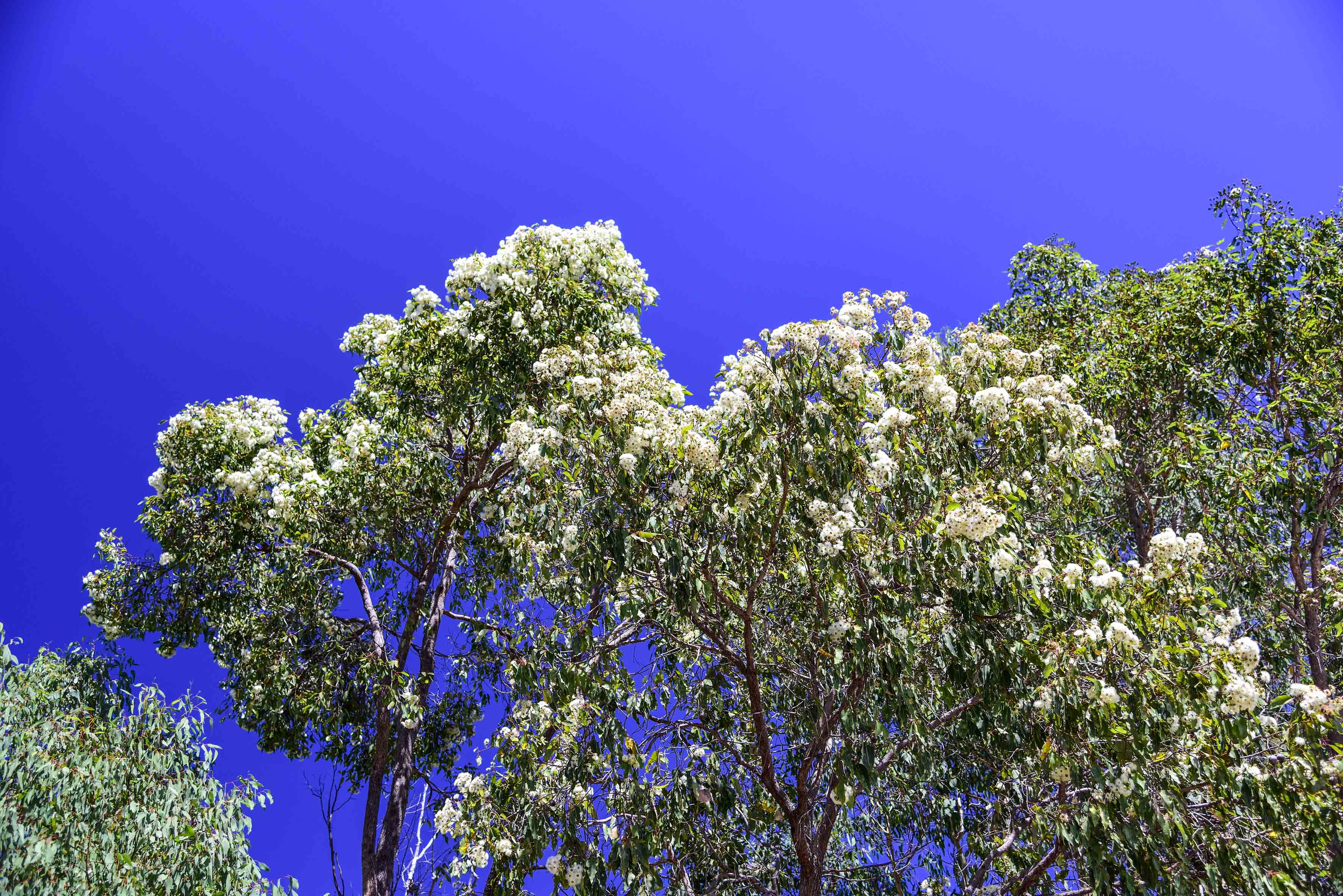
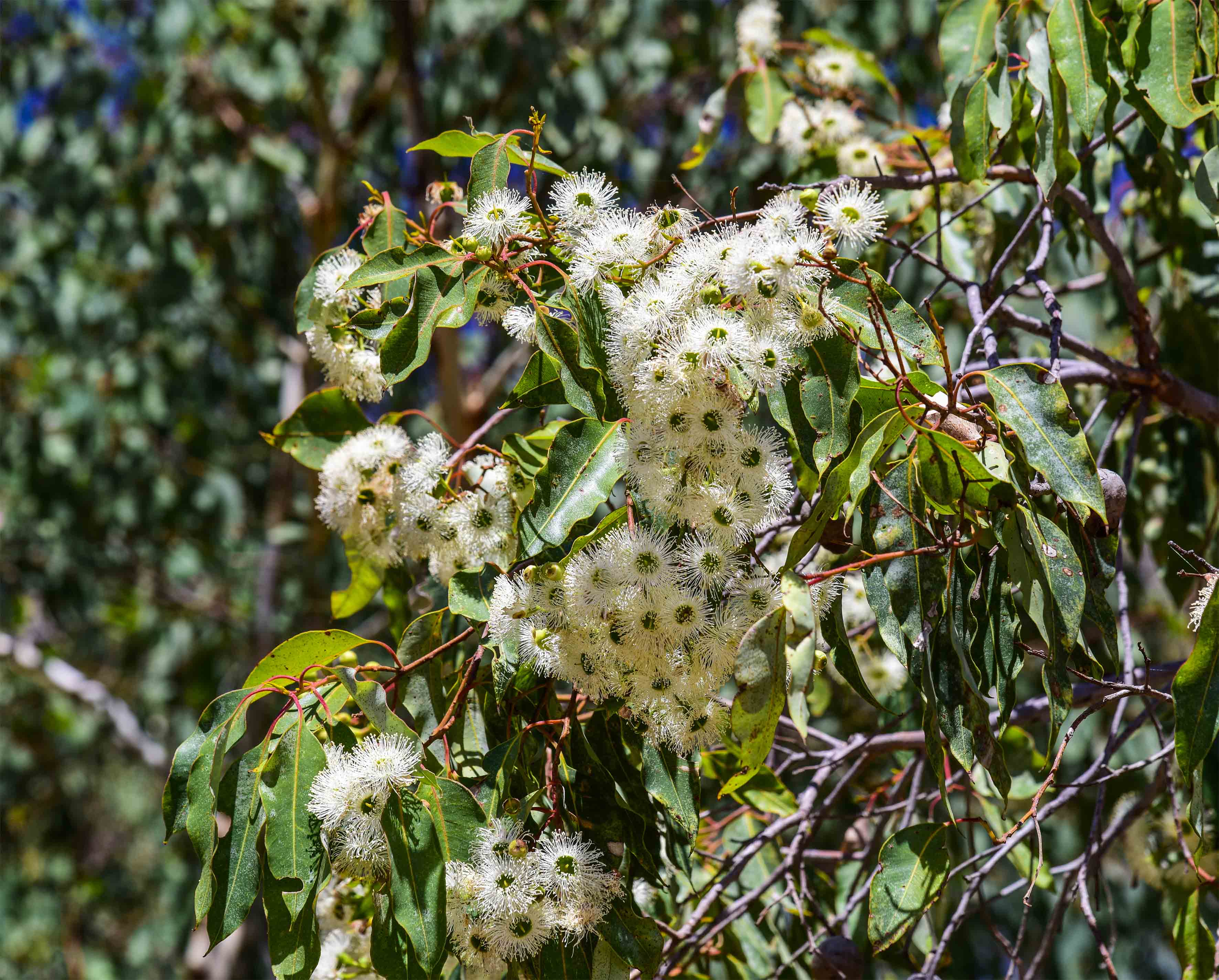
In some places the nectar flow is so great it forms wet patches on the ground.
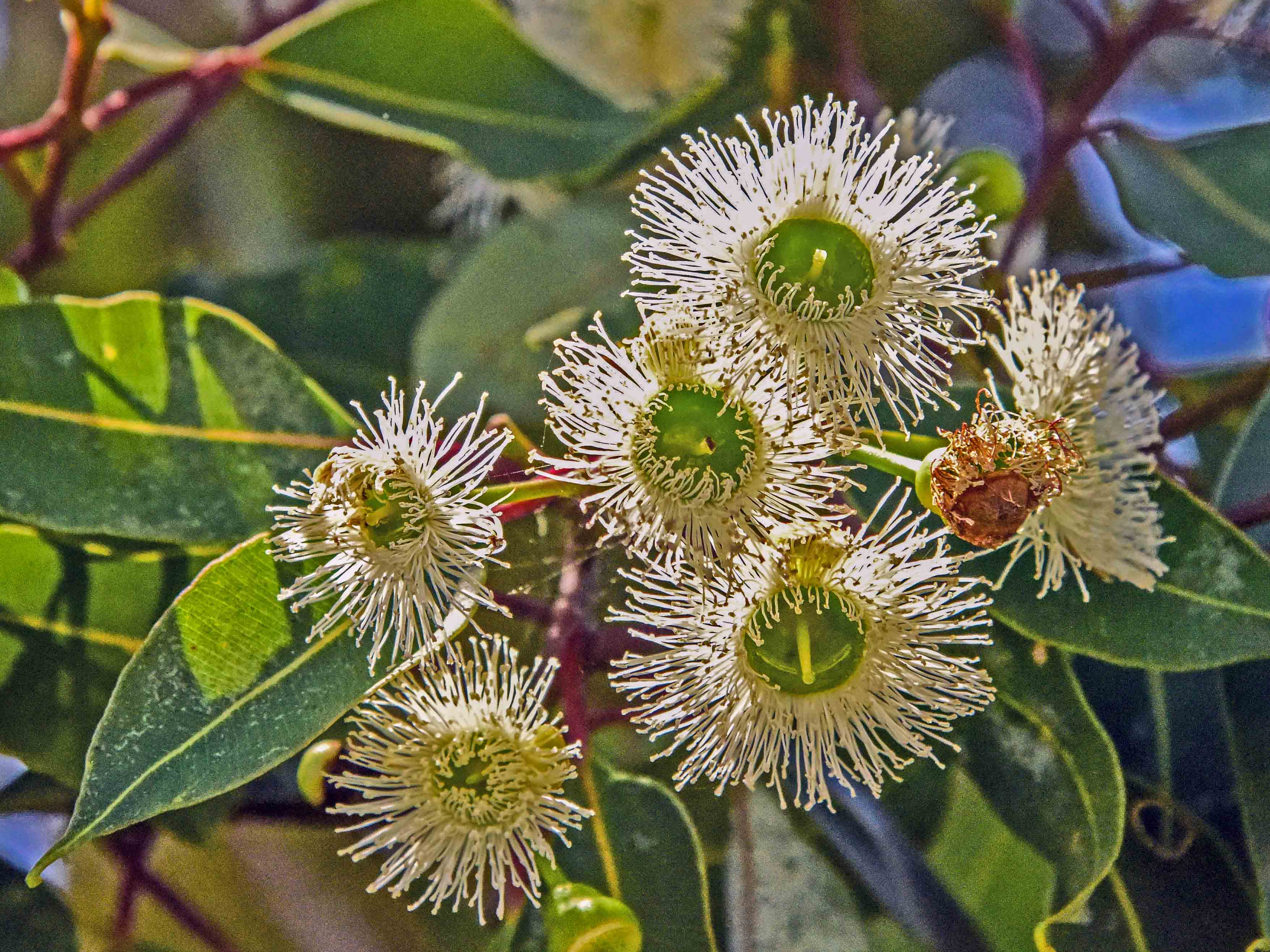
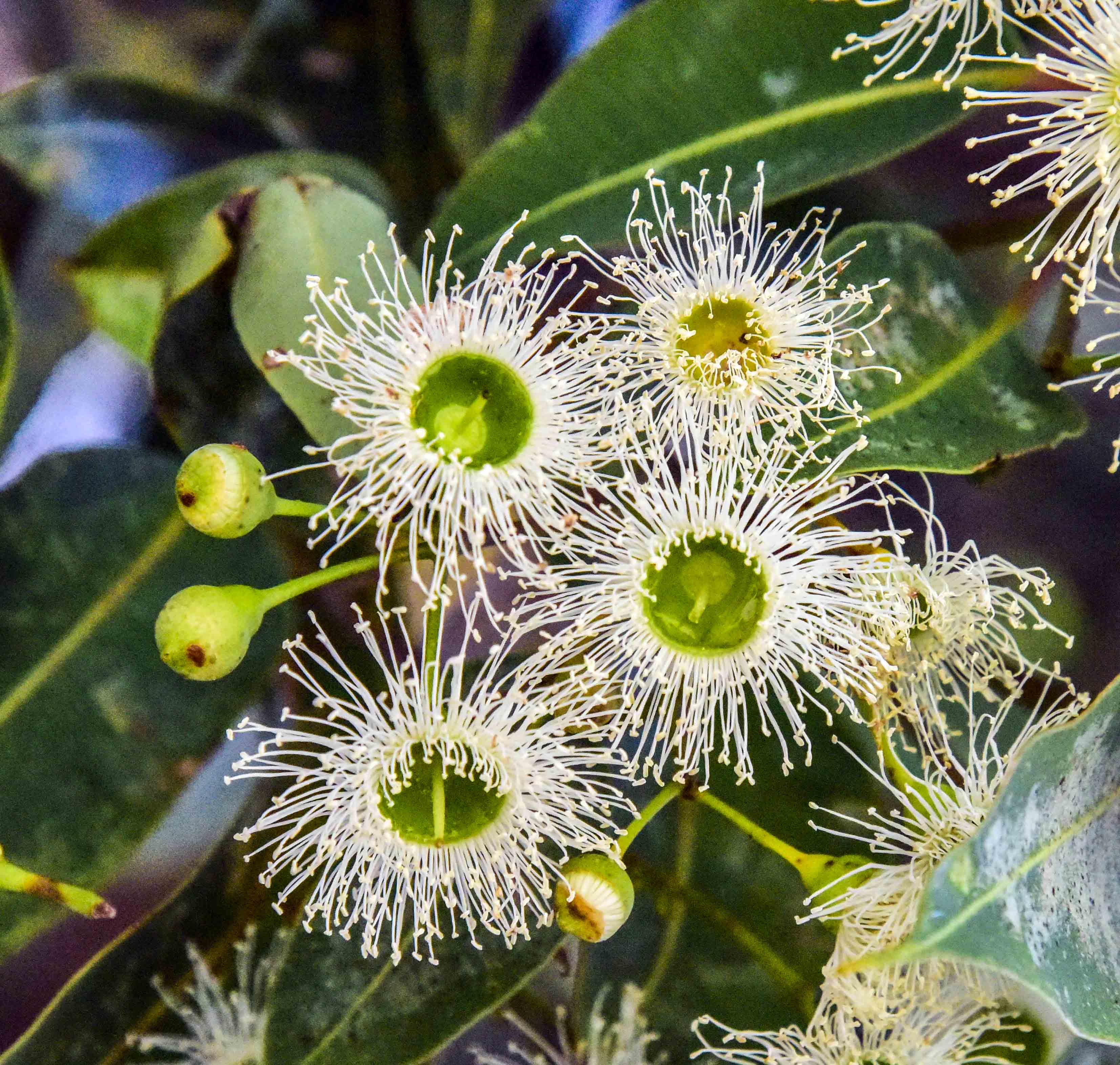
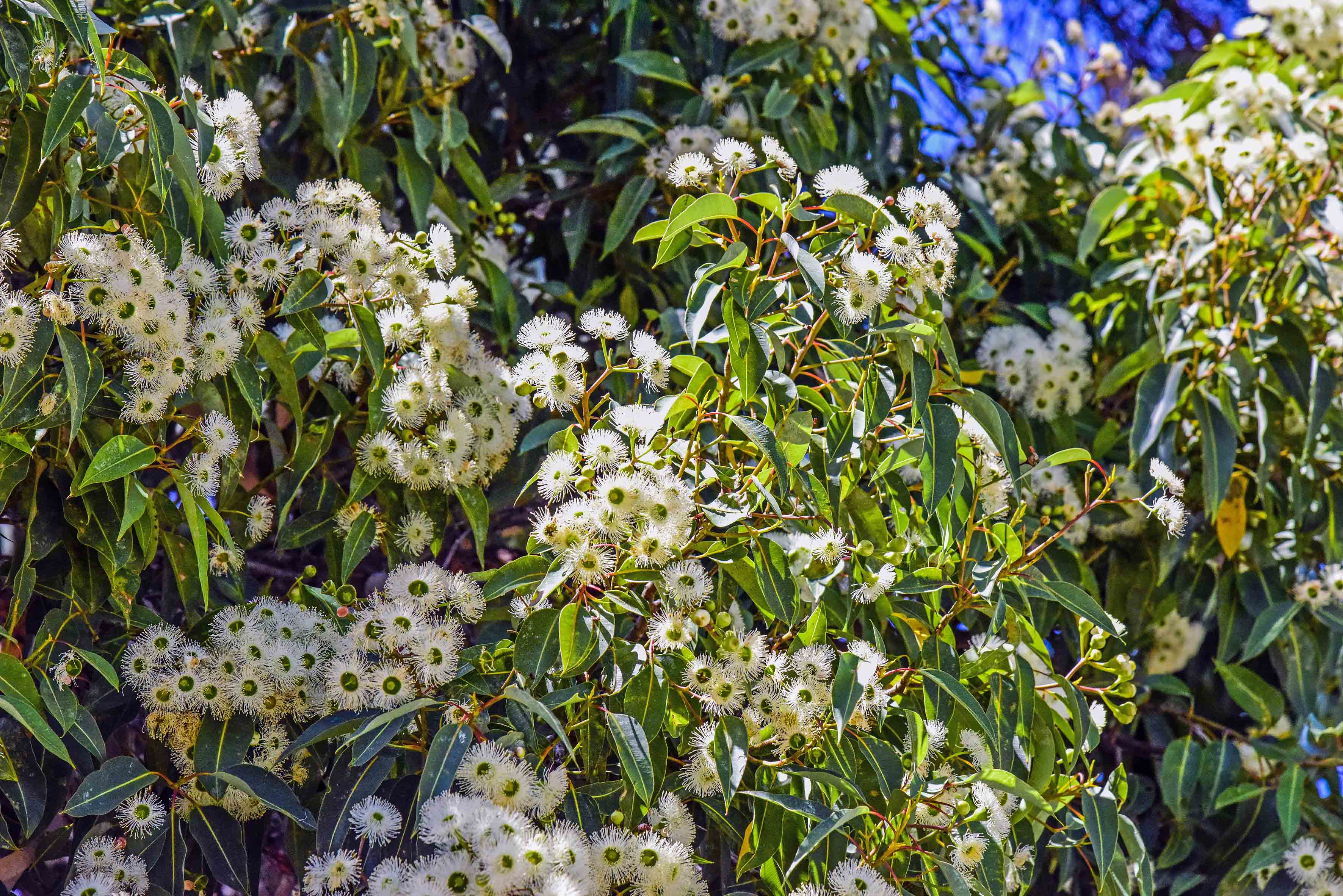
Some trees are 10-15 metres in height and nearly as big again around their crown. The flowers are sometimes bunched up over most of the extremities of the crown, rather like a cauliflower.
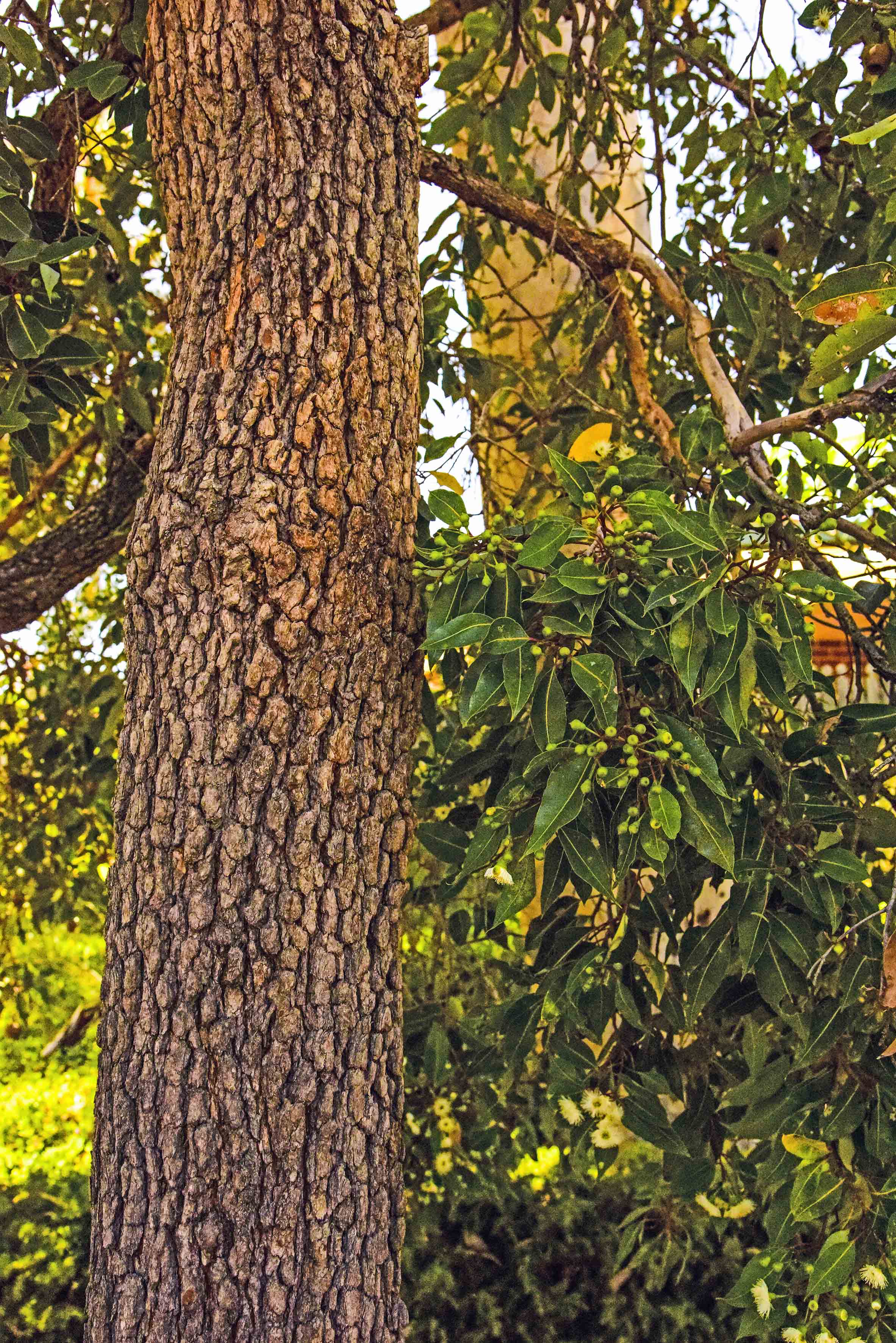
The characteristic gnarly bark of the trunk and limbs is very evident. Some of last year’s fruit on our local trees is still intact and has avoided the Red & White Tailed Cockatoos’ attentions. These large birds have very strong beaks that they use to crack open the hard gumnuts to extract the seeds.
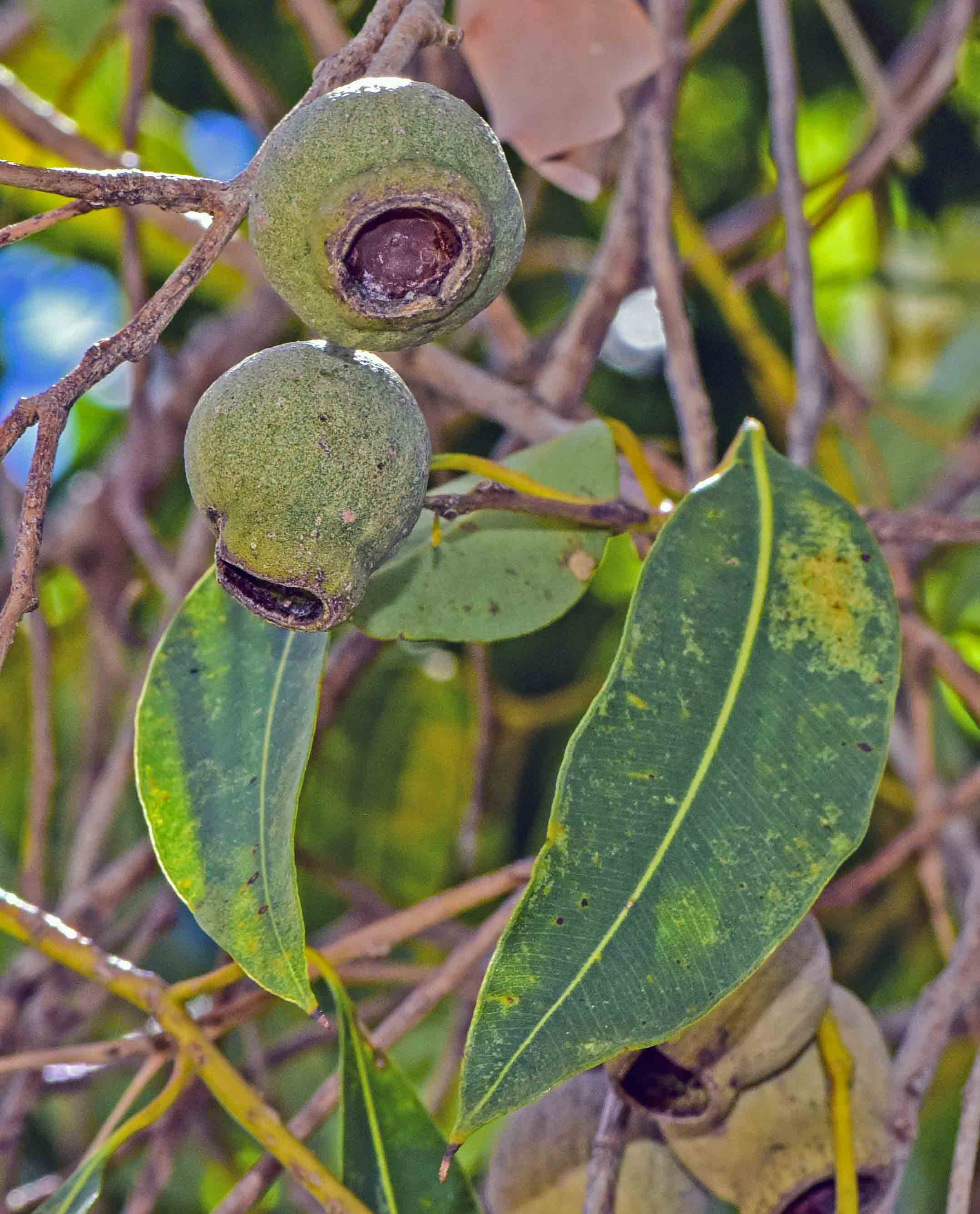
The marris provide a very beautiful display at this time of the year throughout the South West of Western Australia, and seem like an extension of our peak wildflower season starting in September each year.
Fellow West Australians, you may like to share your favourite native tree, bush or wildflower with us too?

 2020 Travels