Cobbold Gorge

After leaving Undara, a tyre repair was required so we stopped in Georgetown – not the fab suburb of Washington DC that we also love, but a truly great little outback town. While the local tyre fix-it man a.k.a. ‘the Chinaman’ toiled away, we managed to eat icecreams, find op shop bargains and buy award-winning sausages from the local butcher (yummy) and even found … joy of joys – a clean toilet with toilet paper, soap, water AND papertowels! What an amazing start to the day. The fuel outlet put together the BEST corned beef and pickle sandwiches as well…
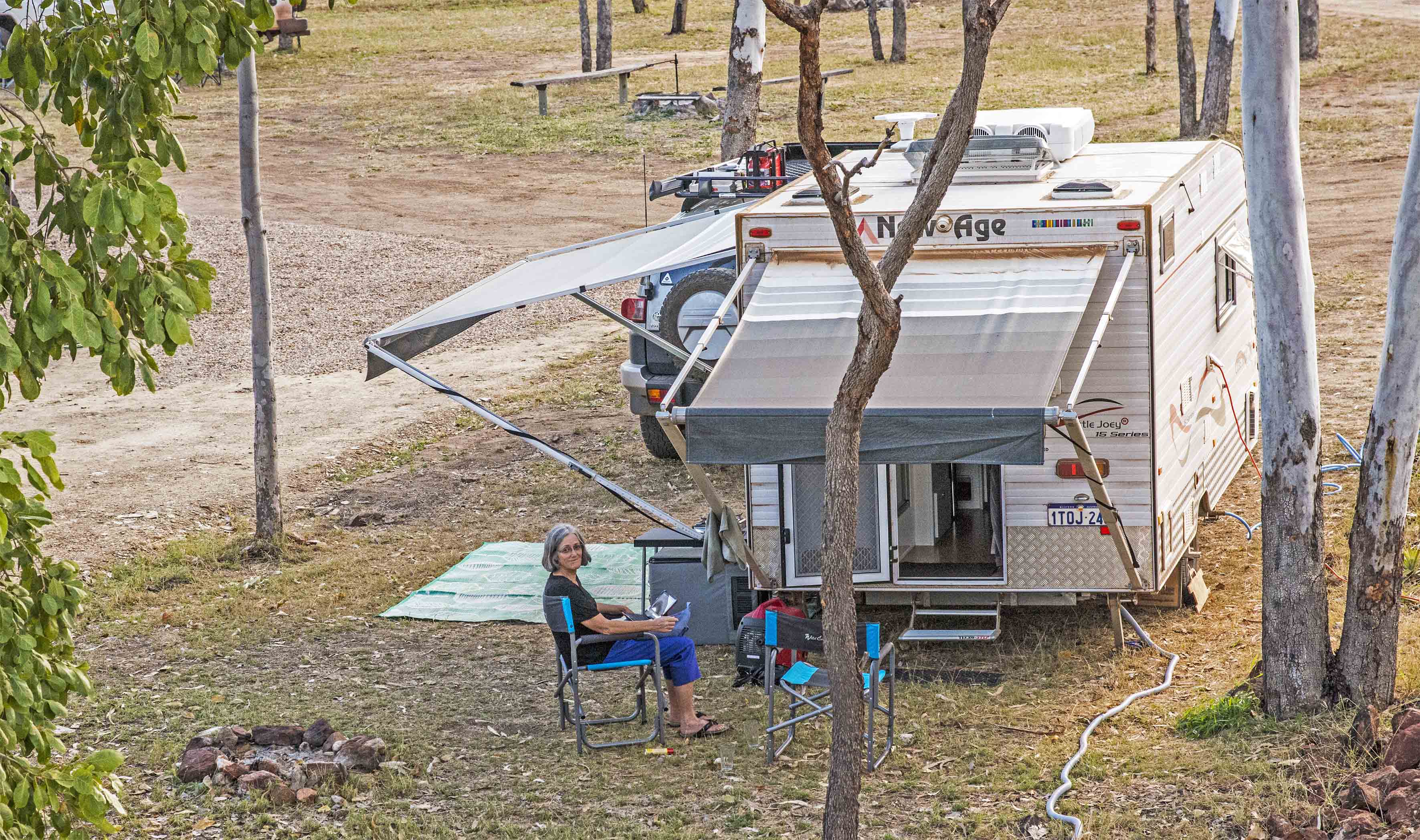
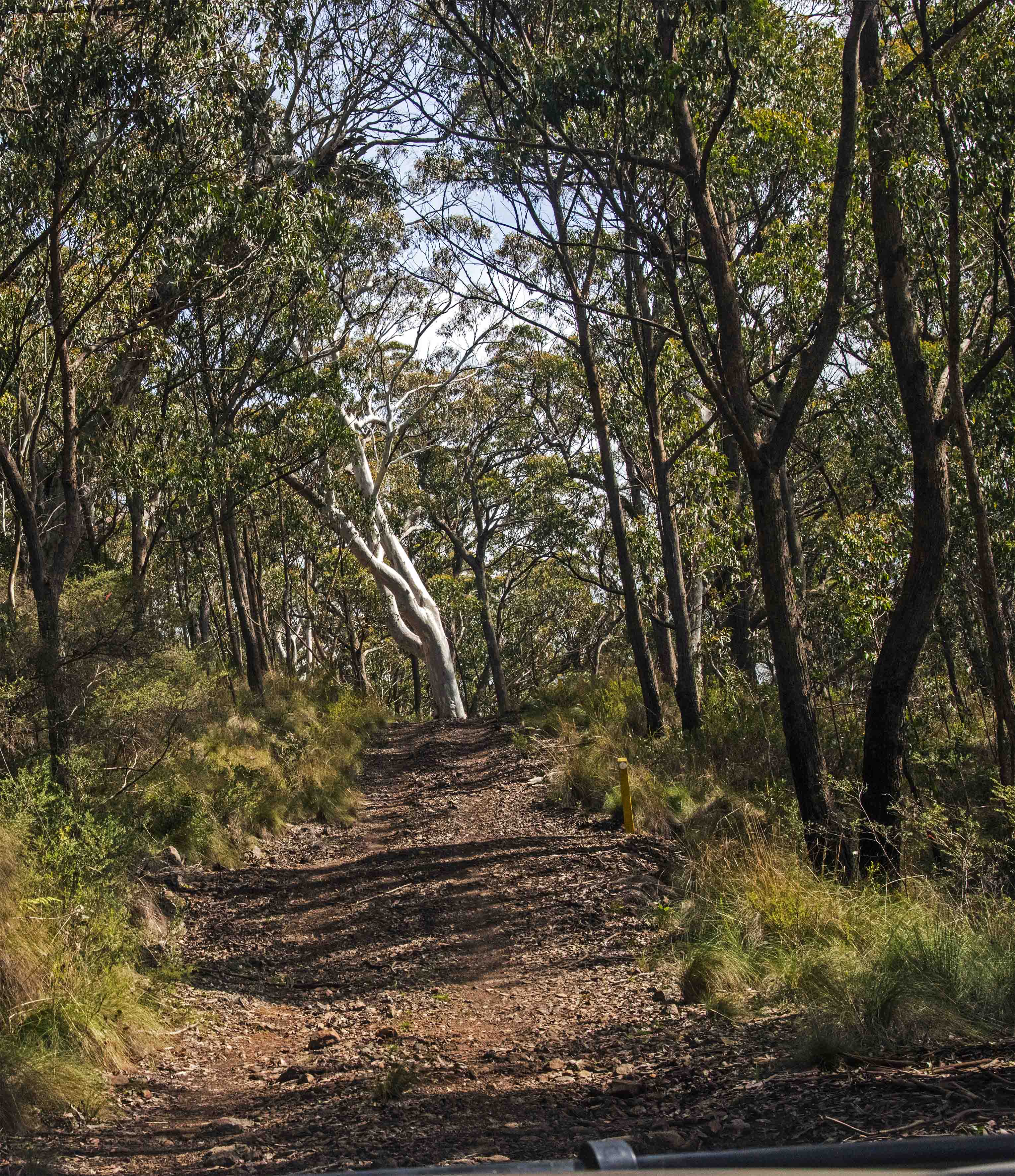
Then off on the 42 km trip out to Cobbold Gorge. The owners had warned us that there was a section of gravel road with some ‘hairy bits’ s ( two parts, totaling about 70km of dirt ). It was a slow trip with our caravan, but no problems. We lowered tyre pressures all round, car and caravan, and had a much more enjoyable gravel road experience…
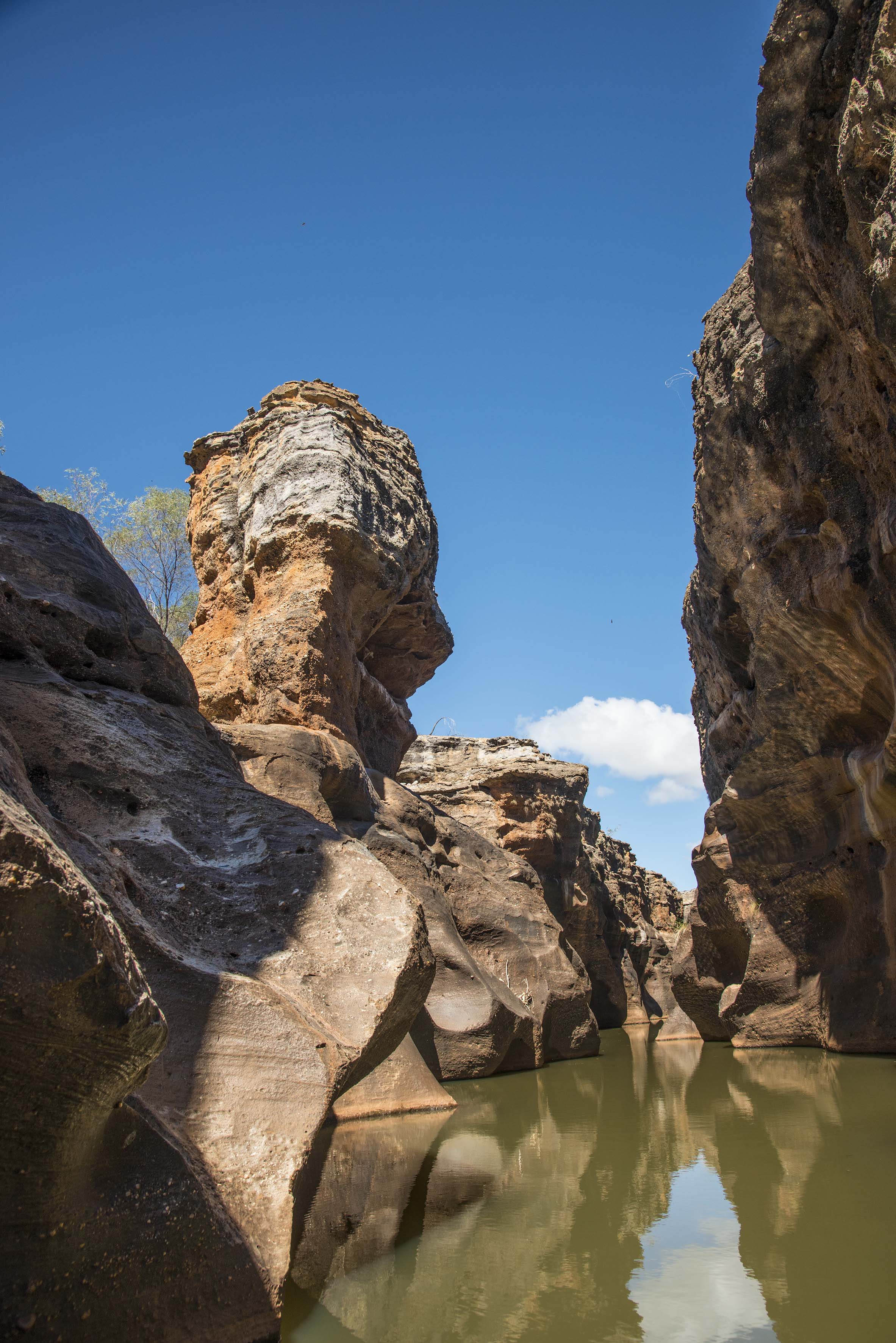
The Terry family own Robin Hood station and provide access to tours on and around the gorge. Funnily enough, they had always swum in a local waterhole but hadn’t realised it was fed by this beautiful gorge. It wasn’t discovered until 1994 when one of the sons went exploring in a dinghy!
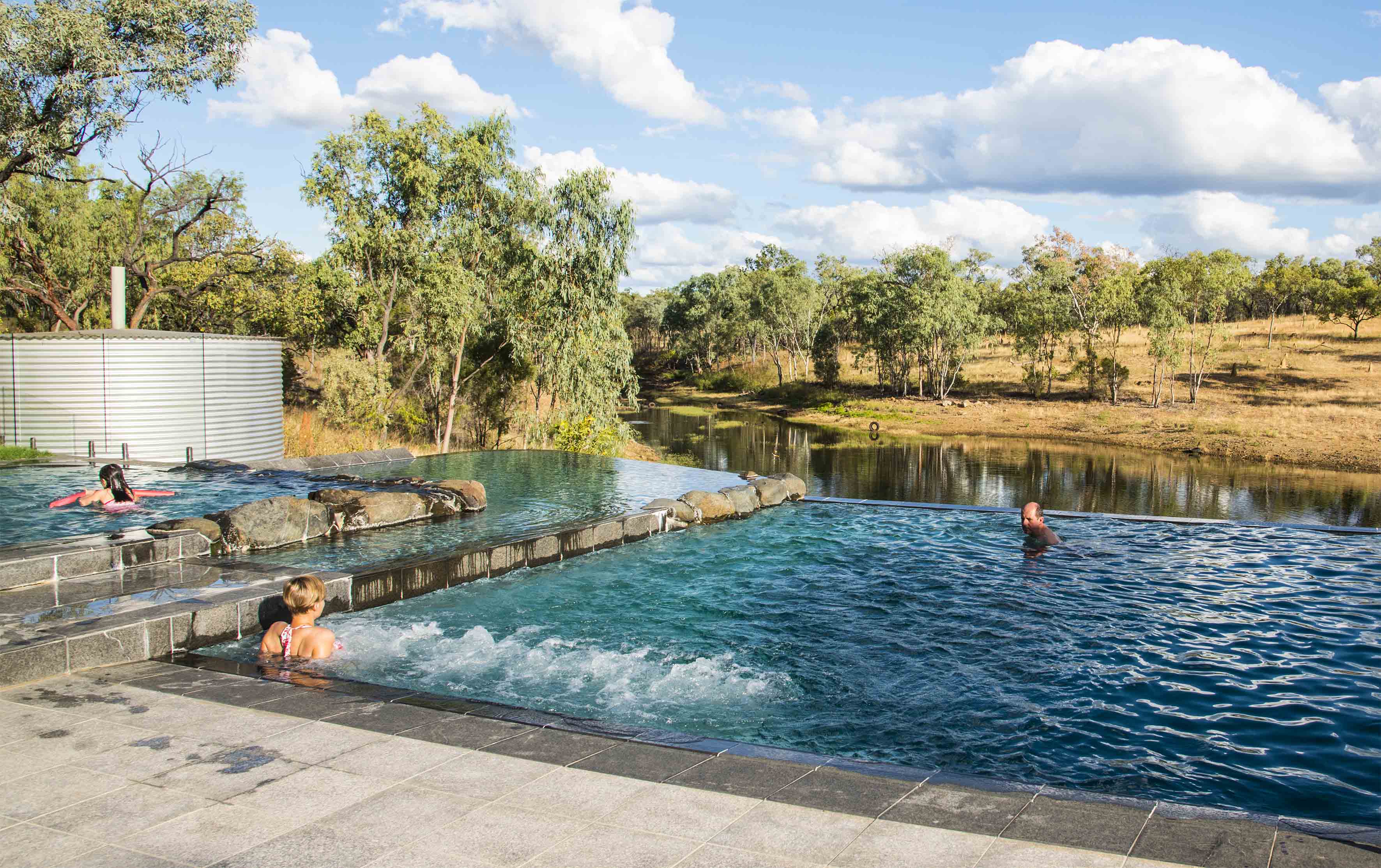
The rest as they say is history, and the whole experience was very pleasant – think real outback, dusty roads, hot temperatures … and contrast this with an infinity pool overlooking tall gum trees, a great bar and really skilled staff and guides. As well the caravan park was very quiet with a lot of bird life and trees.
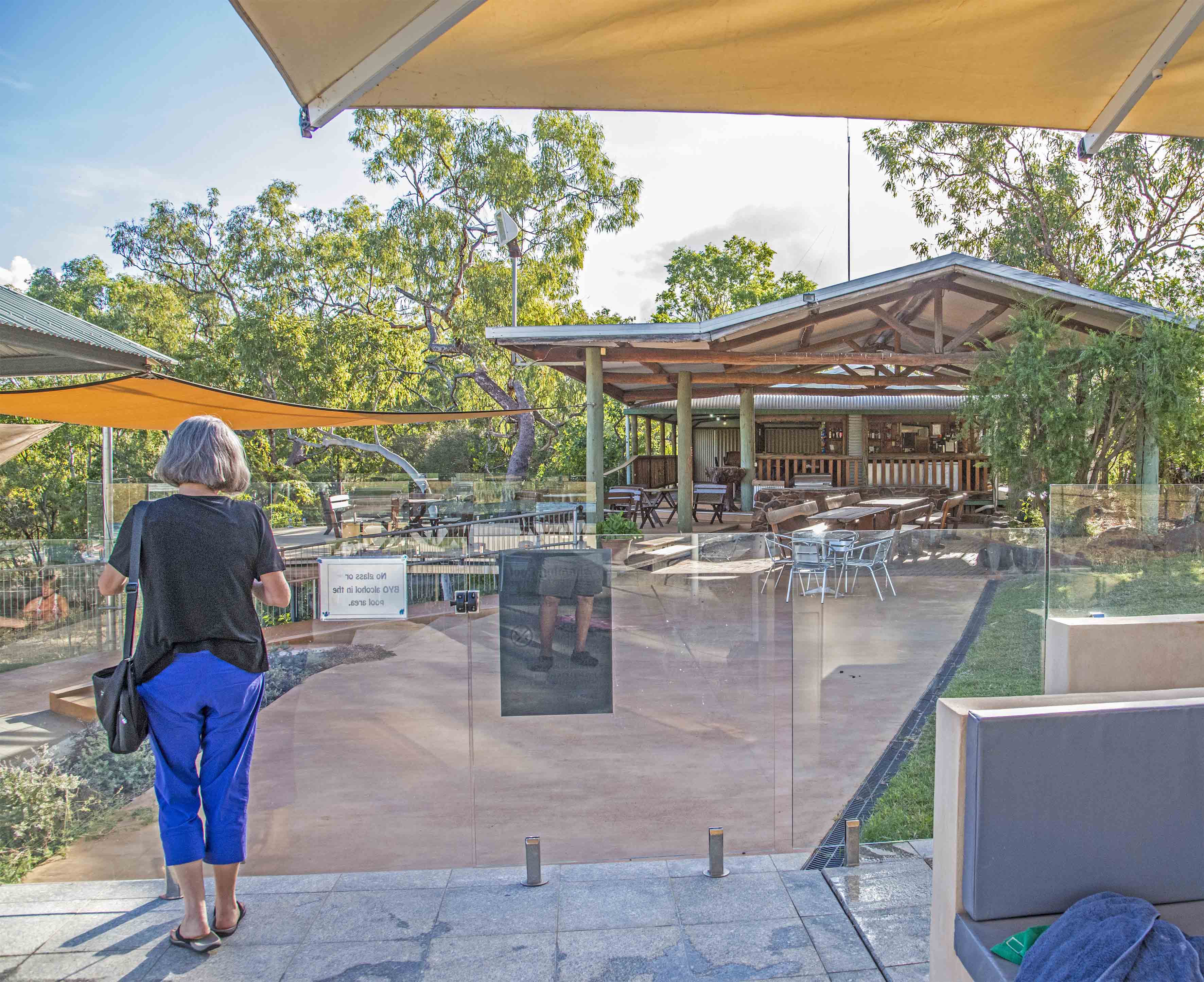
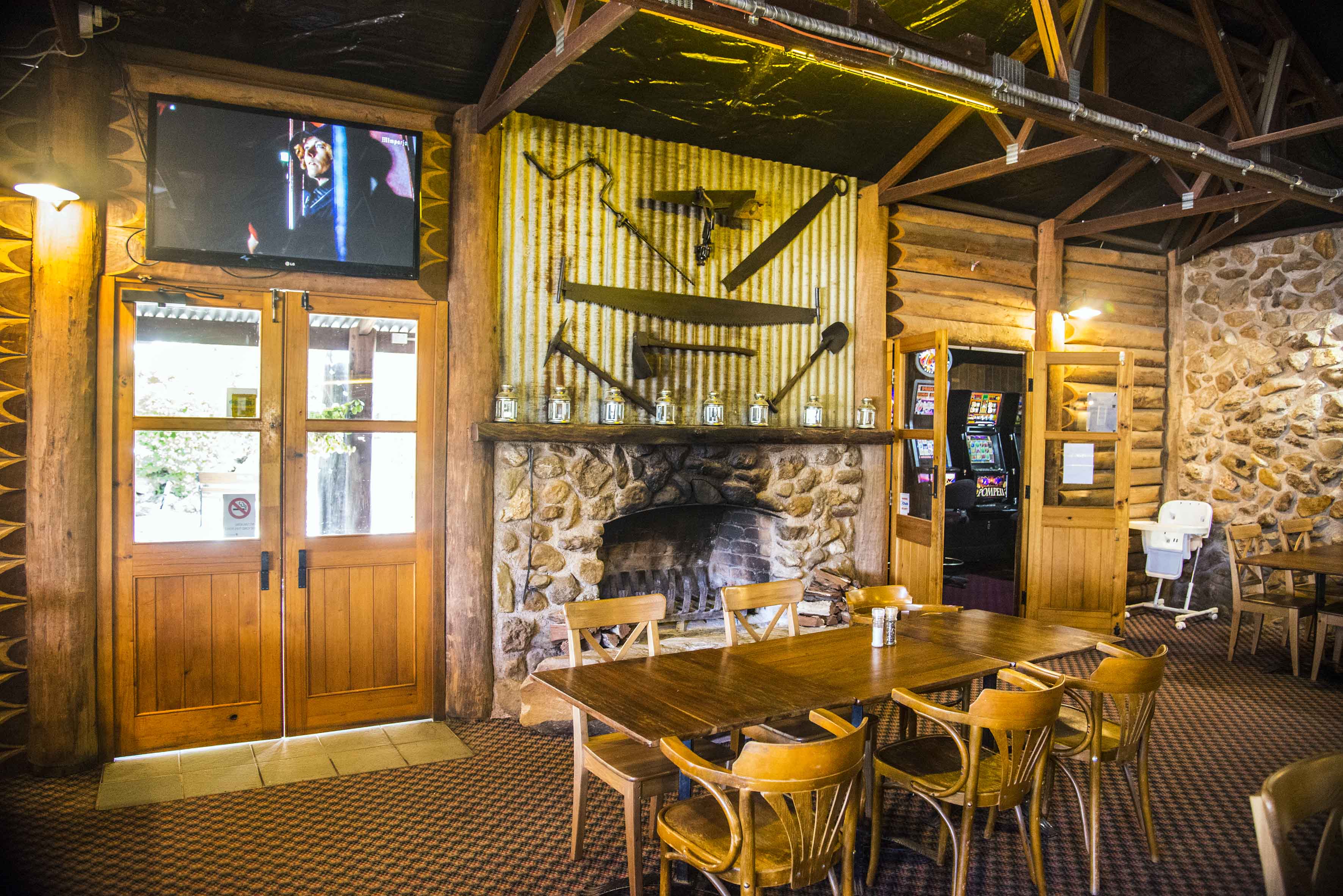
Bar Cobbold 4
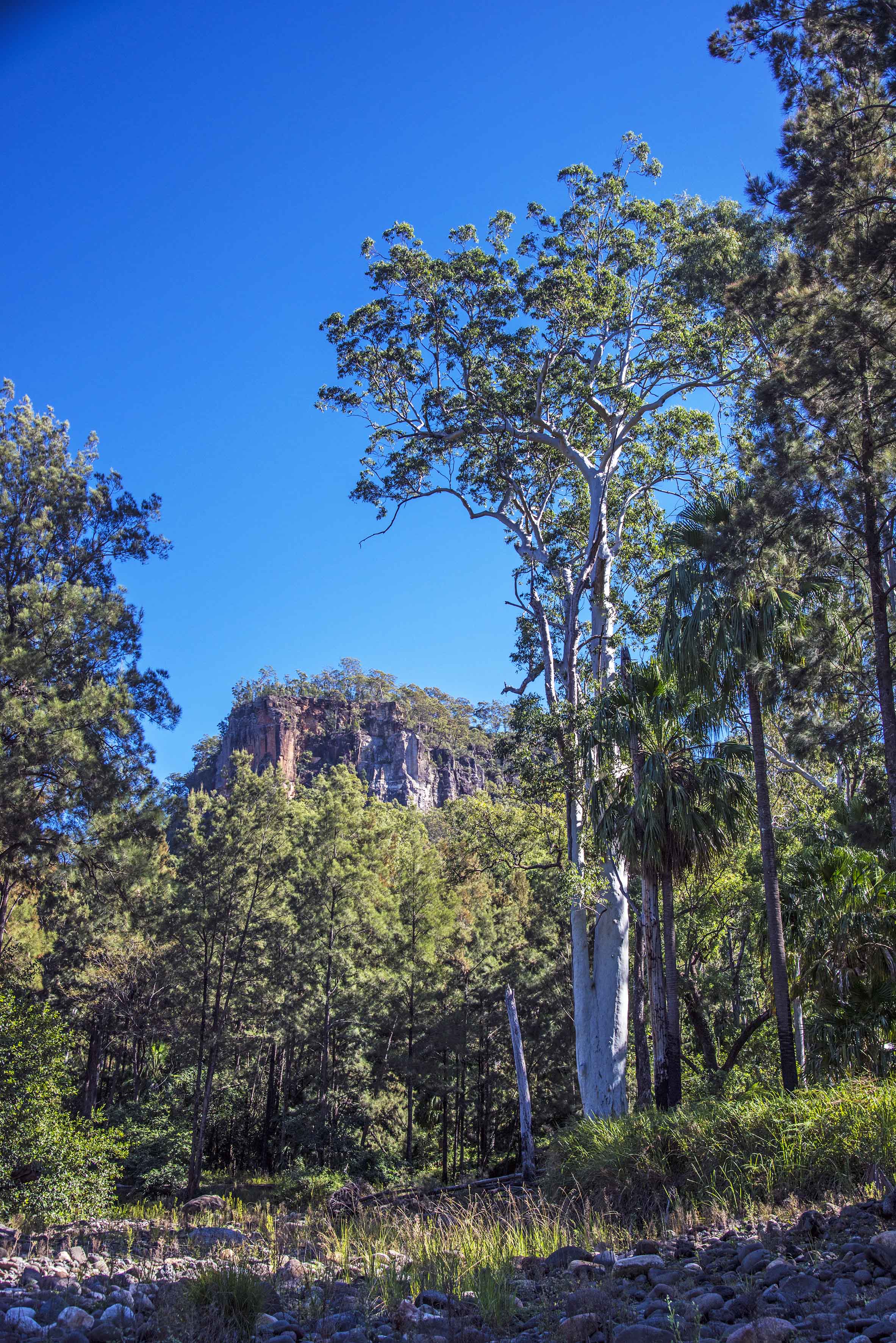
Cobbold 2
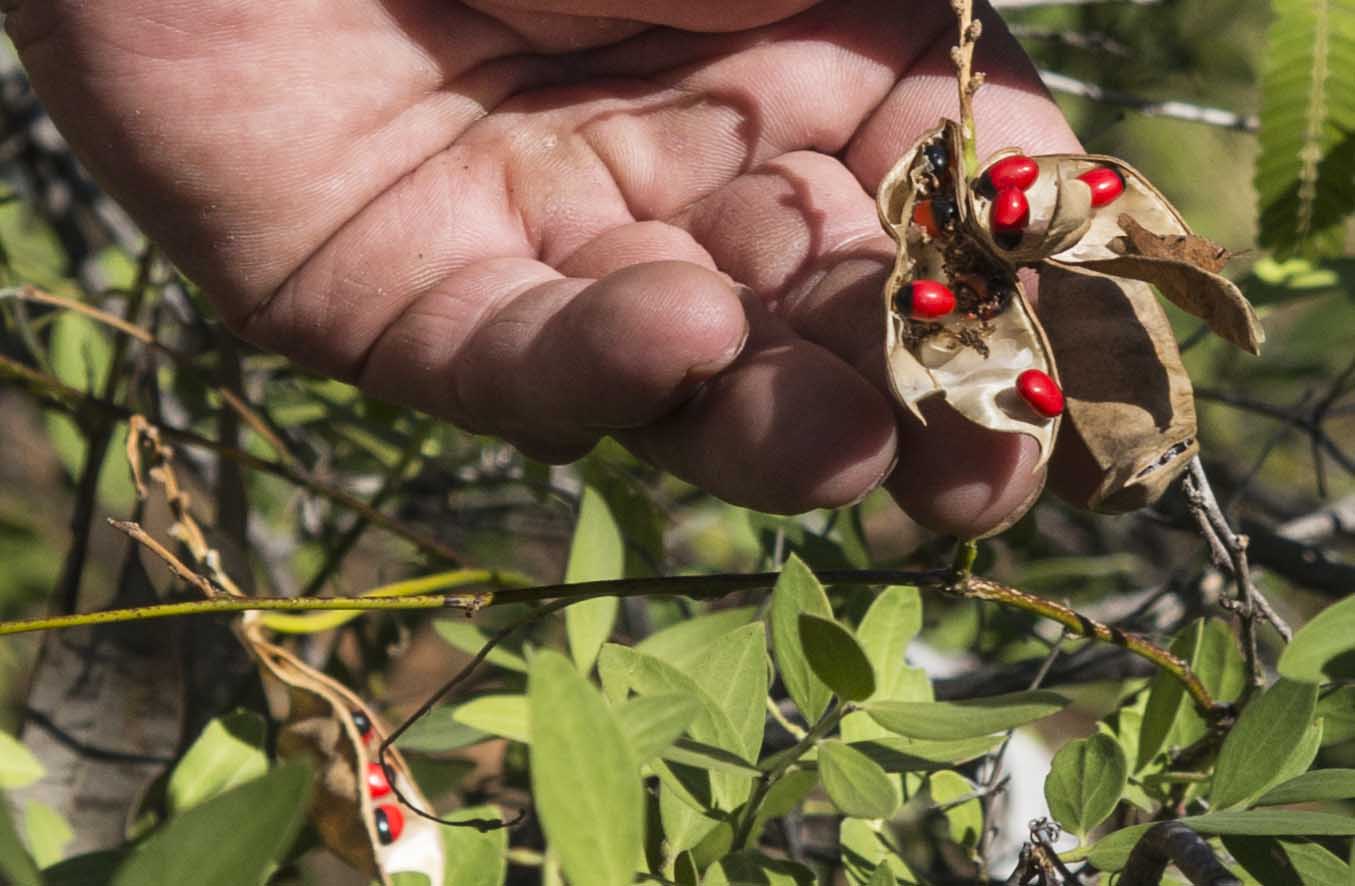
The 3 hour tour started with a bush walk and our tour guide Alex spoke about the local plants and their various uses by local Aboriginal people – fascinating, and subtly different to what we know from living in the Kimberley region.
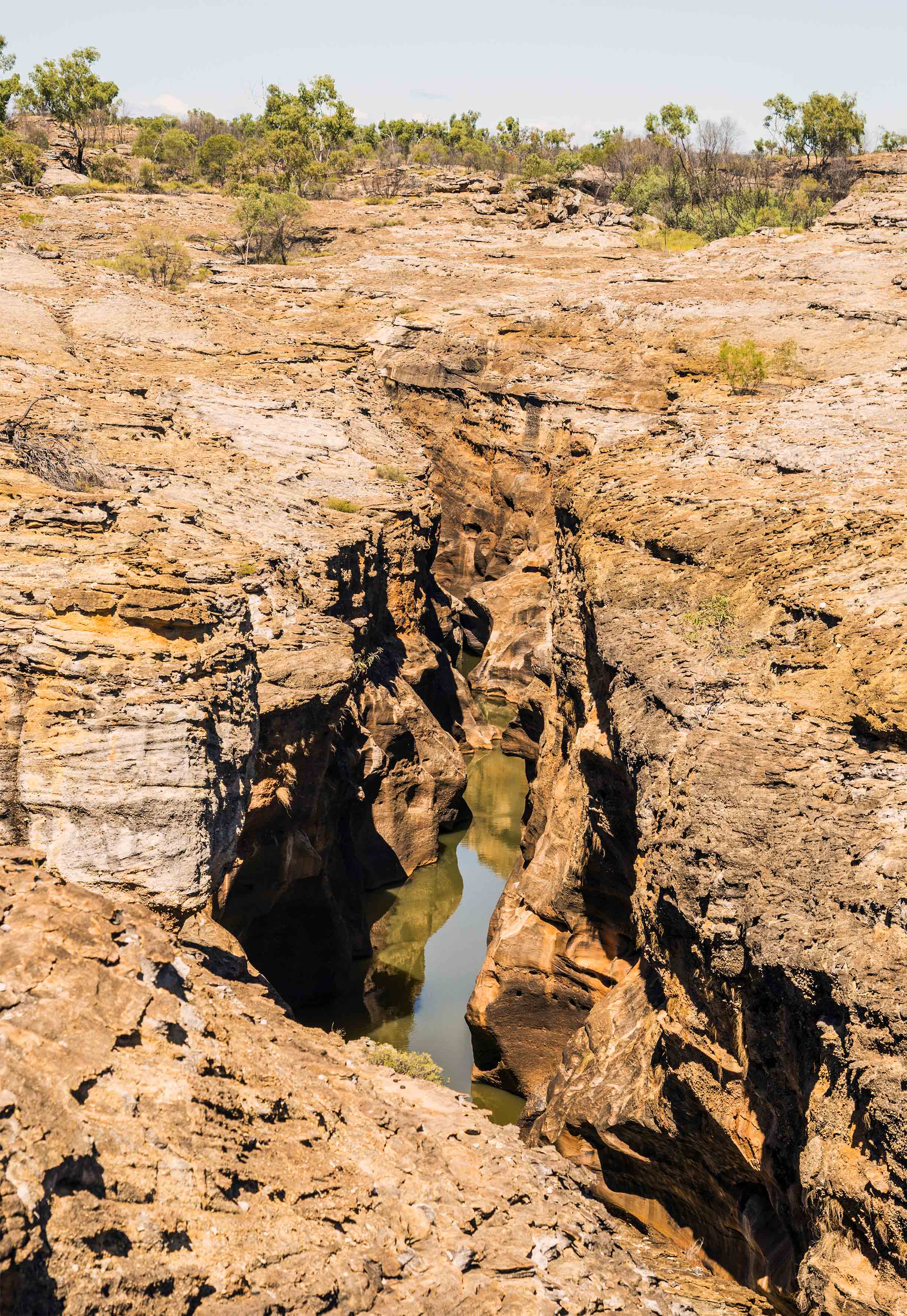
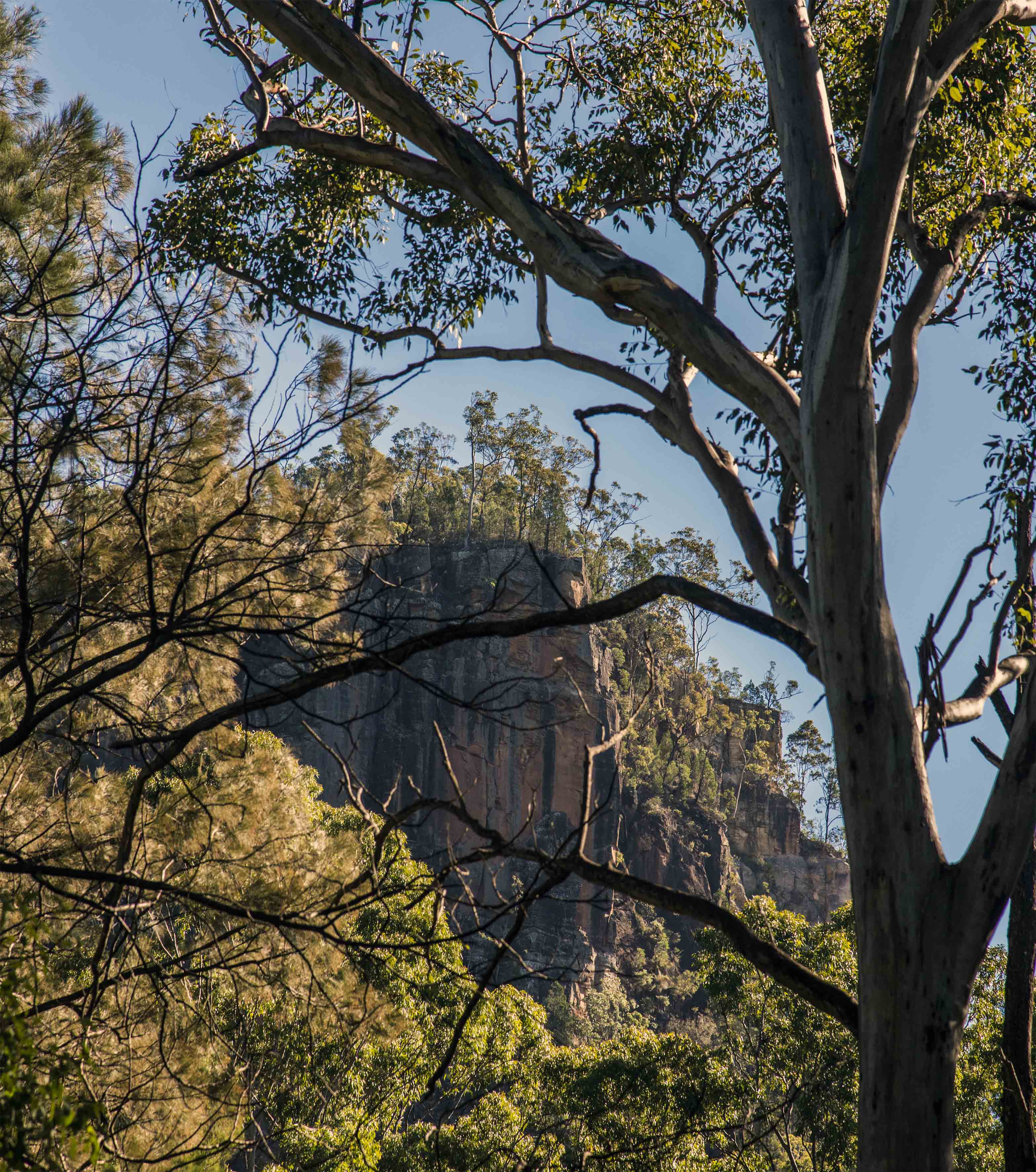
Cobbold gorge 1
Cobbold gorge 7
Gidji-gidji berries
Cobbold gorge 5
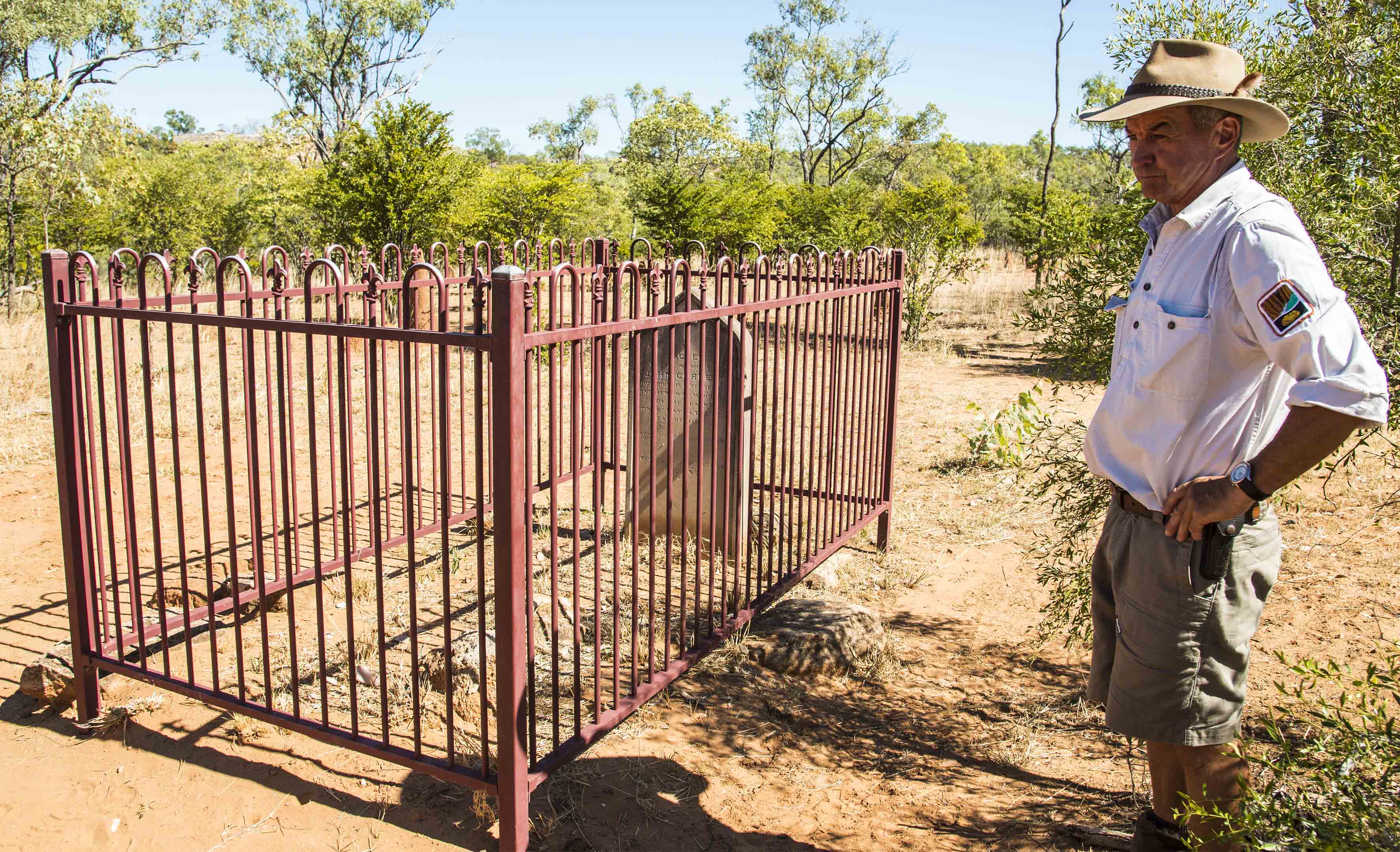
The grave of John Corbett was near the banks of the Robertson River. His gravestone reads that he had been “murdered by blacks” but in retrospect it is far more likely that he was set up and murdered by one or more Europeans after his gold. However the blame was laid on the local Aboriginal people and the authorities killed many men, women and children in what was described as a  ‘meritous retribution’. A chilling story.
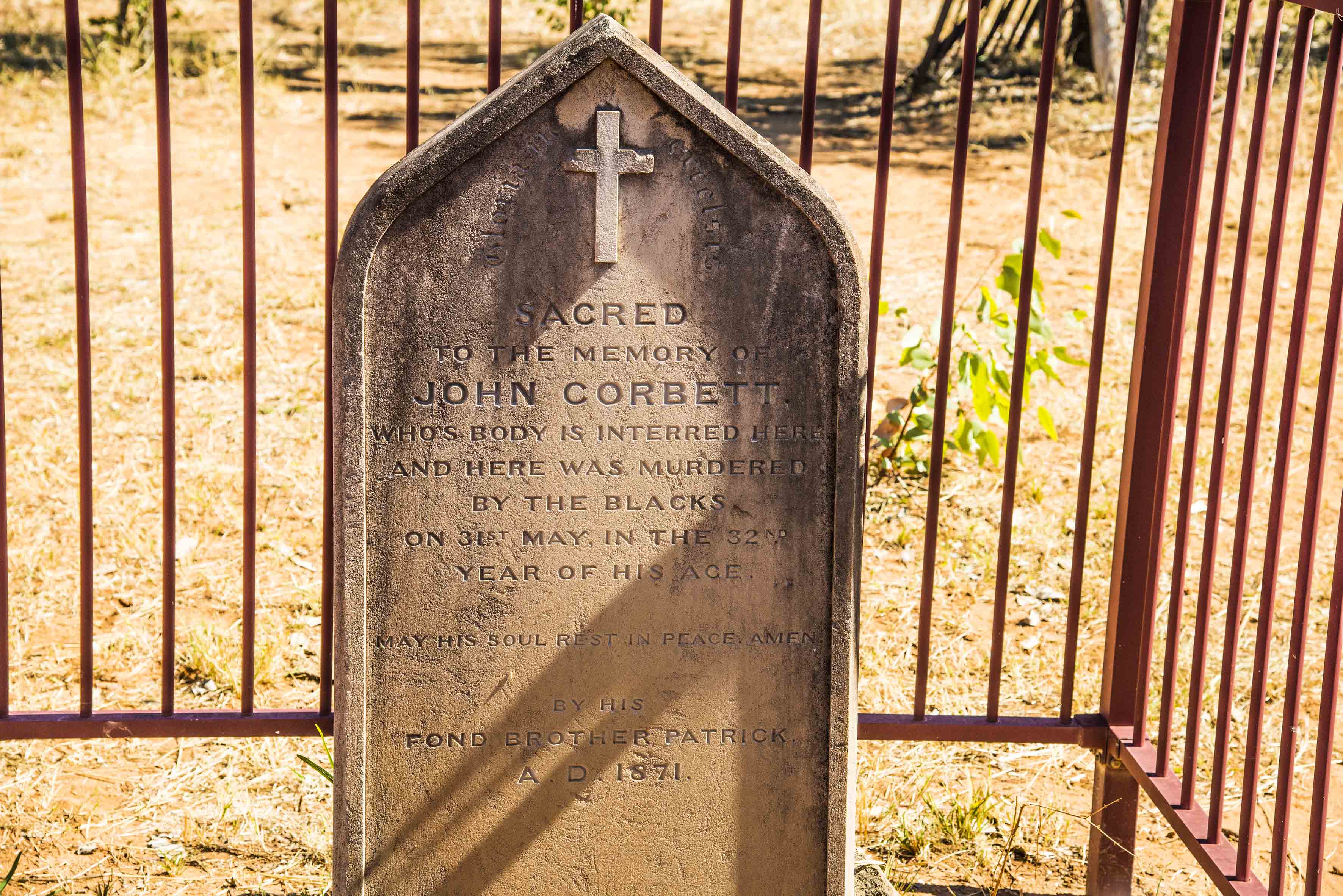
Grave Cobbold 1
Grave Cobbold 2
A visit to the butterfly caves was a great chance to see a multitude of the Common Crow or oleander butterflies hovering all around us – such beautiful creatures.
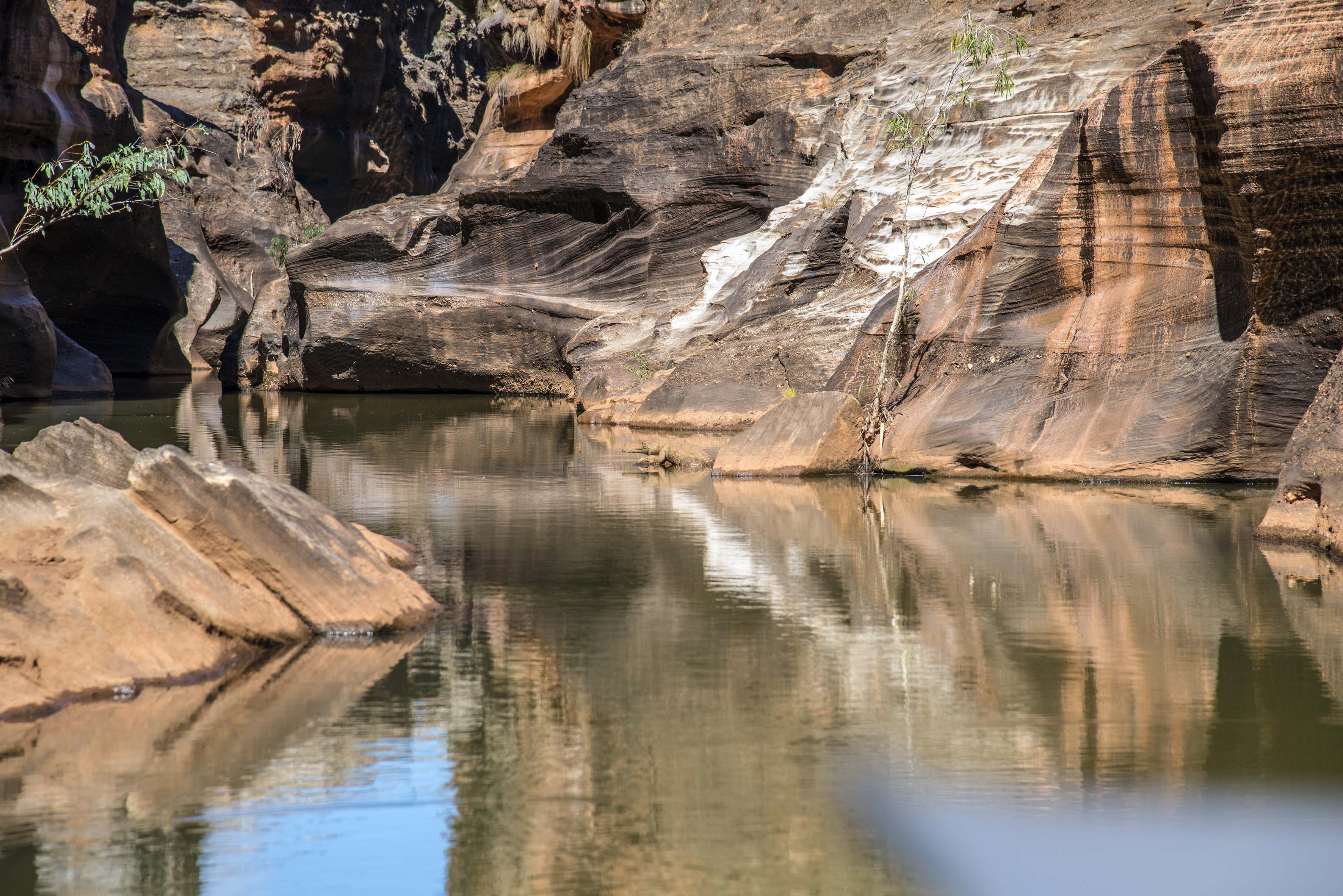
Next was our trip up the very narrow gorge in an electric pontoon about 6 foot wide. As it was so quiet we were able to sneak up on Clyde the Freshwater Crocodile, sunning himself!
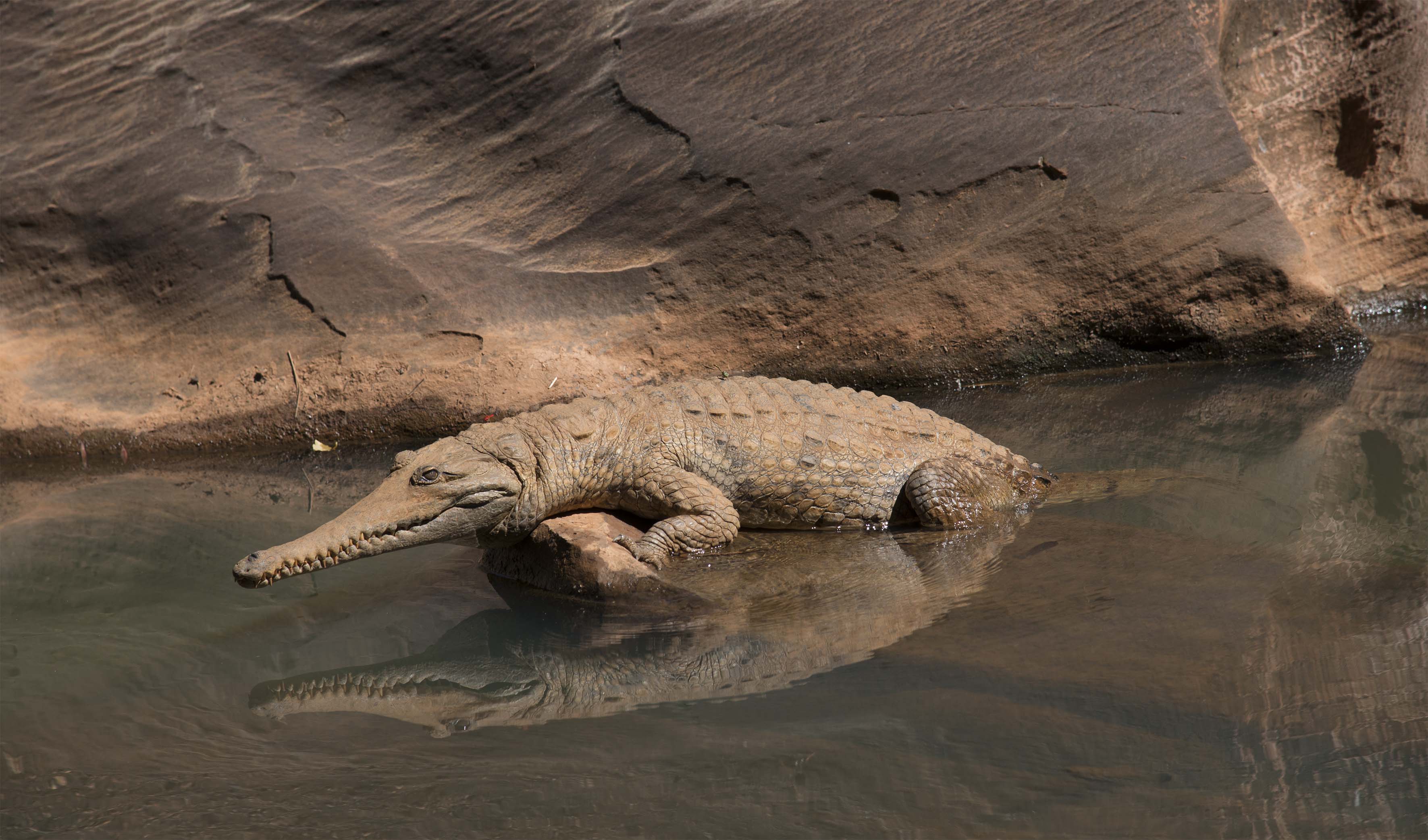
Cobbold gorge 6
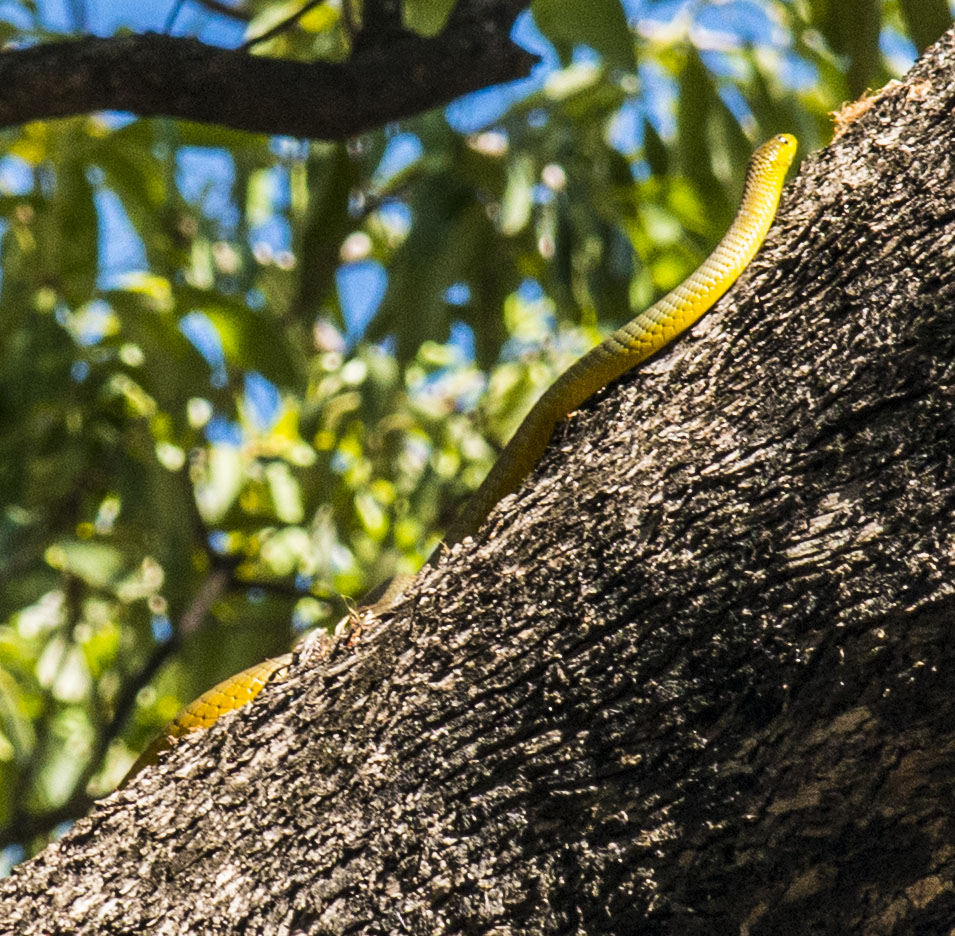
And the very pretty green tree snake making himself scarce…
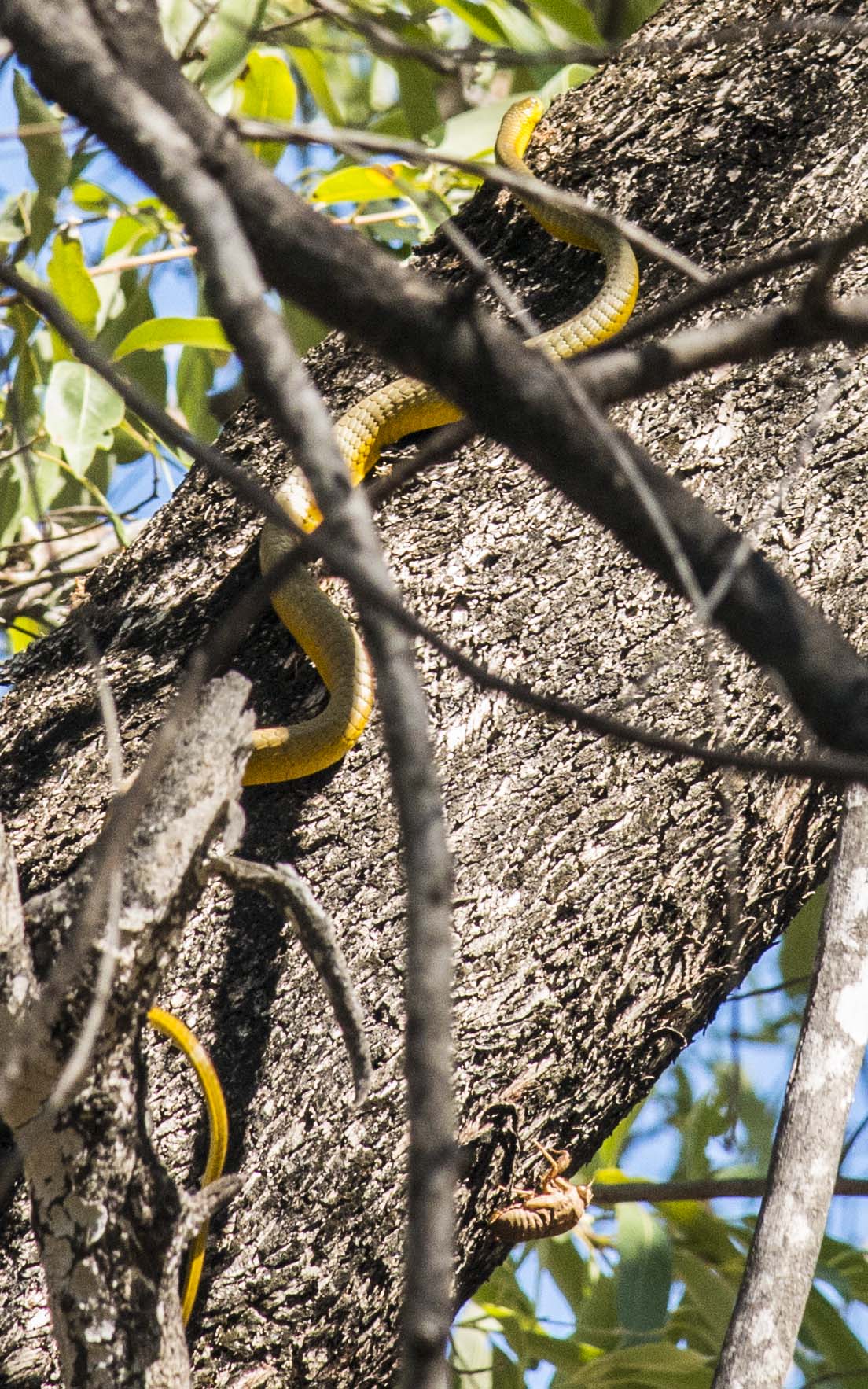
Green tree snake 1 Green tree snake 2
The good news is that both Undara and Cobbold Gorge can be visited without 4WD access or even a vehicle! We met several people who had travelled from Cairns on the Savannah Lander, an amazing outback train tour coordinating tours with all these interesting places. Great for overseas visitors, or anyone who is a bit over being on the road….
The turn off to both Cobbold Gorge and the Undara Lava Tubes are from the Savannah Way, the highway that crosses northern Australia from Cairns to Broome. This is on our soon ‘to do’ list of trips… Maybe next year or 2016. Watch this space.
We would love to hear from anyone who has done this trip…
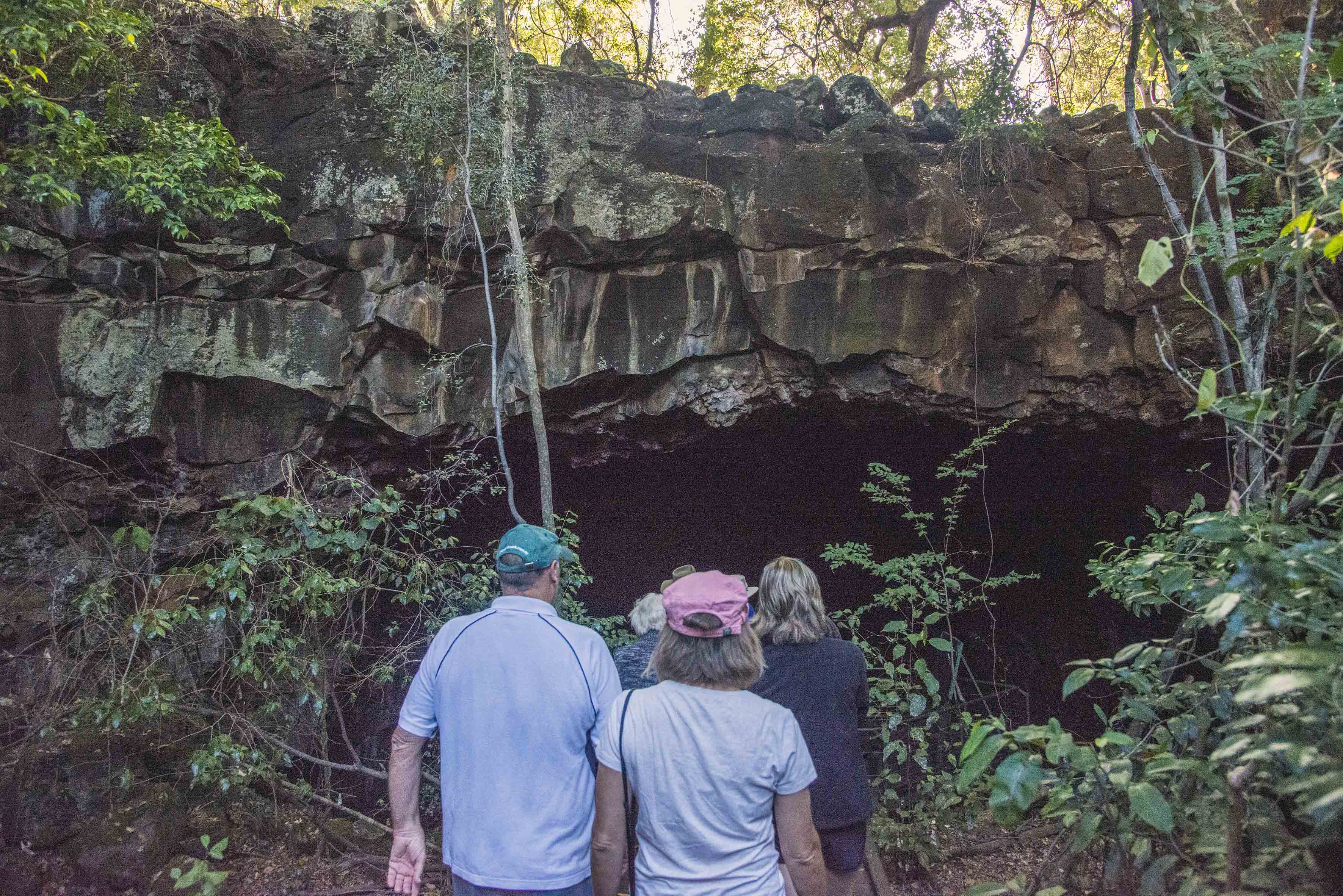
The Undara Experience!

We deviated from the Great Inland Way west to the Savannah Way to visit the Undara Lava Tubes as this trip had been highly recommended by the locals.
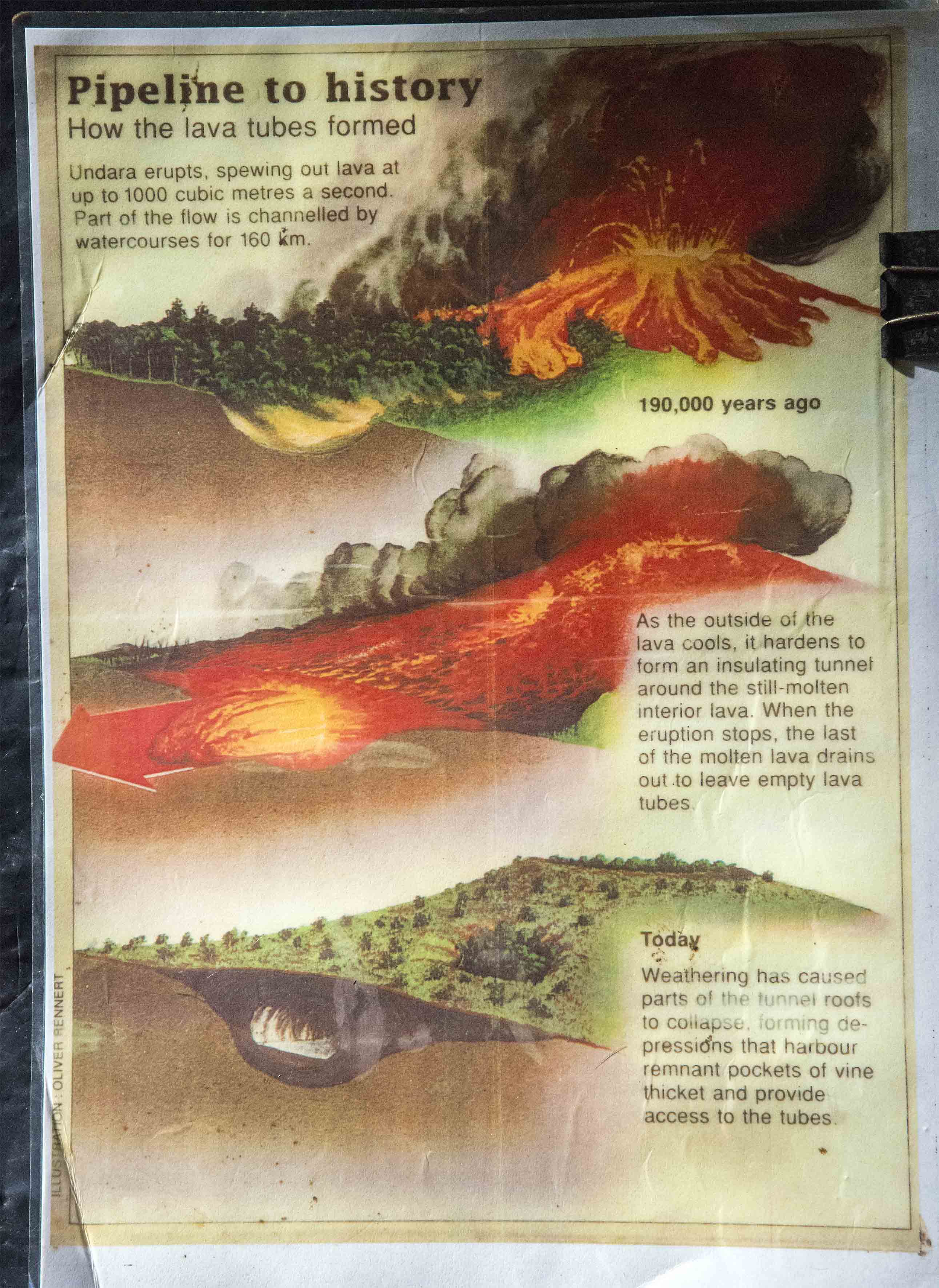
Back in 2008, we saw the ongoing lava flows on Big Island in Hawaii that ooze out to the sea creating huge steam plumes – very spectacular and basically what happened to form the lava tubes at Undara. The tubes are formed when a lava flow melts (1200C or more) the surrounding rock and then a crust forms of cooling lava over the liquid river… In Undara this happened thousands of years ago.
Lava tube 7
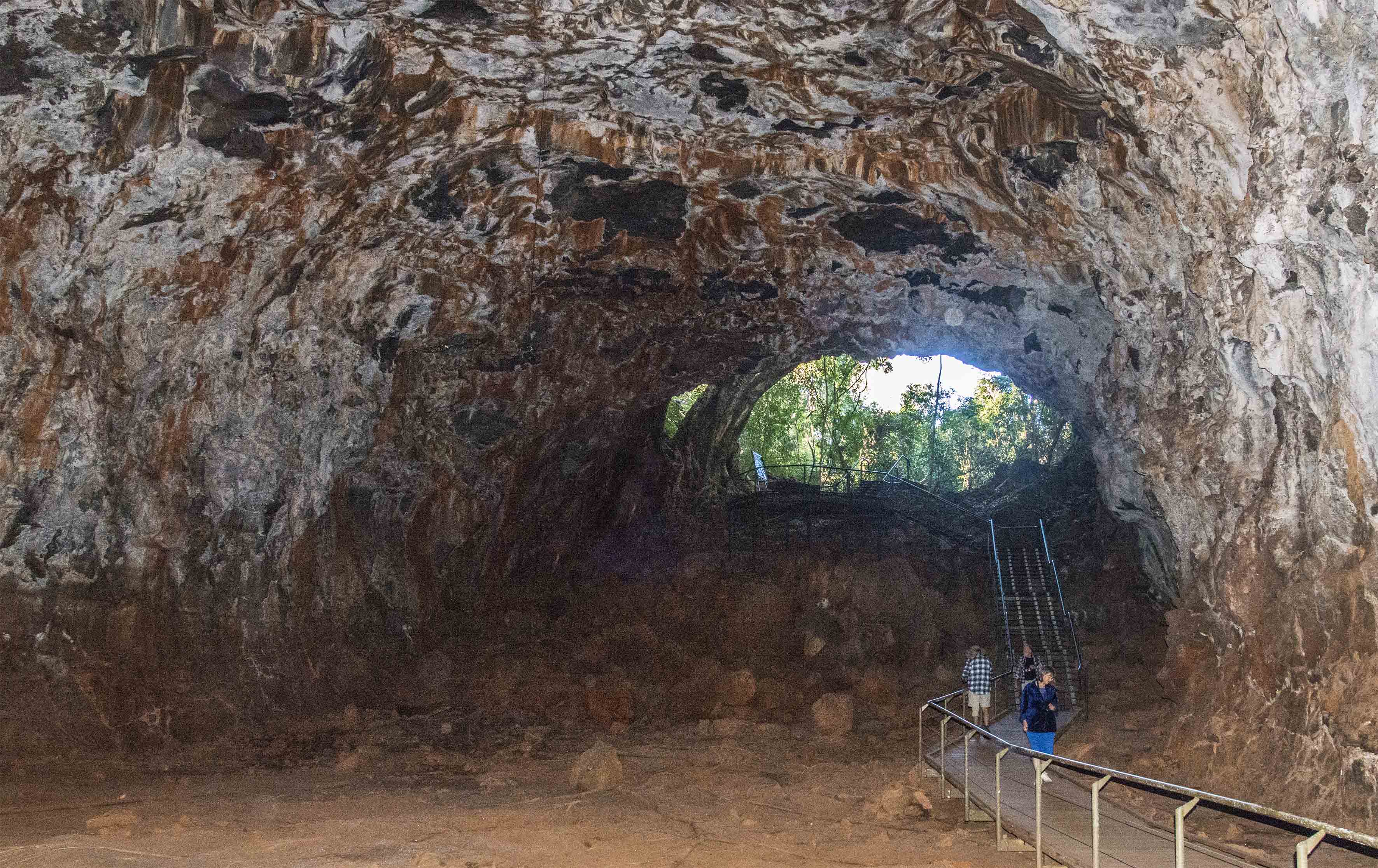
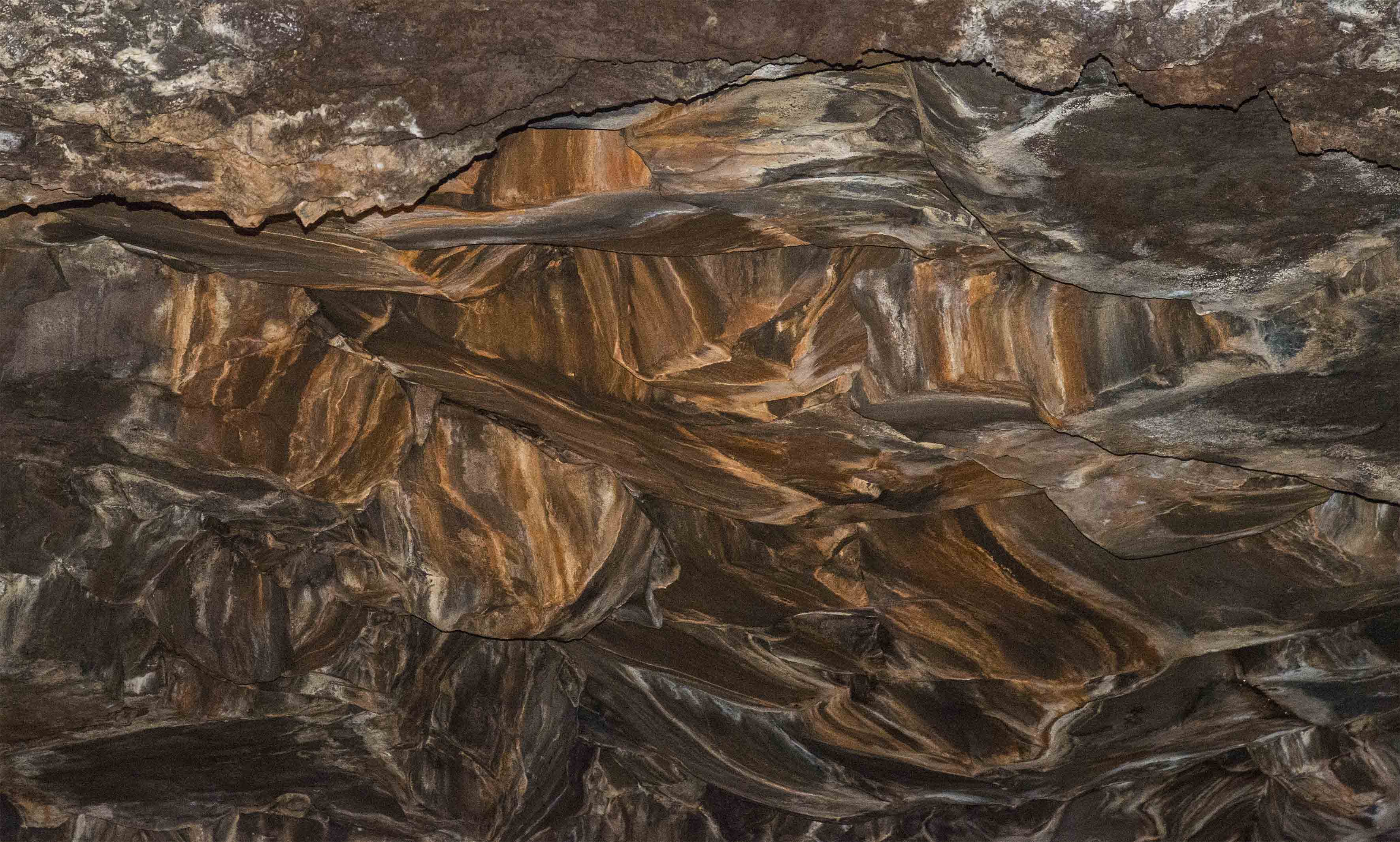
Our guided tour through these lava ‘tubes’ which were formed by one of the Earth’s longest lava flows was fascinating as we explored the beautiful underground caves and their very colourful rock formations. The entrance to these is where the tube roof has collapsed in places. These collapses are plainly visible from above as they have vegetation growing in them which has been spared the periodic fire that the plain above has experienced.
Lava tube 1
Lava tube 3
Lava tube 8
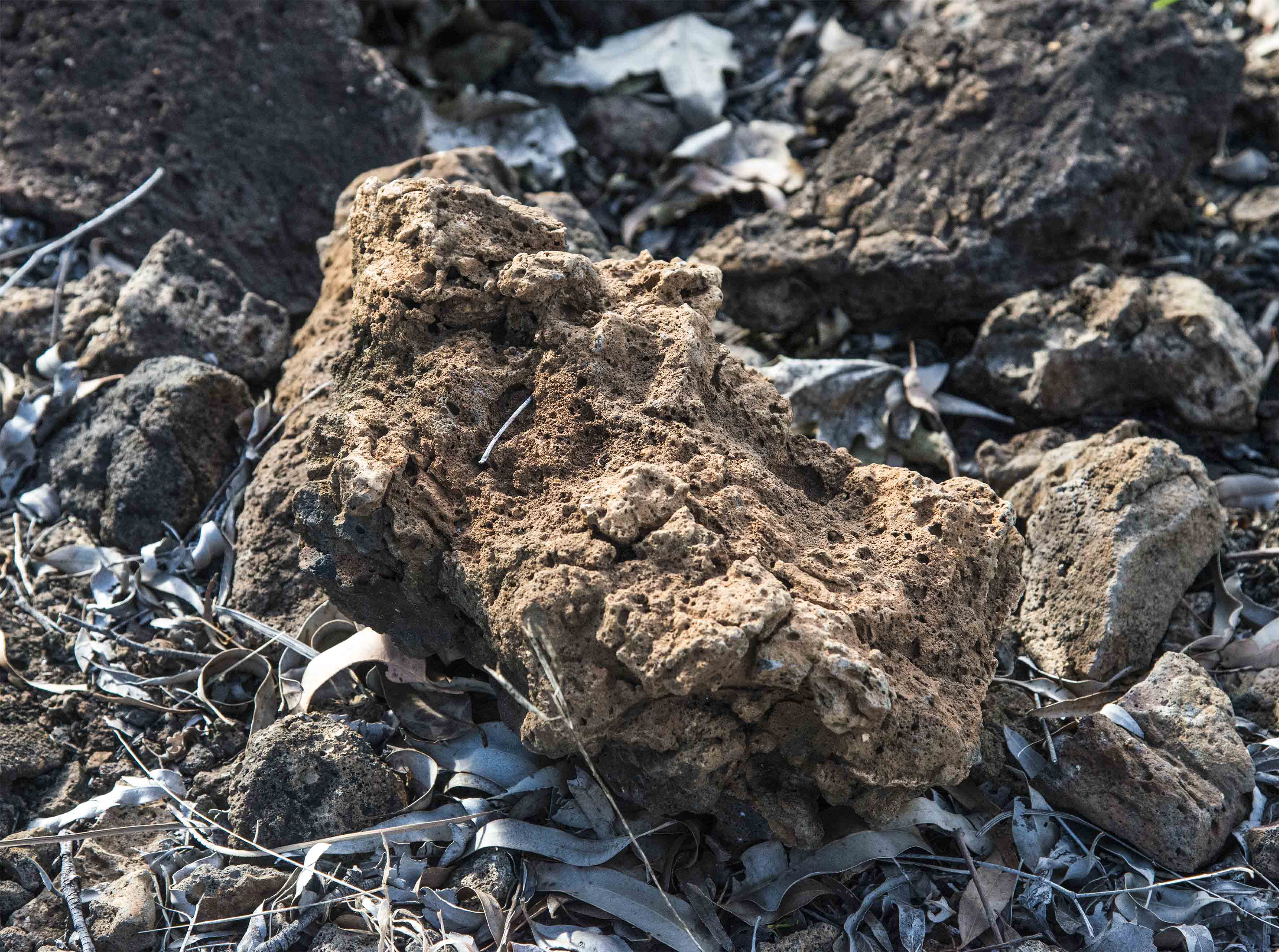
These ancient volcanic rocks cooled under different pressures – the scoria was full of gas and frothed like the head on a good Guinness whereas the granite was formed under intense pressure and now is as hard as a …rock really!
Undara 5
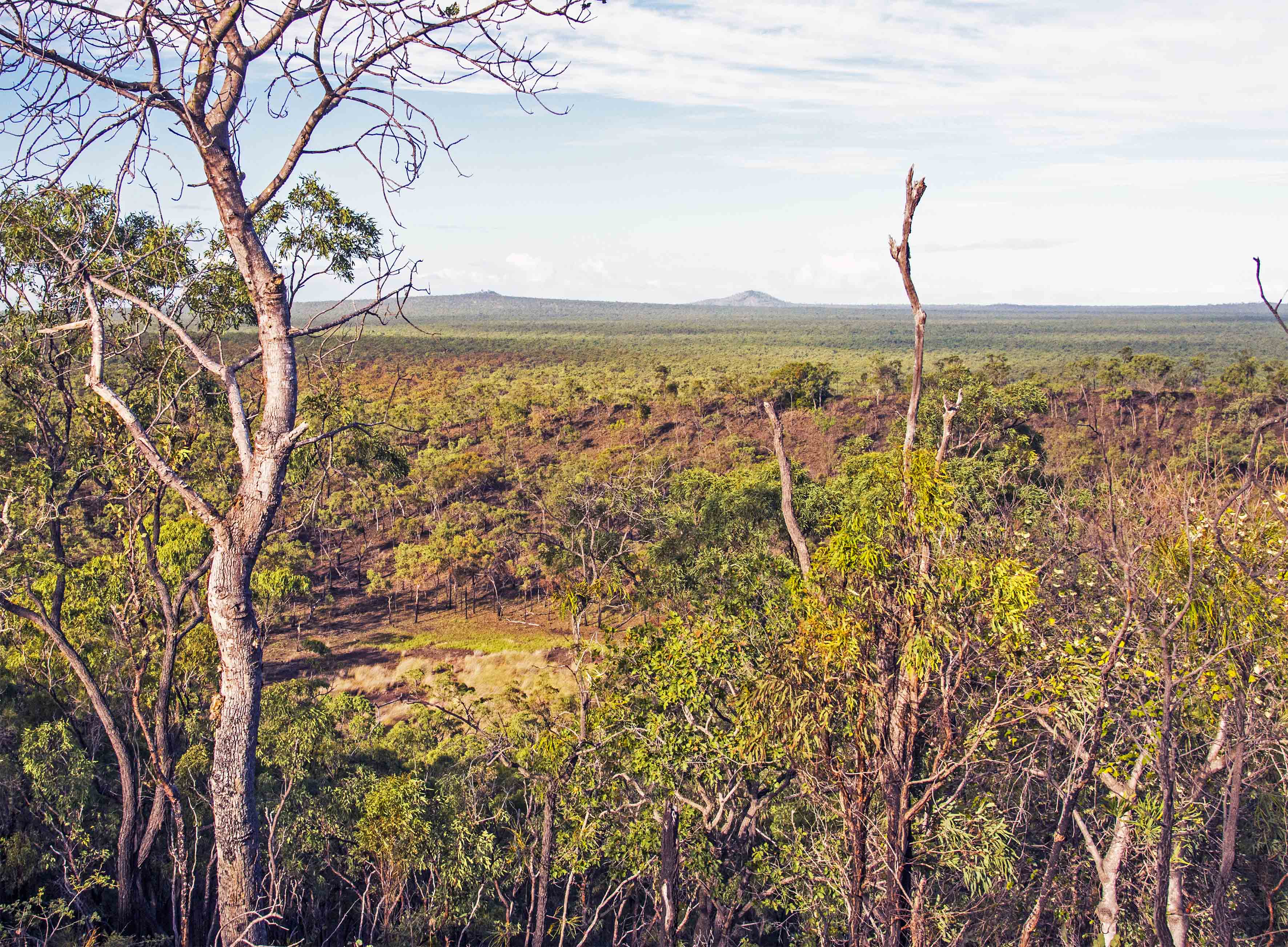
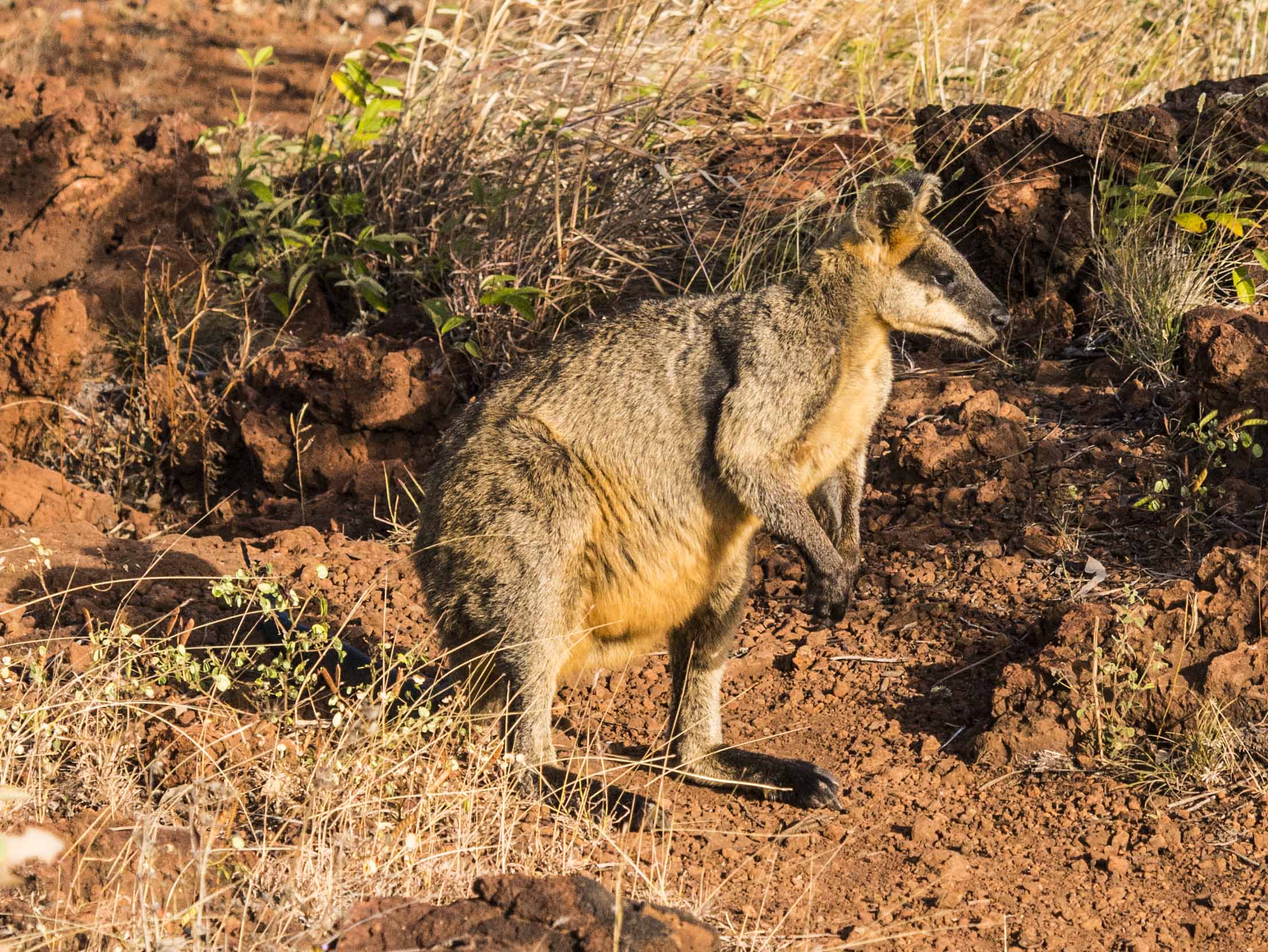
The nearby Kalkani Crater was a more traditional ‘fountain’ volcano and we walked up to the top and around the rim. This huge hollow is home to many birds and several species of wallabies that were new to us.
Undara 3 Rock walaby 2
Undara has many types of accommodation and tours and is the venue for the two annual music events; Opera in the Outback’ and the Outback Rock and Blues concert – what a magical place to visit!

Charters Towers

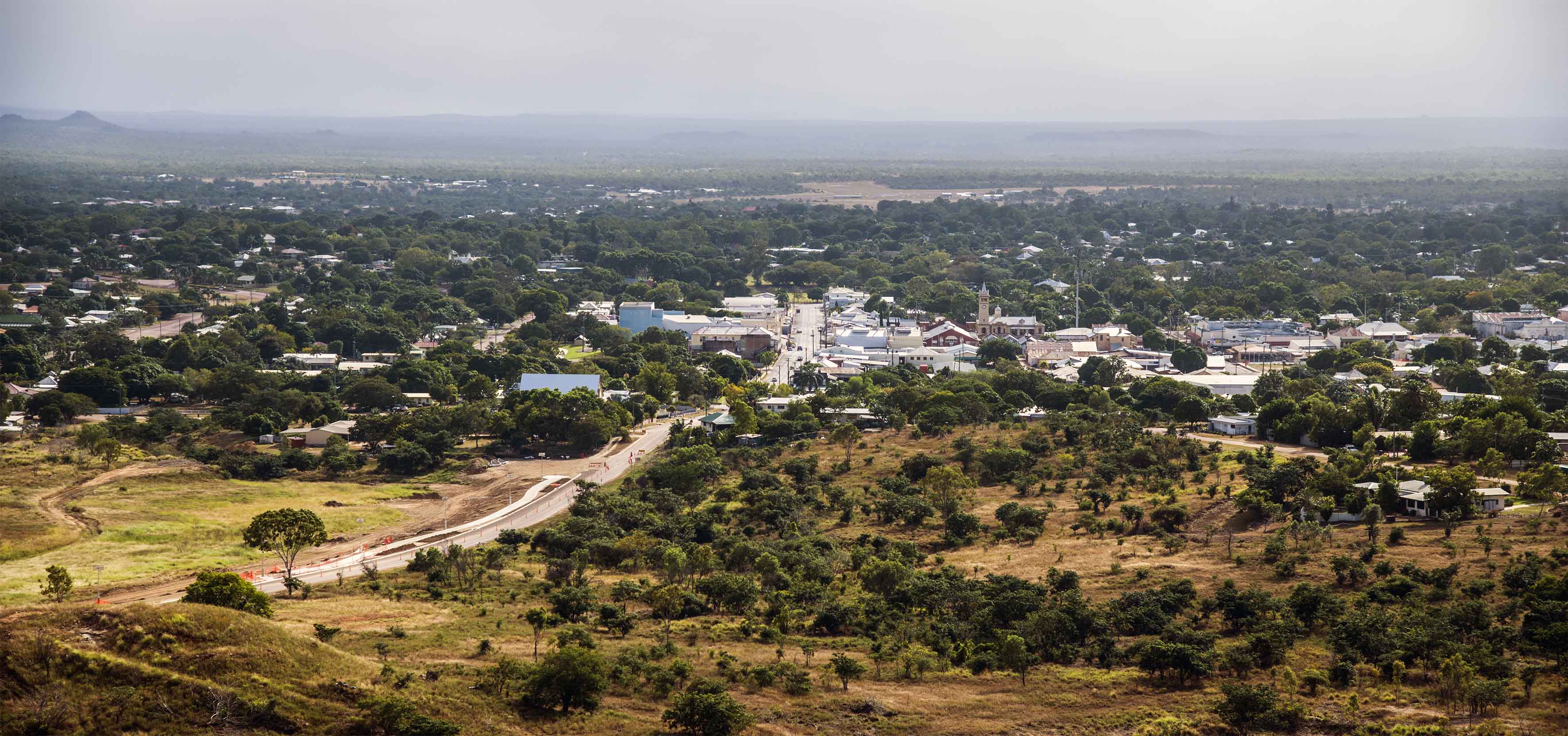
We immediately felt ‘at home’ in Charters Towers as the beautiful sub-tropical plants, trees and birds reminded us so much of living in Broome on the opposite coast of Australia – very similar sights, sounds and smells.

Charters Towers 1

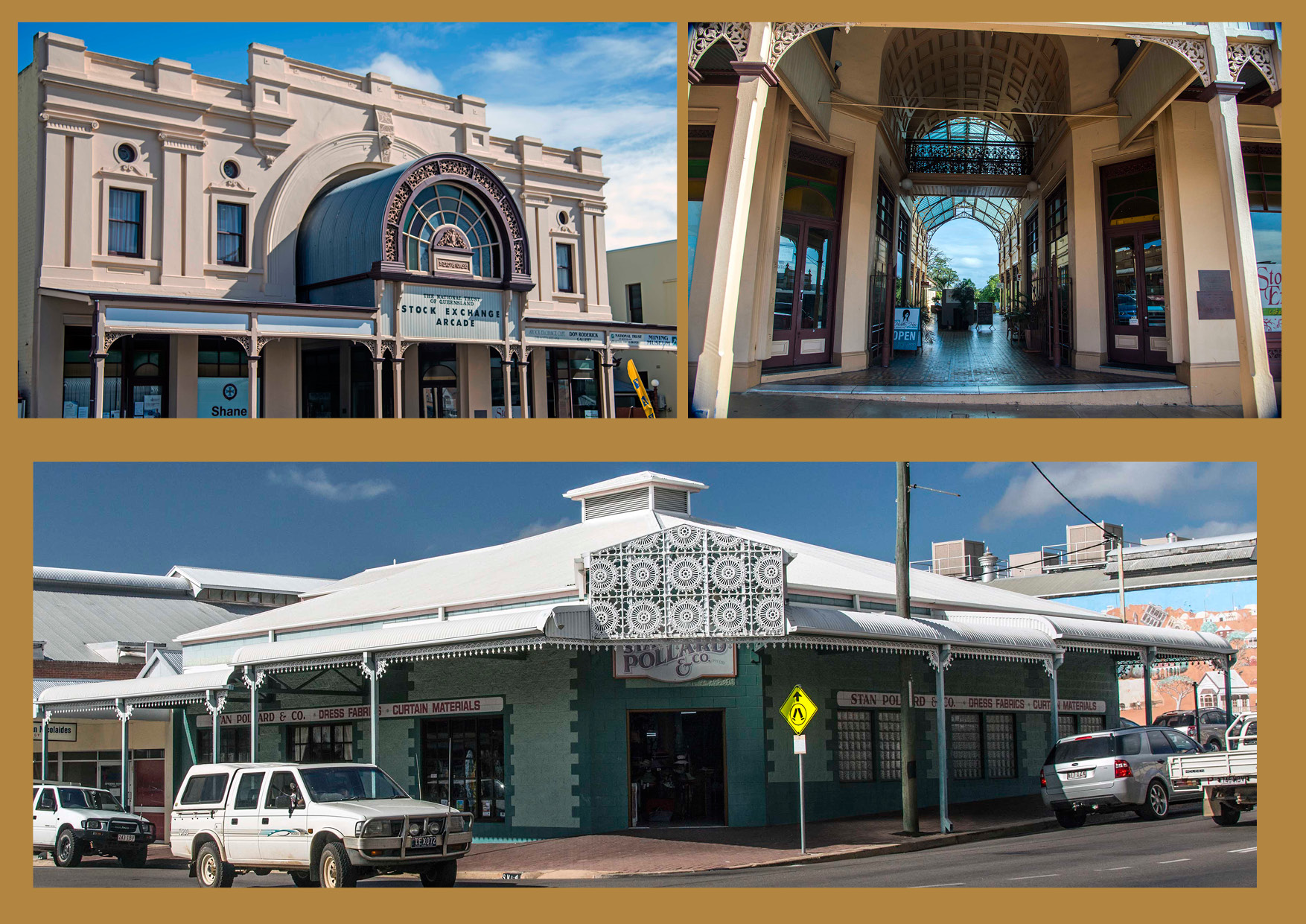
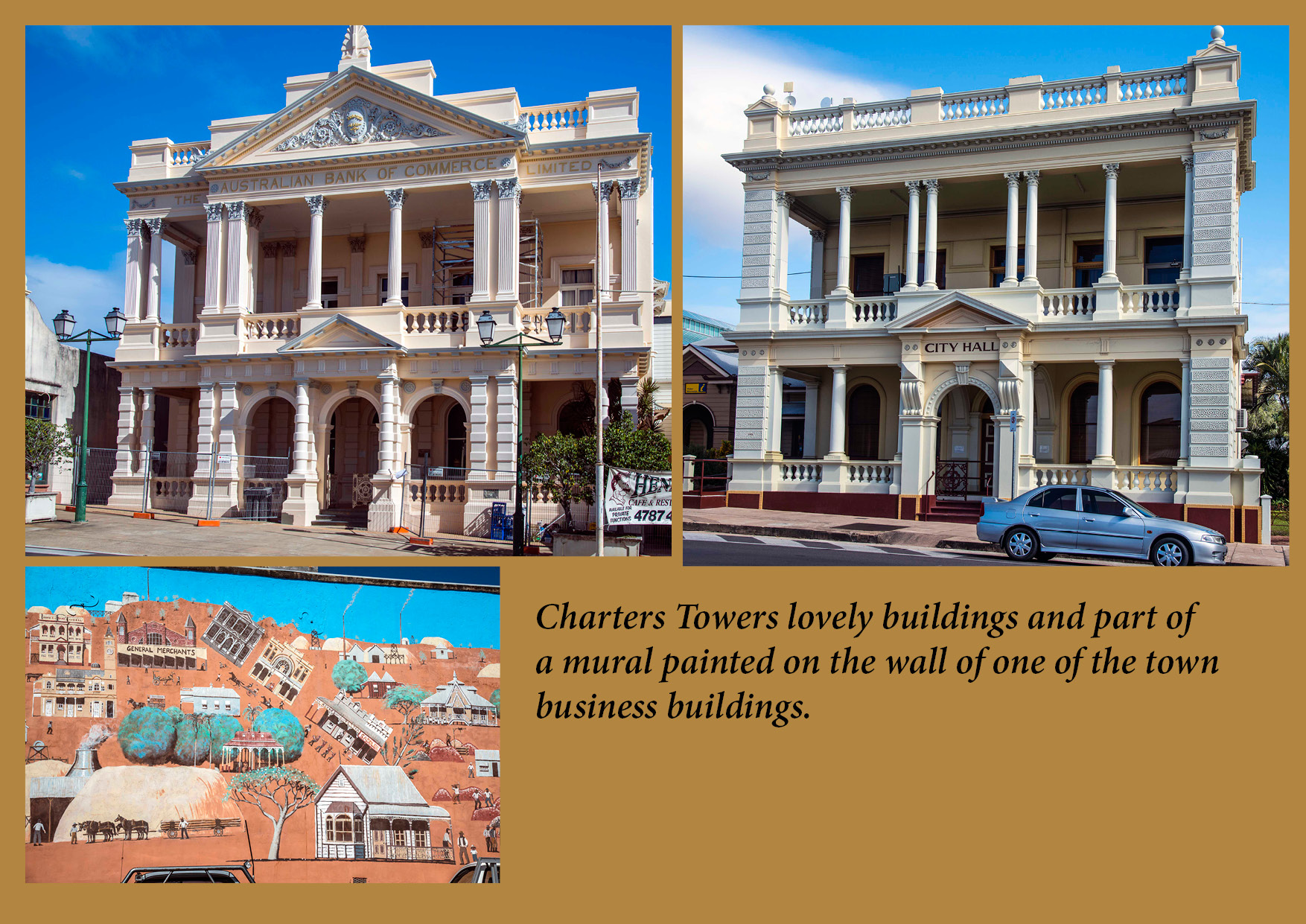
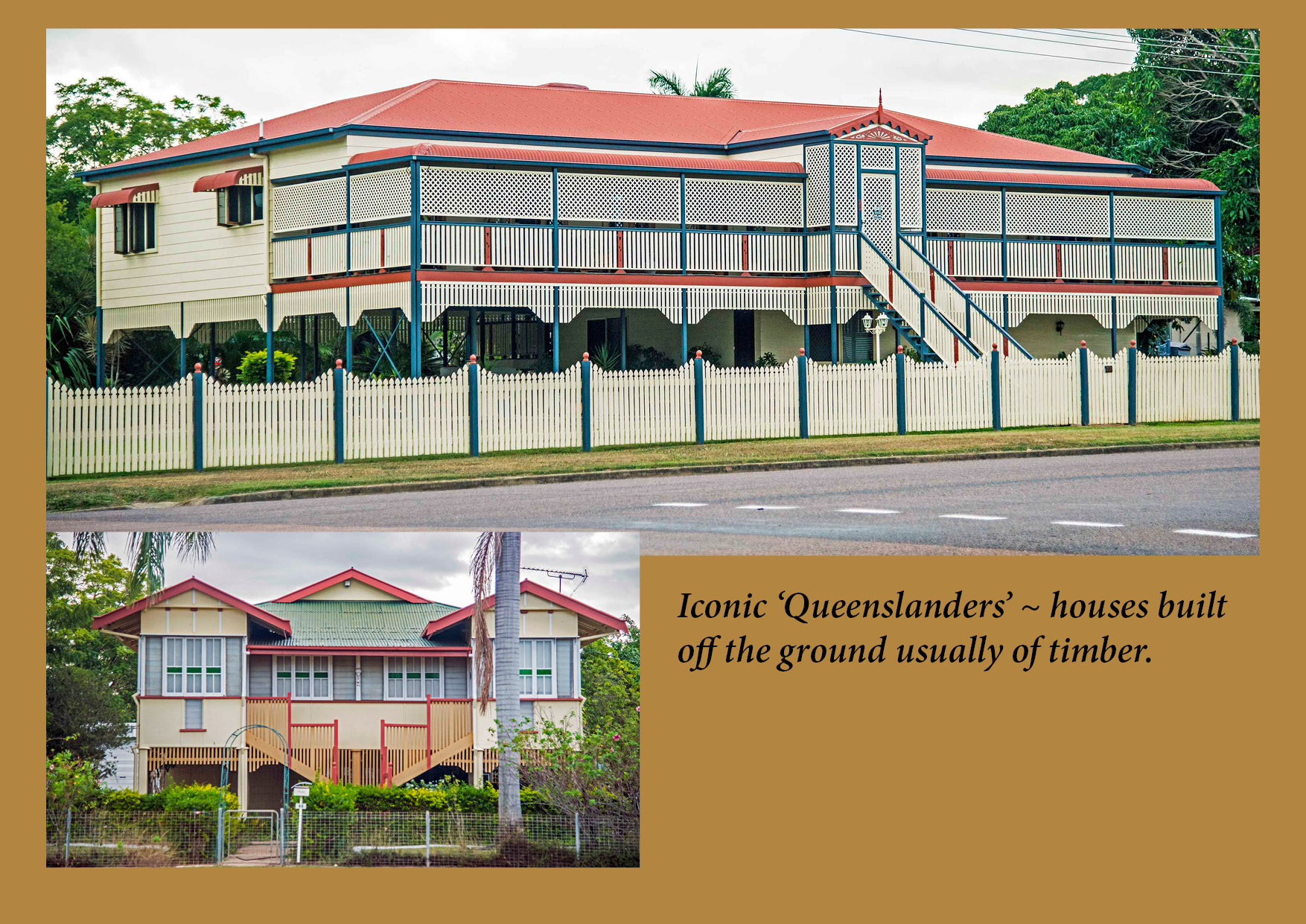
The town is well laid out, with wide streets and magnificent buildings preserved on Gill and Mosman Street; for example the regional Stock Exchange which operated during the gold boom in 1870-90, the original (huge) post office and the Gentlemen’s Club. Some lovely examples of the iconic ‘Queenslanders’ – those unique houses on stilts that Queensland is renown for…

Charters Towers composite 1

Charters Towers composite 2

Charters Towers composite 3

At the Towers Hill lookout we had a great view of the town and enjoyed the story boards about the gold rush. Jupiter, a young Aboriginal boy, was first to see the bright glimmer of gold in a stream when he was searching for horses spooked by a thunderstorm. The gold was initially processed with the pyrites method and later with cyanide. Not an easy way to make a living and so many tragic stories.

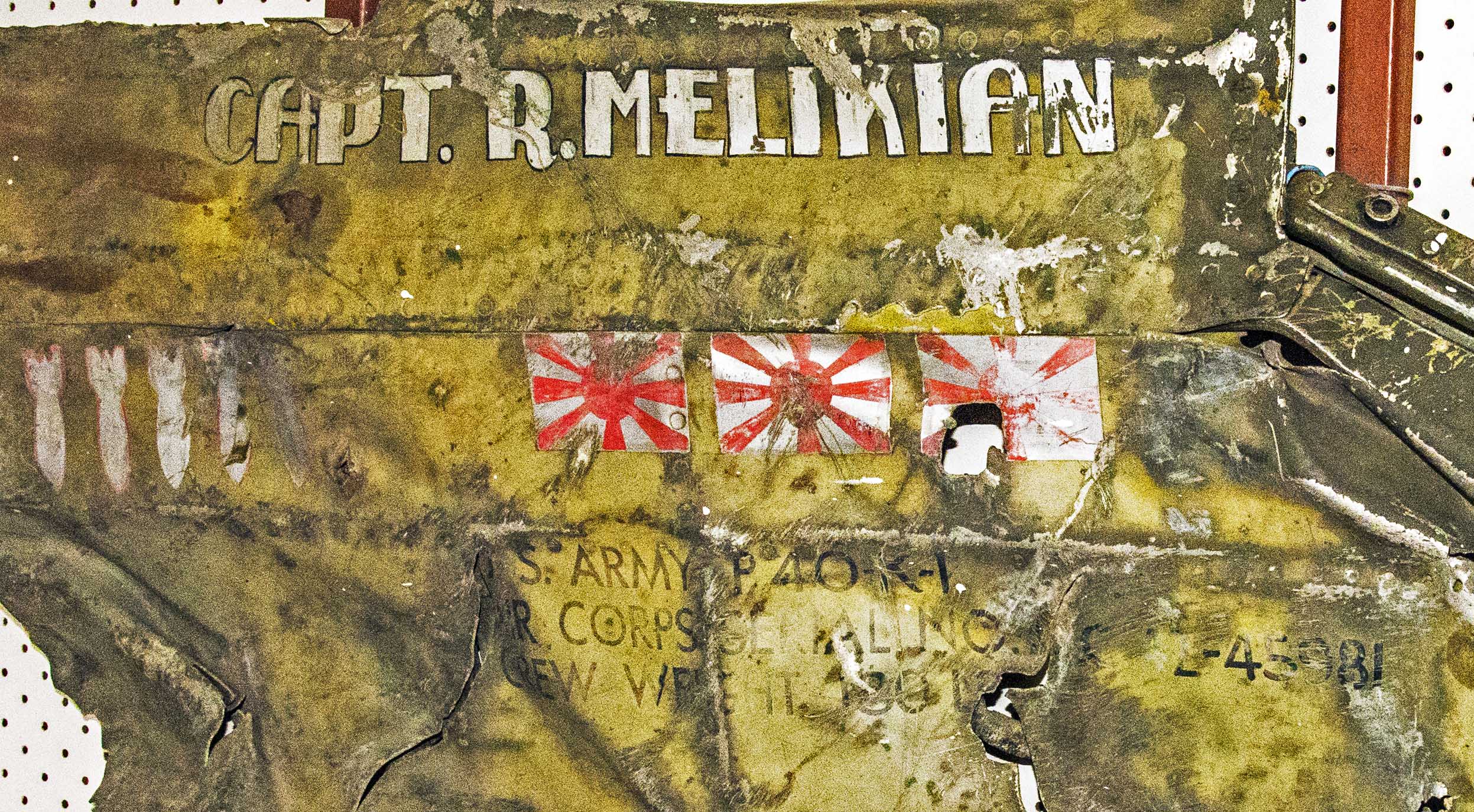
The long mining history is well recorded at the Zara Clark museum. One of the interesting items on show was an aerial photograph about 2 metres long of the town and surrounding area with the underground mine workings overlaid… Hundreds of kilometres of them! The deepest shaft is 2960 feet deep. There were some interesting WWII items on display including pieces of a Curtis P-40 with the details of the pilot and his successes…

Charters Towers 10a

The regional beef industry gives the town two strings to its bow and helps the community to survive the ups and downs of both industries. This is definitely cattle (beef) country. We have seen many herds of them especially when we entered Queensland. Quite a few different types – the Brahman cross seem to be dominant in the far north as they are on the west coast. They are able to handle the tropics better than other breeds. The beef we have sampled has been beautiful and the steak Ian had in Irish Mollie’s pub was to die for…

Charters Towers 11

We enjoyed our stay in the Big 4 Outback Oasis; lovely shaded caravan sites, Country and Western music one night and pizzas cooking in their big wood-fired oven. An impressive spot, and a great town to visit. Next stop – the lava tubes at Undara!


Three ‘sparkling’ towns – Emerald, Sapphire and Rubyvale

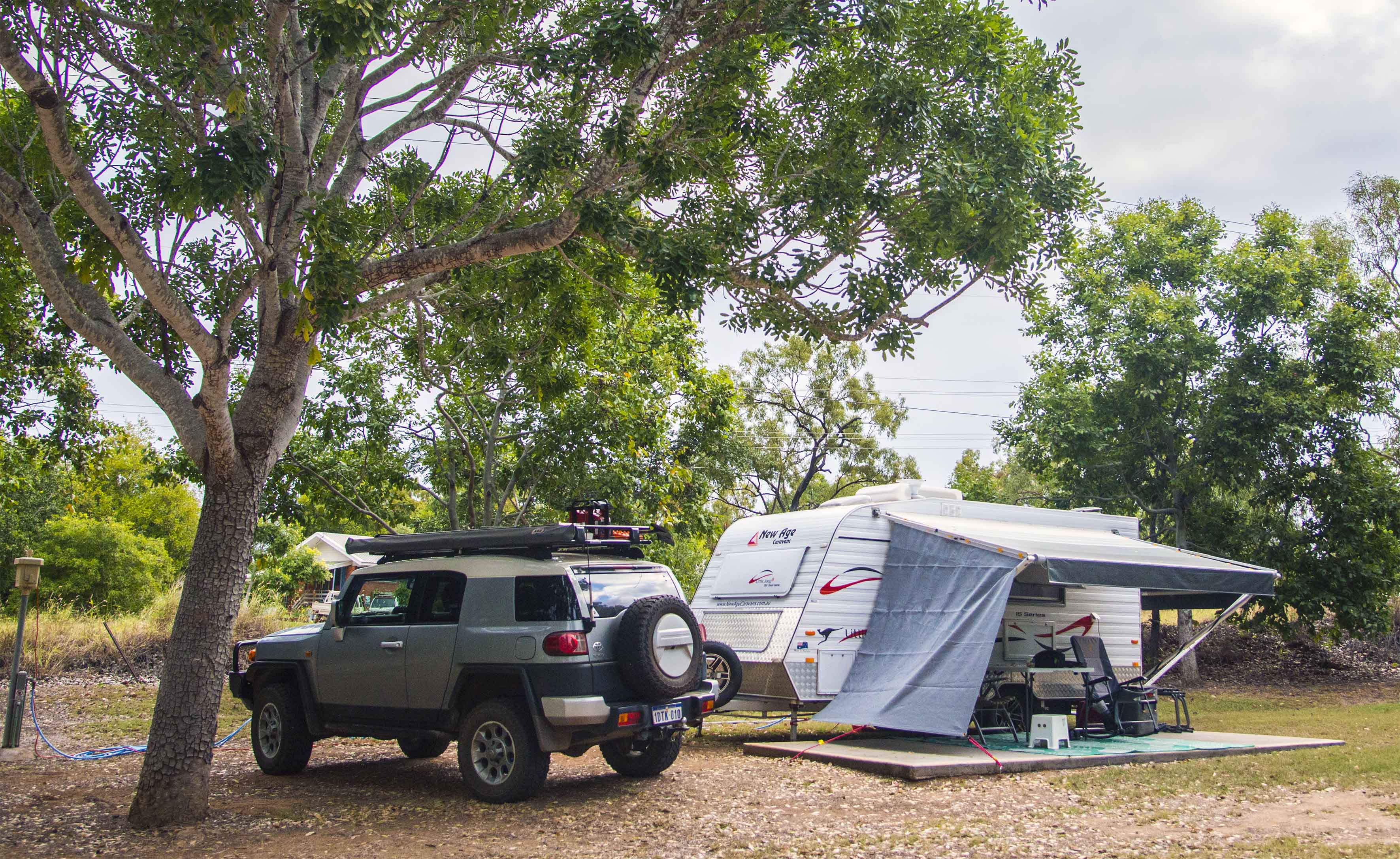
We spent several days in Emerald having our windscreen replaced.  Julie and Lloyd from Emerald Autoglass were brilliant especially as FJ Cruisers are more difficult to fix than other 4WDs! We had a good yarn with them and it was sad to learn that there has been a big turndown in business over the last 3 years and 4000 people have left town to look for work so there are lots of vacant houses.
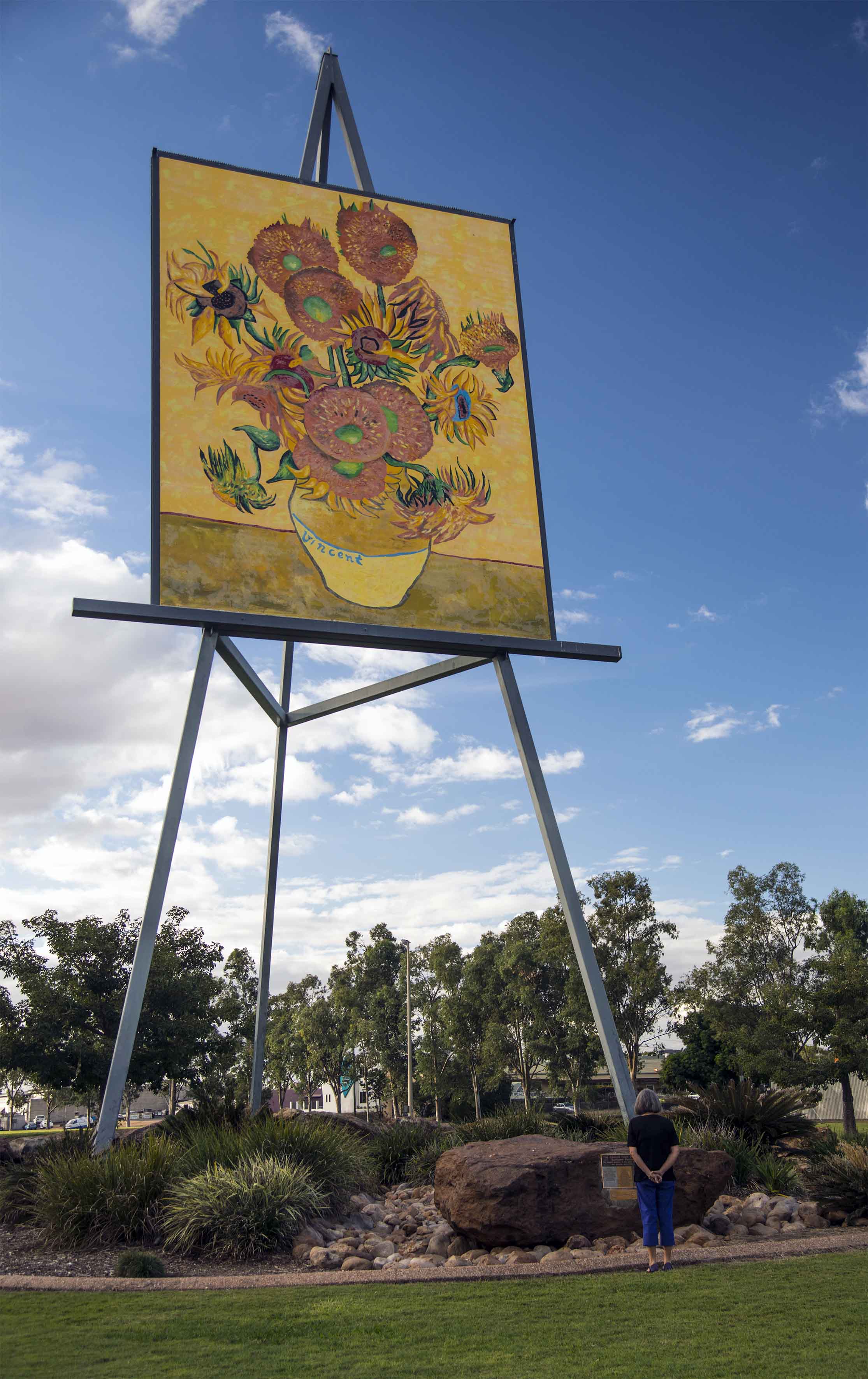
The Big Easel is a striking tribute to this region’s sunflower production – it is HUGE! It is part of the Van Gogh Project created by Canadian artist Cameron Cross. He intends to reproduce all 7 of Vincent’s beautiful sunflower paintings in 7 different countries across the world – very special for us having seen Van Gogh’s wonderful works at the Rijksmuseum in Amsterdam last year.
Emerald 1
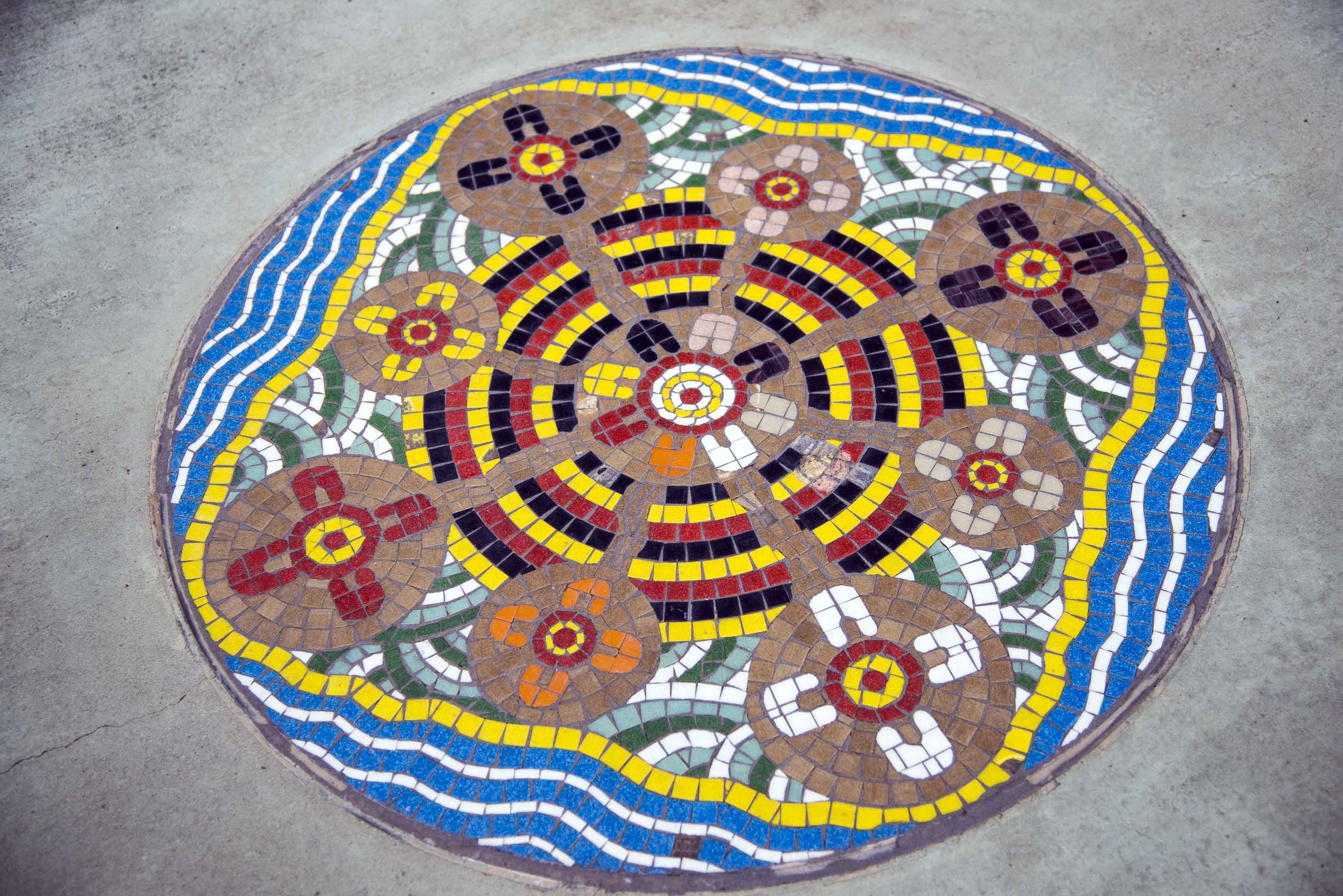
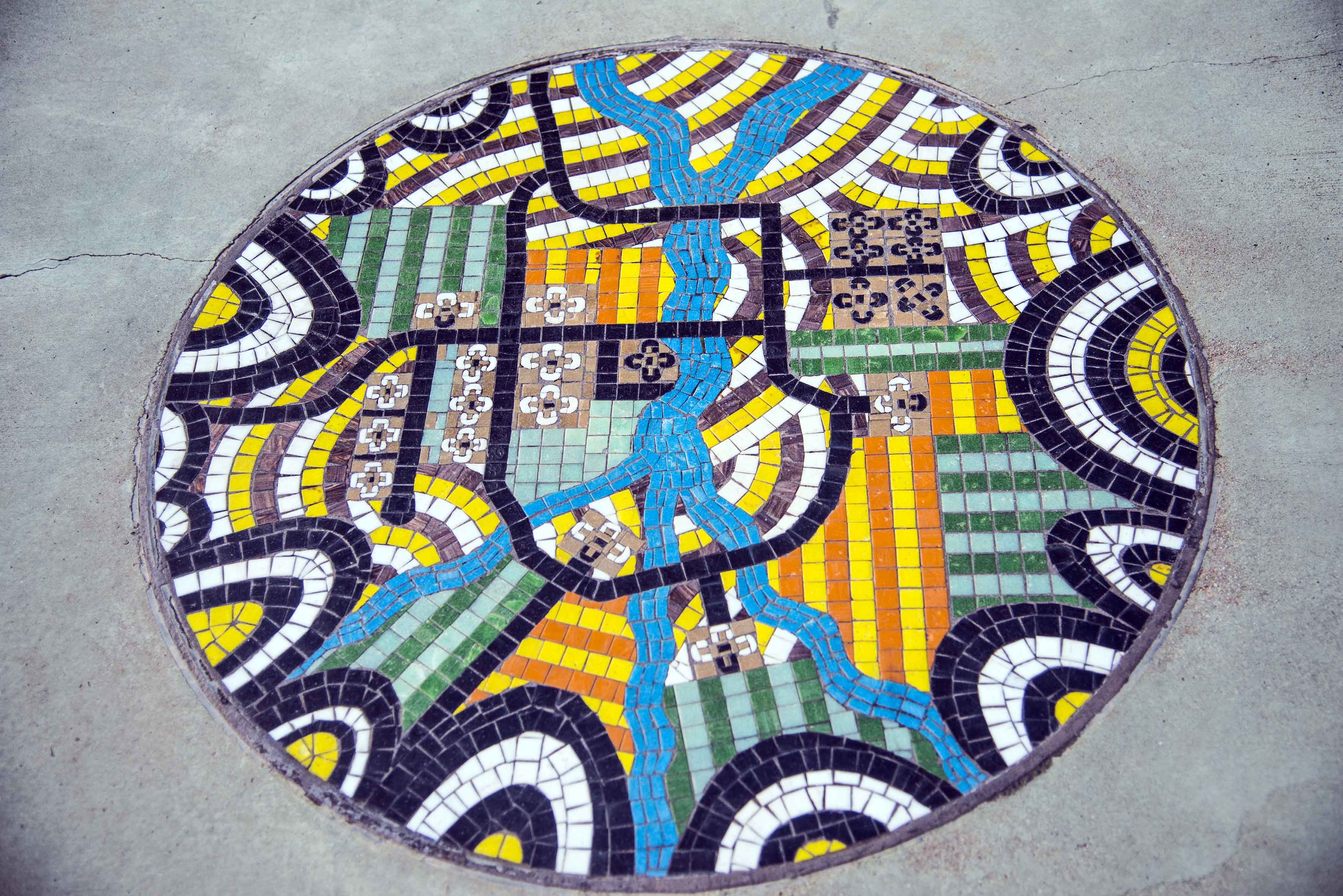
Alongside is a mosaic pathway of 21 tiles created by local artists to describe 100 years of Emerald’s history. The local Aboriginal people, the Murri, designed several mosaics about the dreamtime, before and after white settlement, and the future. We found these positive visual images very beautiful.
Emerald 2 Emerald 3 Emerald 4
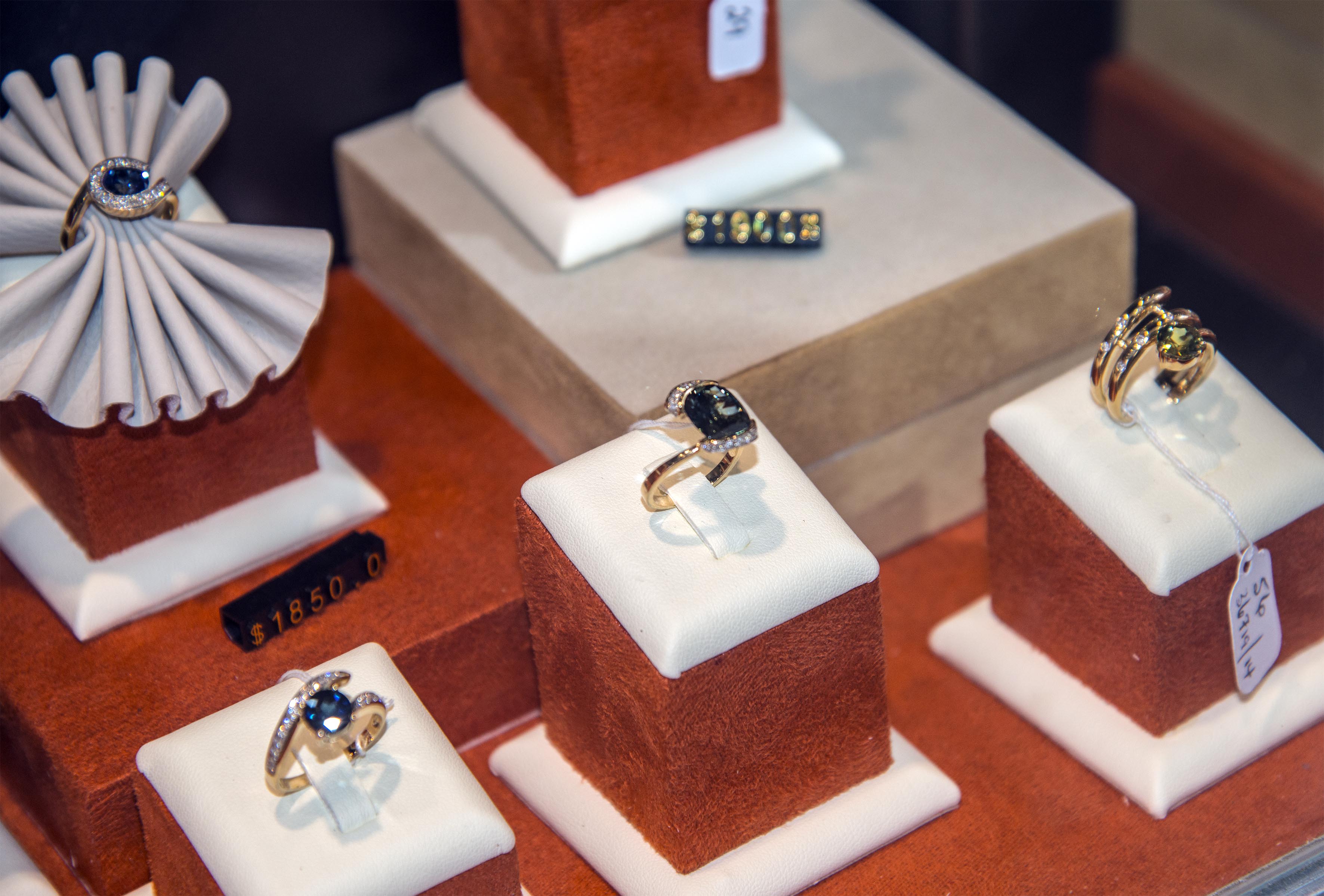
Gem perusal and prospecting was in order in Sapphire and Rubyvale, about 45 mins from Emerald. The gem merchants come in all shapes and sizes – some tracing their ancestry back through many generations of hard yakka, others who happily said that they import their stones from Thailand cos it’s cheaper – and the full gamut in between. The colours of the sapphires include blue, green and pink etc but the golden yellow ones were stunning – and expensive.
Rubyvale 2
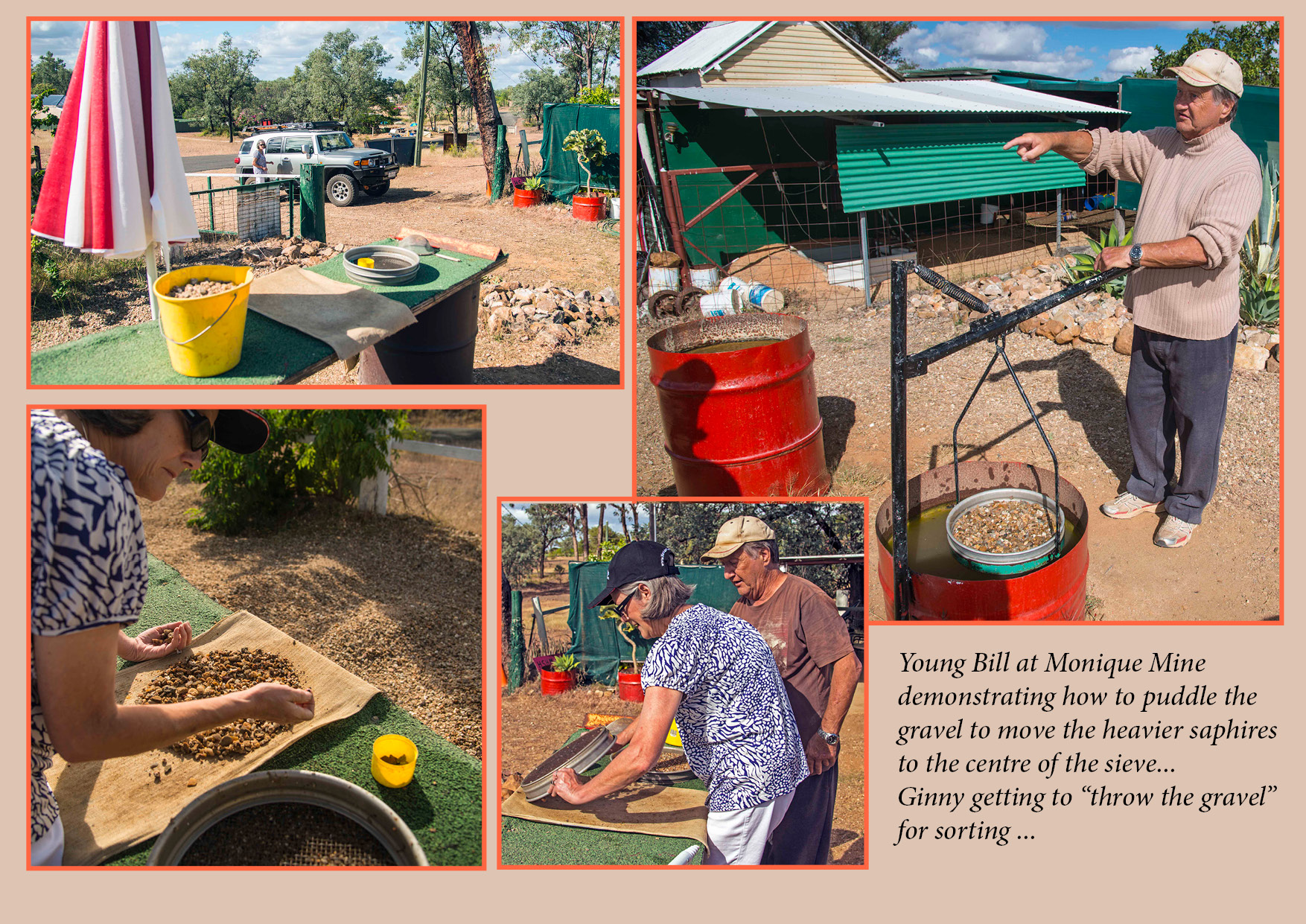
We enjoyed meeting Bill from the Monique Mine, a local bloke who likes to have a yarn  and provides punters like us with a $15 bucket of gravel from the diggings alongside his house to sieve…  we had great fun and learnt a lot!
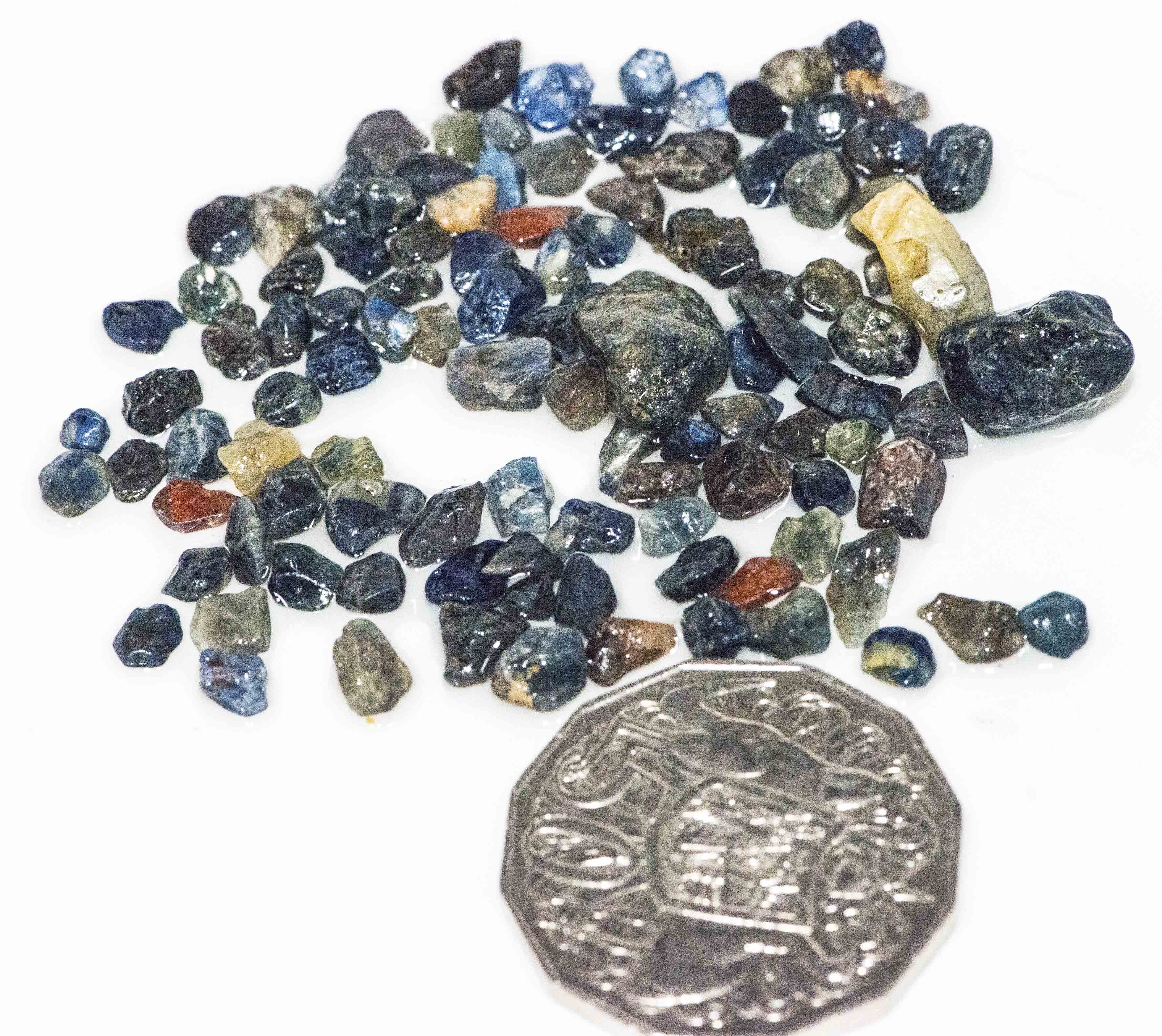
Sorting saphires Saphires 2
We went away with a tiny bag of babies, but also a couple needing more investigation – e.g. the one that looks like an old yellow tooth!
It was also great to see the modern pub and gem shops going back to using the traditional timber planking and stone construction used in this region – and the beer wasn’t bad either!
Royal Hotel 2

Carnarvon Gorge

After leaving Tamworth we copped a big boondie on the windscreen thrown up by a truck – not much we could do about it on a Friday afternoon so we crossed over the border into Queensland to stay at Goondiwindi overnight. Maybe it was just psychological, but we felt warmer immediately! And the hot mineral pools were delightful.

Windscreen

Headed north to The Gums then west to Surat, where several vans were free camping beside the river – tempting, but we wanted to stay further north in Roma. This is where we joined the “Great Inland Way” route from Sydney to Cooktown. Parts of this road are atrocious and we were forced to slow down to less that 60km/hour in many sections. We have never seen a sealed road in such a deporable condition.

Roma is a lovely old country town with buildings dating back to the 1860s gold rush. It is still an agricultural hub (largest Oz cattle saleyards) and a huge oil and gas hub (the Big Rig is BIG, and there were acres of Toyotas with orange flashing lights and flags at the airport just like the Pilbara).

On to the Carnarvon Gorge which had been recommended by many fellow travellers. We spent 3 lovely days exploring this gorge. The main track is also the first section of a 6-7 day ‘Great Walk’ up to the Great Dividing Range, and several young and fit walking groups were setting off on this.

Carnarvon Gorge 1

Carnarvon Gorge 3

Carnarvon Gorge 4

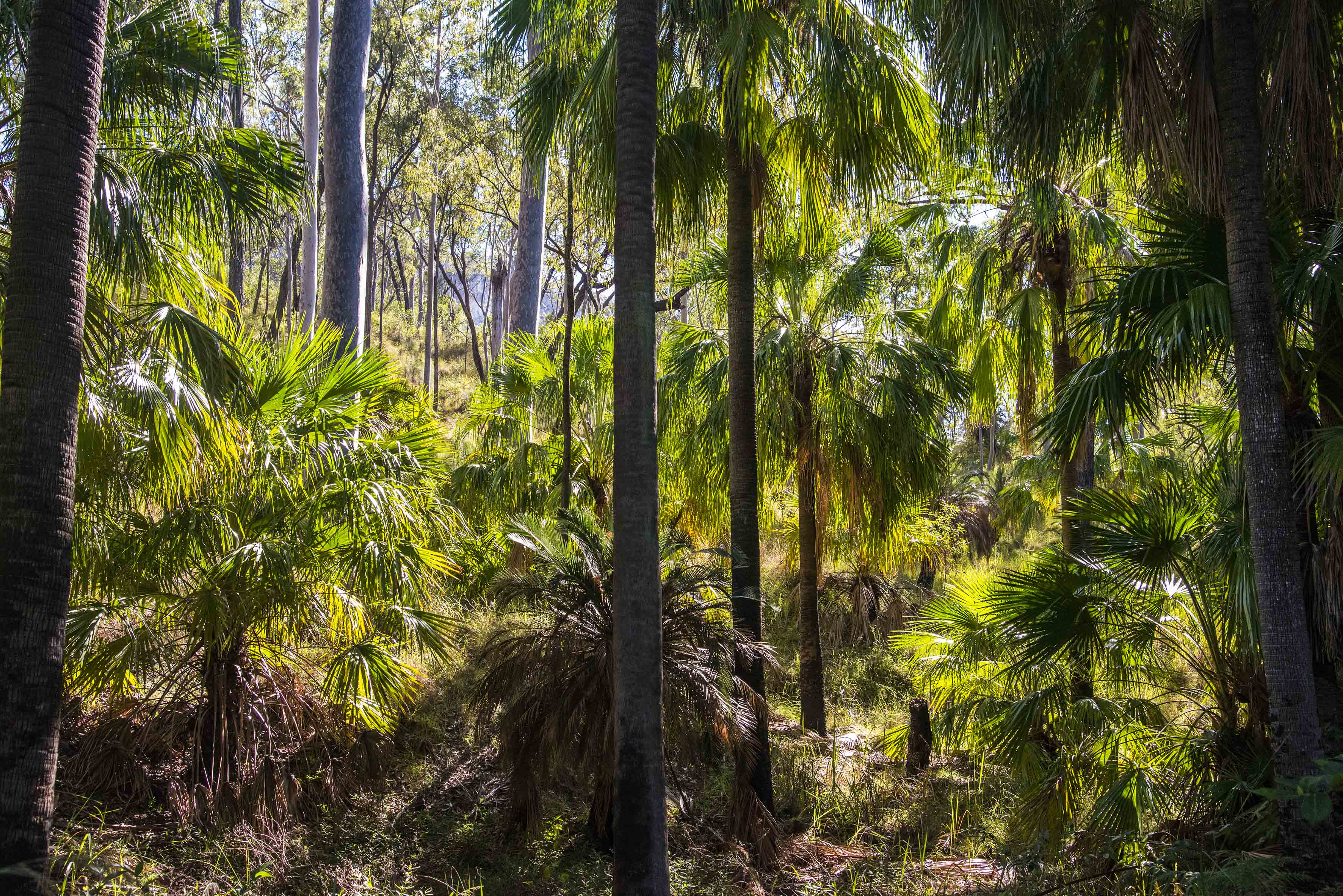
The lookout provided great views, and a highlight was spotting a platypus early one morning in a nearby pool. We rock-hopped our way up the Mickey Creek Gorge to find a beautiful cool chasm which was so moisture-rich that livistona palms, maidenhair ferns, zamia palms and cycads were all in abundance.

However we were sad that the nature trail at the Discovery centre is full of blackberry and many other weeds – not sure how that works in a national park?? Also there is prickly pear everywhere – we thought that QLD had imported something to kill it all? Maybe it’s a repetition of the cane toad being imported to kill the cane beetle and now it’s taking over the country instead!

Takarakka Bush Resort was a great bush camp, with no TV or mobile reception (but they did have WIFI courtesy of satellite so us i-pad addicts could be found hanging out near the office!) The staff also do a magnificent roast dinner – a great chance to relax with our fellow campers and not have to cook for a night or two.

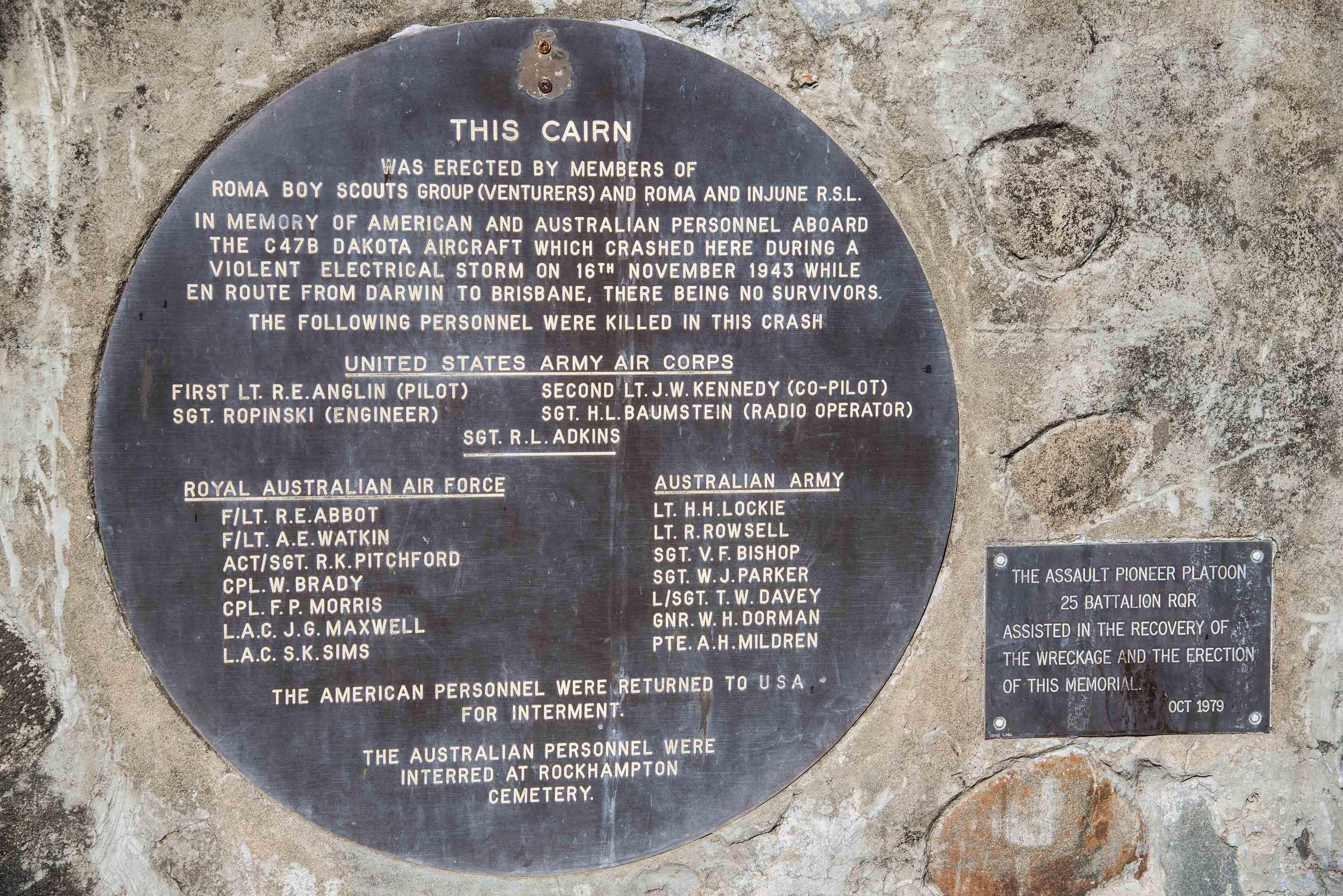
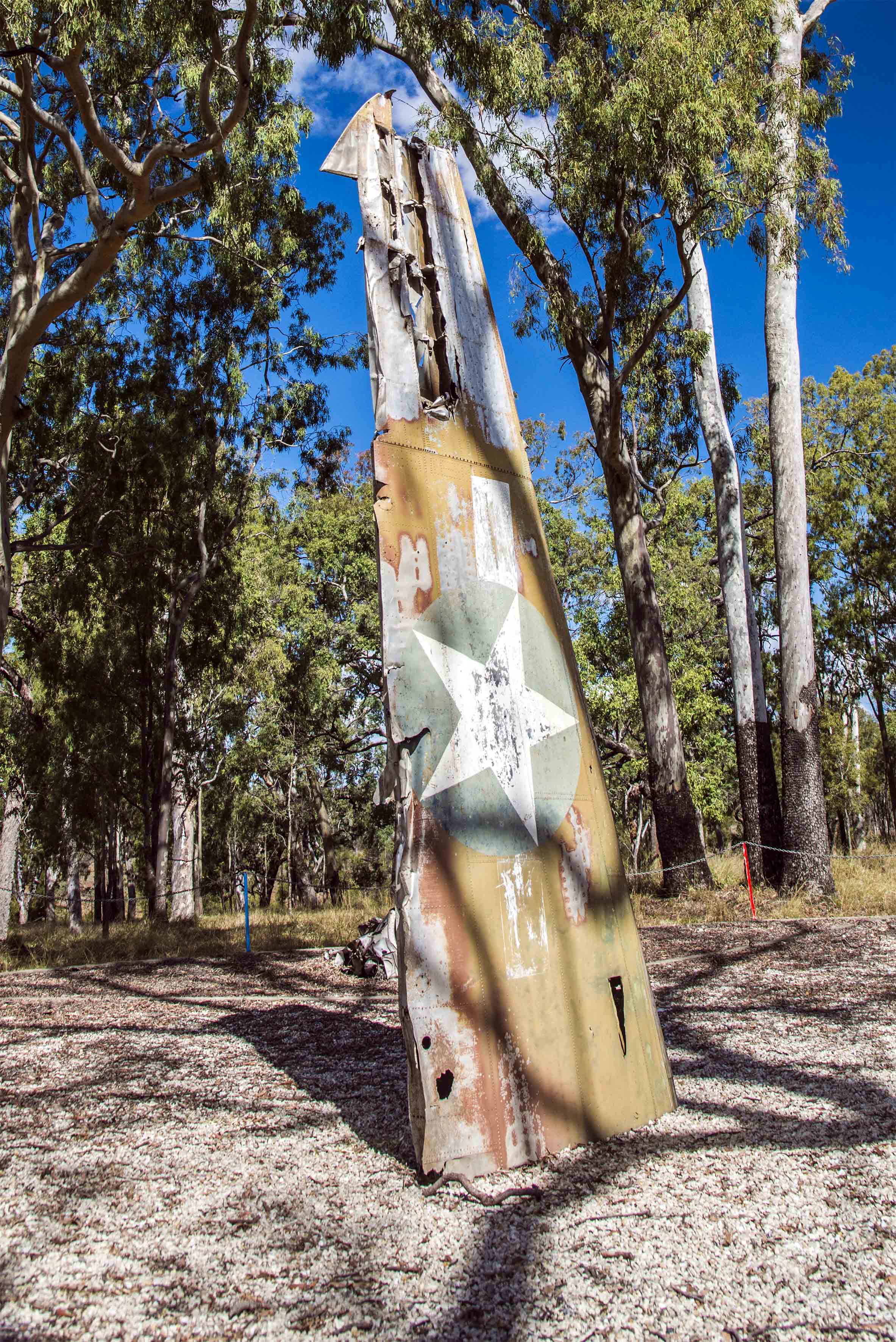
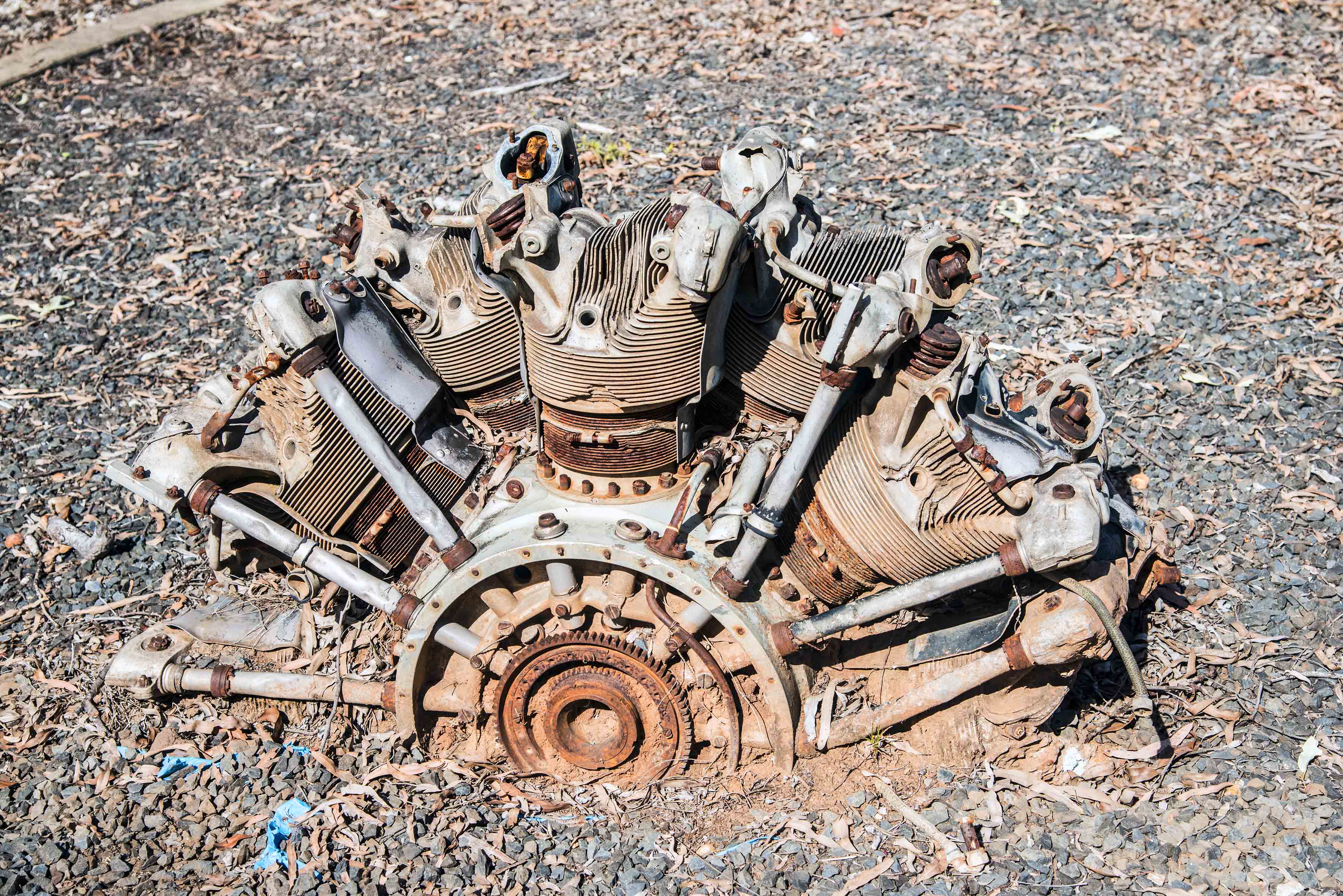
A little bit of history surprised us on the road into Carnarvon Gorge. There is a memorial on the side of the road to the passengers and crew of a wartime Douglas C47B (civilian version is the DC3) which was broken up in a severe thunderstorm very near the memorial site. It was enroute from Darwin to Brisbane at the time. A very sad story.

C47 crash memorial 5

C47 crash memorial 6

C47 crash memorial 3

Terrific Tamworth

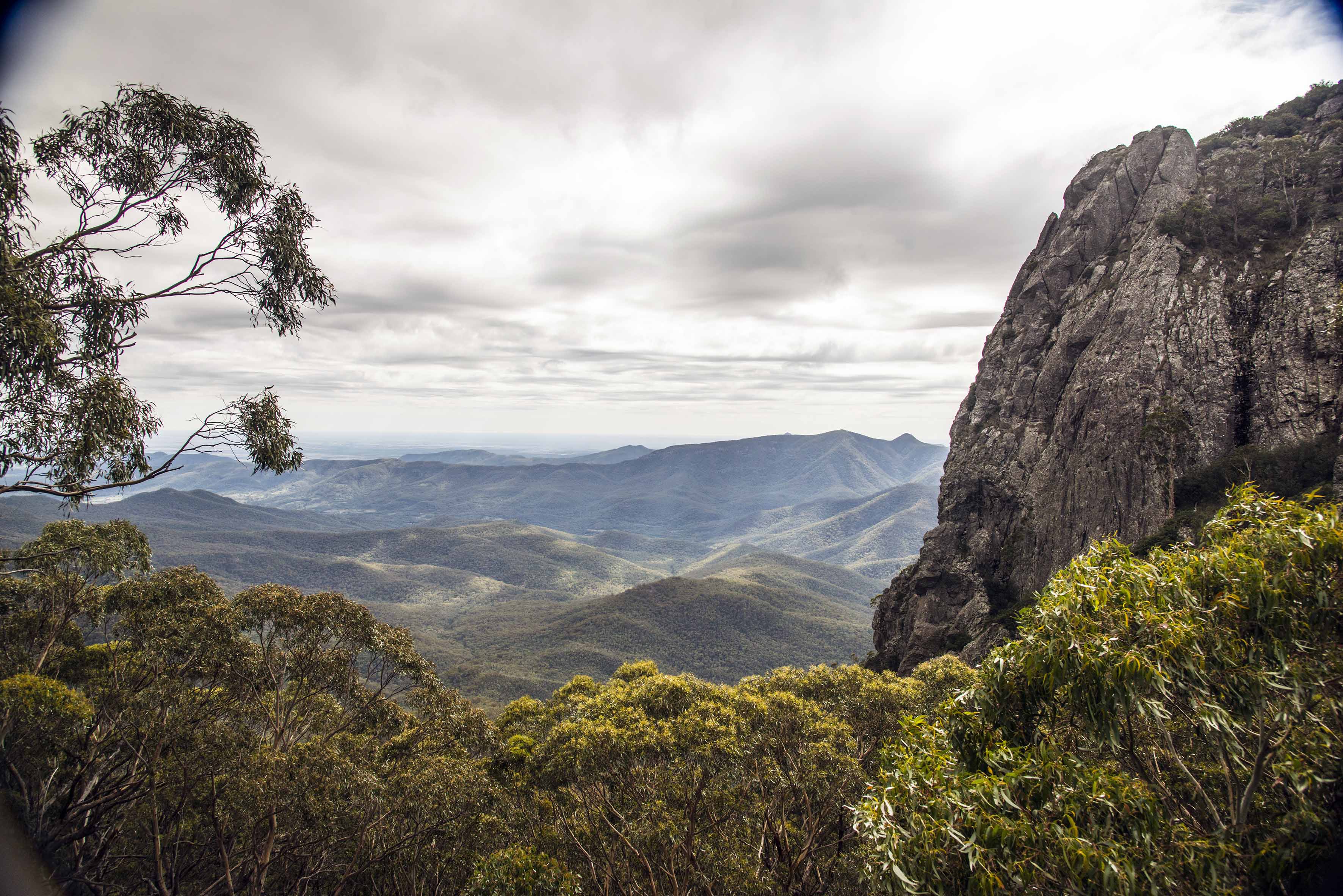
“It pays to know the locals” rang true for us in Tamworth as we are lucky enough to have our nephew Jon and his family living there so we had special guides to help us explore this beautiful country region. Check out the 4WD Barraba Track up to Dawson Springs in the Mt Kaputar national park…
Mt Kaputar 4
Mt Kaputar 5
Mt Kaputar 2
Mt Kaputar 1
Wow, what a great trip and place to camp – a special blog will follow for our 4WD mates!
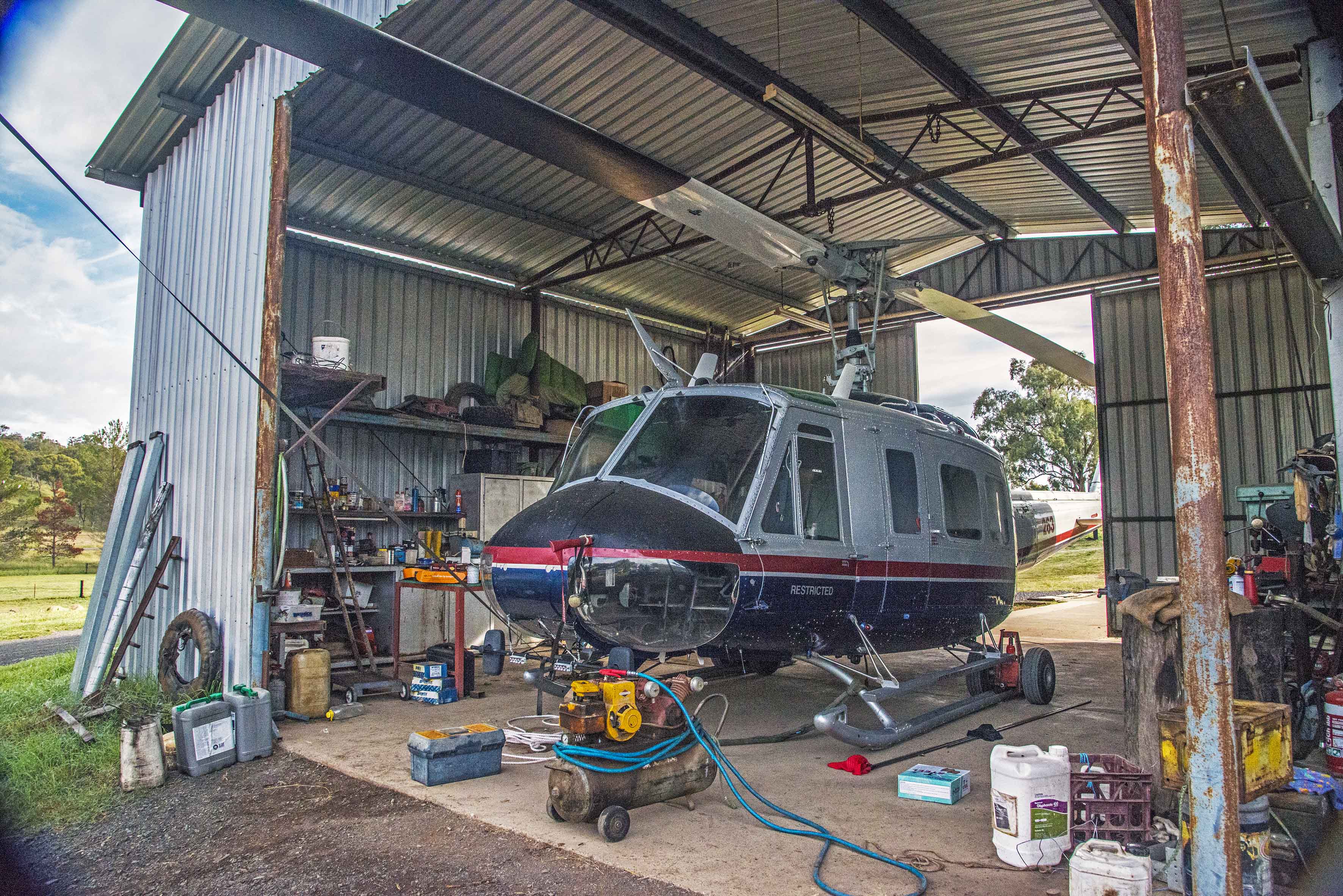
Ian was stunned to see a Huey H model helicopter parked in a local farmer’s shed – to use his words “The last time I saw these choppers at work they were part of a slick of 12 on a LZ (landing zone) in South Vietnam”. This one is now in use as a commercial fire fighter.
Huey 1
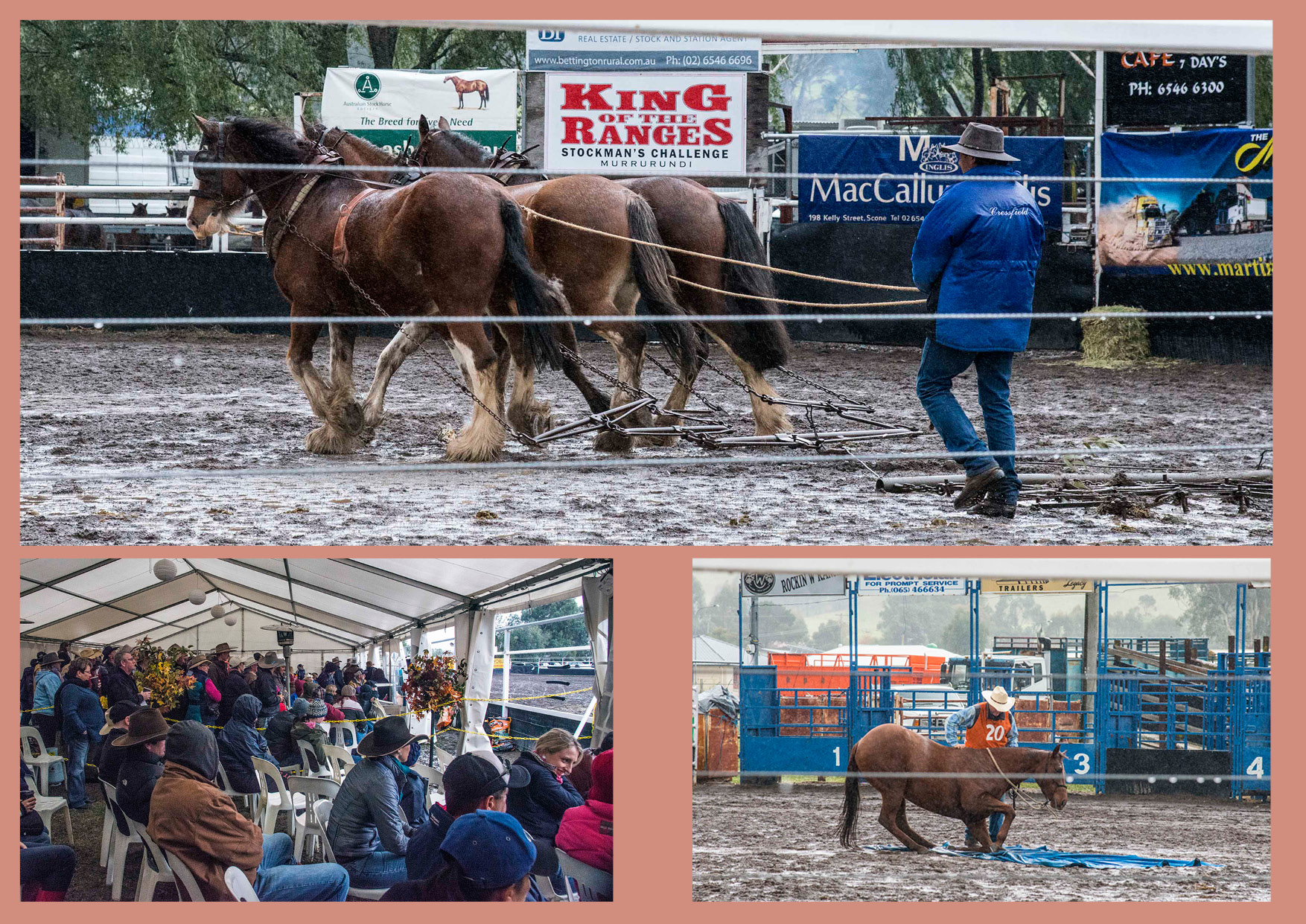
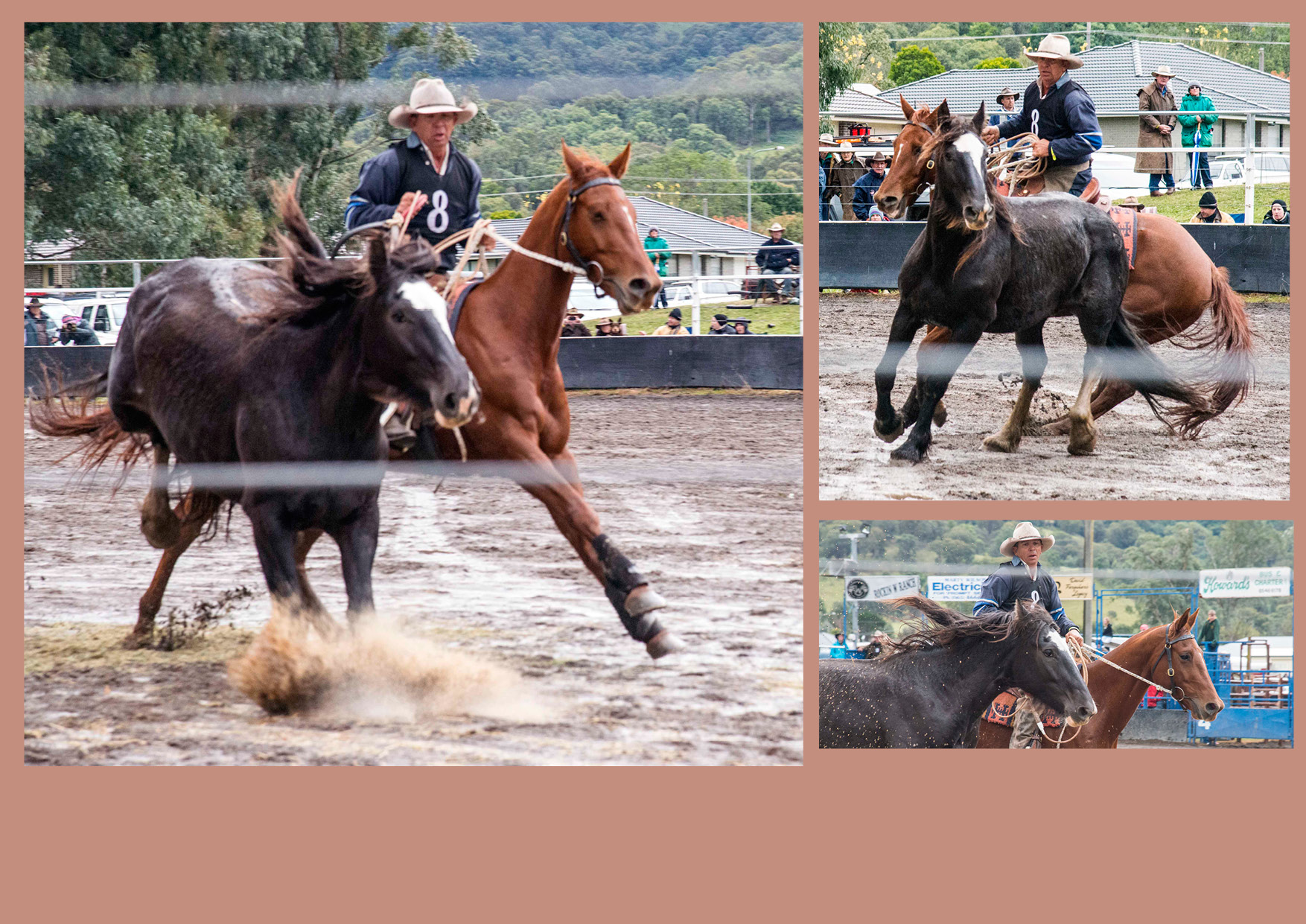
 We crossed the Great Dividing Range from Tamworth to Murrurundi for the final day of the ‘King of the Ranges‘ stockmen’s challenge and bush festival. A great showcase of the everyday tasks and skills required by stock men and women, and loved the demonstrations of the wild horse catch where the women outshone the men in speed and control on this occasion! Unfortunately it was a very wet and cold day, and even the horses were unhappy – ‘”You want me to kneel down in the mud – why?!”
King of the Ranges composite
King of the Ranges composite 2
Learning about the local agriculture and stock industries from Jon gave us a much better understanding of crops, soil types and local growing conditions. Constant research is underway to improve the quality and output of crops and to control the ever-present weeds. The intensive cropping includes cotton, sorghum, beef, chickpeas and wheat, along with beef, lamb, pork and chicken farming. The Narrabri info centre had great fact displays about each industry, but no copies were available…. presumably the info gets outdated too quickly! One fact we do remember is that that KFC now uses only Australian canola oil instead of imported palm oil.
The Long Paddock has been grazed bare this year due to drought conditions. These stock routes for mobs of cattle or sheep are easy to spot as the verges on either side of the road are very wide so that the livestock can graze as they travel. Water has to be available along the way and signs are put up so that motorists know stock is ahead as it is compulsory to give way. Certainly not an easy life.
All of this made us wonder why more farming tours are not available in local regions for everyone to understand a bit more about the rural sector and the food we eat? Overseas visitors might be interested too, and it might help farming families’ budgets as well? Do you know places or other countries where this happens well?
All in all, we loved the city of Tamworth. It is most famous as the country music capital of Australia, but as well we found it a thriving fun place to be and learnt lots too.

Warrambungles and Siding Springs Observatory

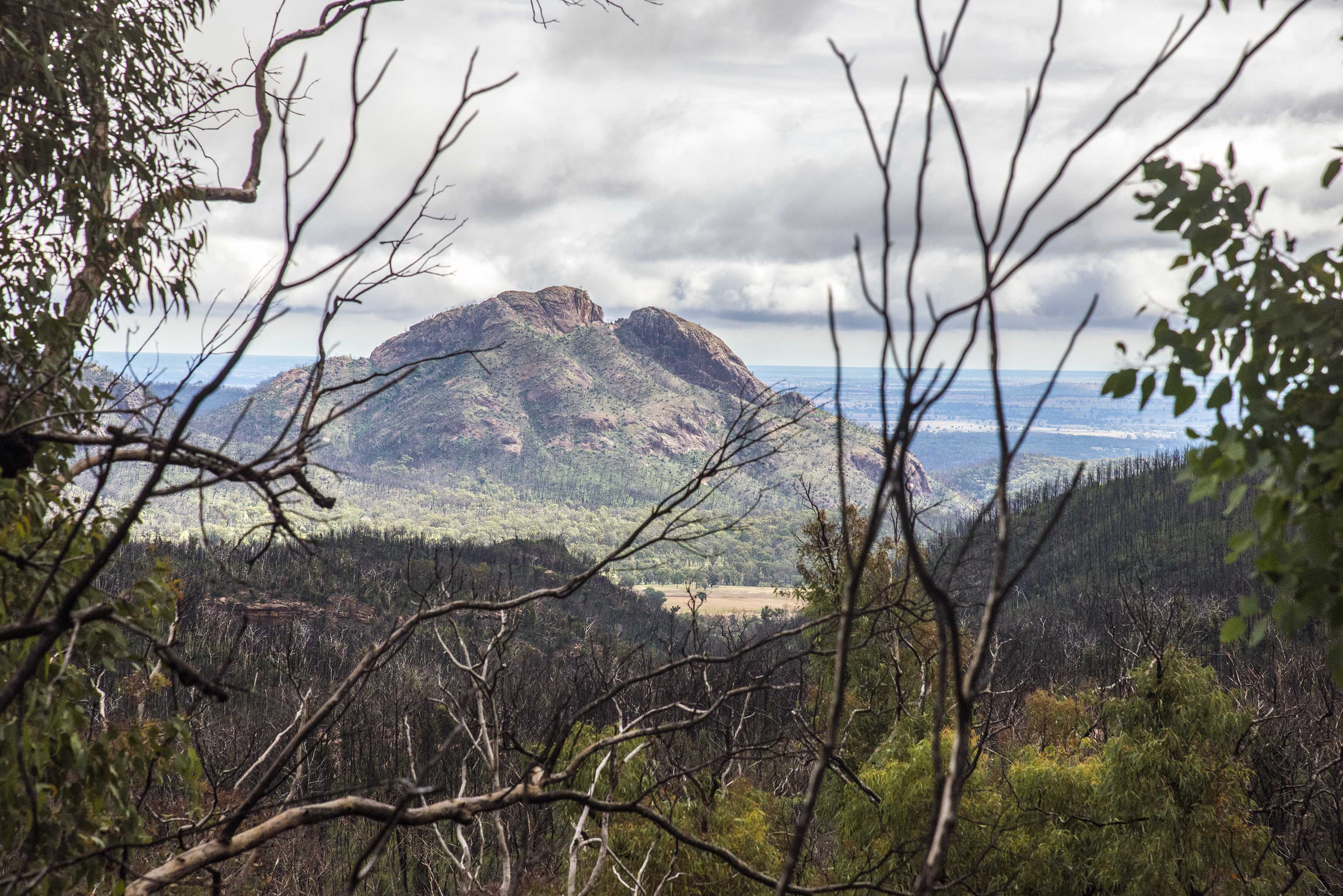
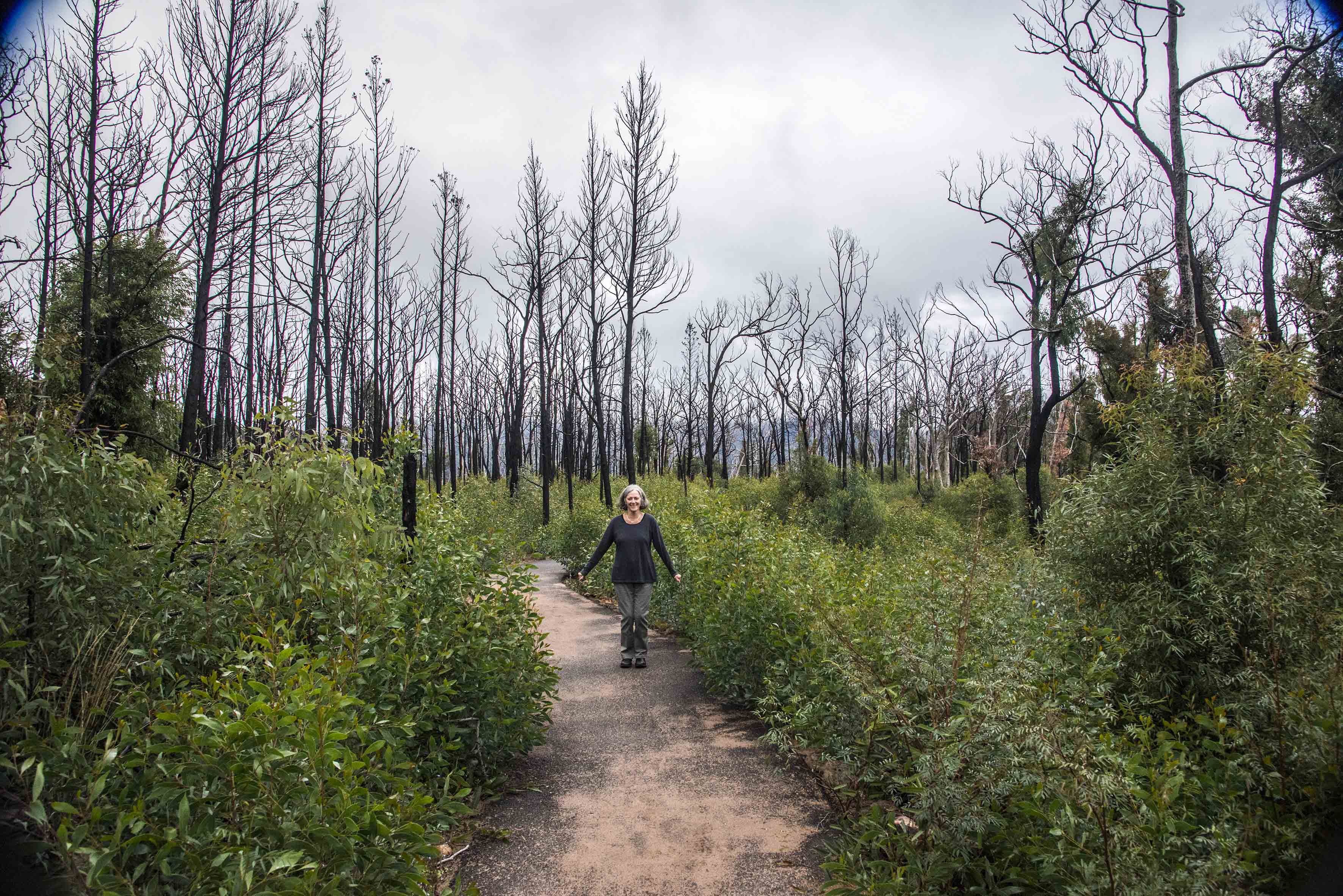
A wet trip on the Oxley highway through Gilgandra to Coonabarabran, home of the Warrambungle National Park. The January 2013 bush-fires badly affected this area so several walks are still closed. However there are signs of regeneration and the sun even peeped out for these photos.
Wurrumbungles 1
Wurrumbungles 3
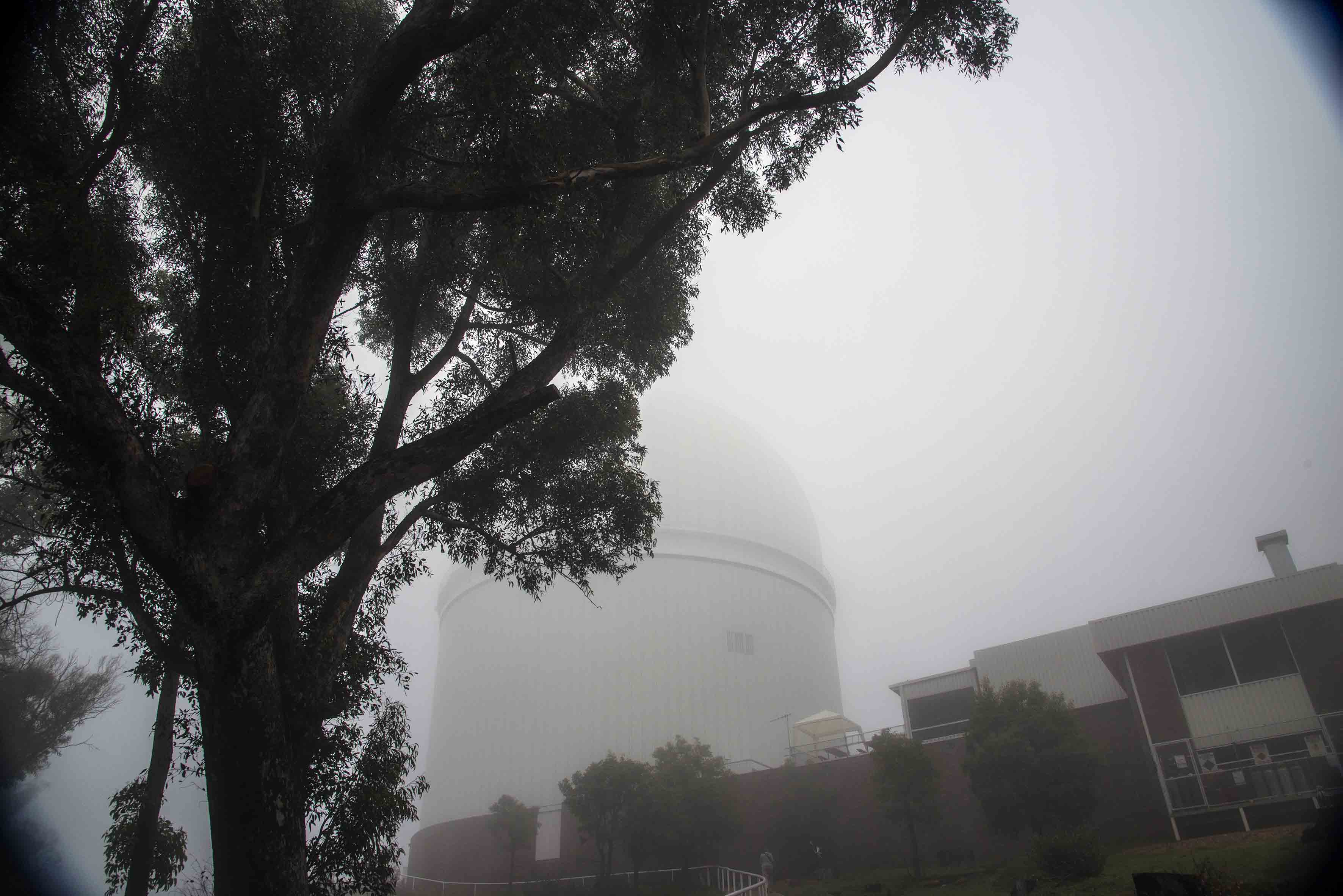
Visiting the Siding Spring Observatory was a special experience as we drove 28 kms up a steep and winding road through fog and light rain to the peak of Mt Woorut.
Siding Springs observatory 1
Siding Springs observatory 2
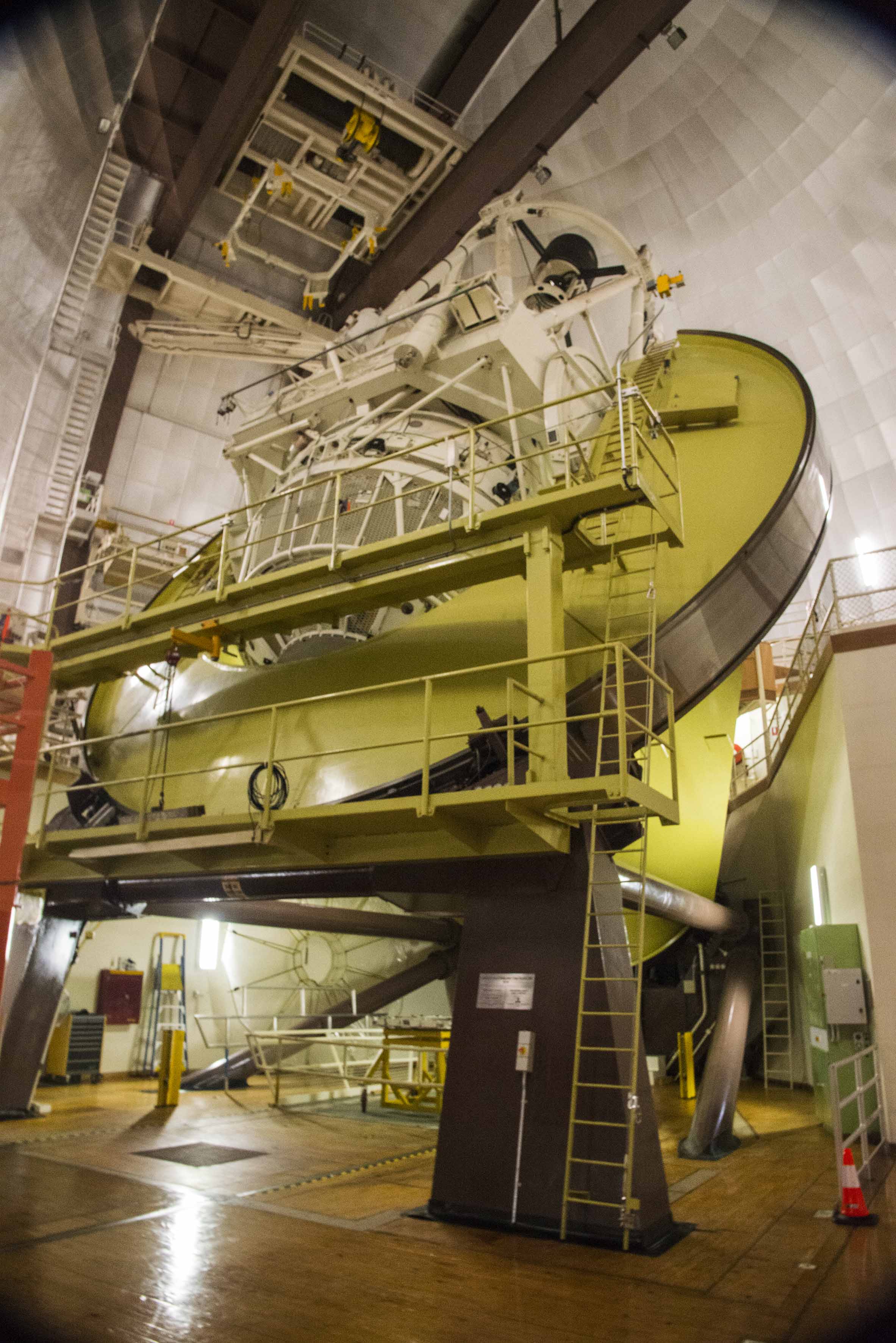
From the inspection gallery we could see the 3.9 Anglo- Australian telescope, opened in 1964 as a joint project between Great Britain, USA and Australia to better observe the southern night sky.
Since then, other international and local organisations have become involved with several new telescopes currently commissioned to open by 2015. The information in the exhibition area was rather outdated, but interesting.
Today there are 12 telescopes used by professional astronomers from all over the world who ‘probe the mysteries of the night sky‘ – isn’t that a beautiful description?!
The many megafauna finds in this area include a display of the skeleton and skull of ‘Diprotodon‘, a supersize wombat-like marsupial with enormous front teeth. Sadly(?!) he became extinct about 30,000 years ago but you can read the Australian Geographic story of discovering this amazing beast here. Maybe a palaeontology career beckons?

Into New South Wales!

Leaving Mildura, we continued 7 kms along the Sturt Highway to cross the border into NSW. After a walk in Robinvale and lunch in Balranald, we headed for Hay. Got a big shock when a car in front of us braked suddenly, and reversed straight back into a diagonal street park. Presumably this particular NSW law is based on some kind of safety research but it’s scary!
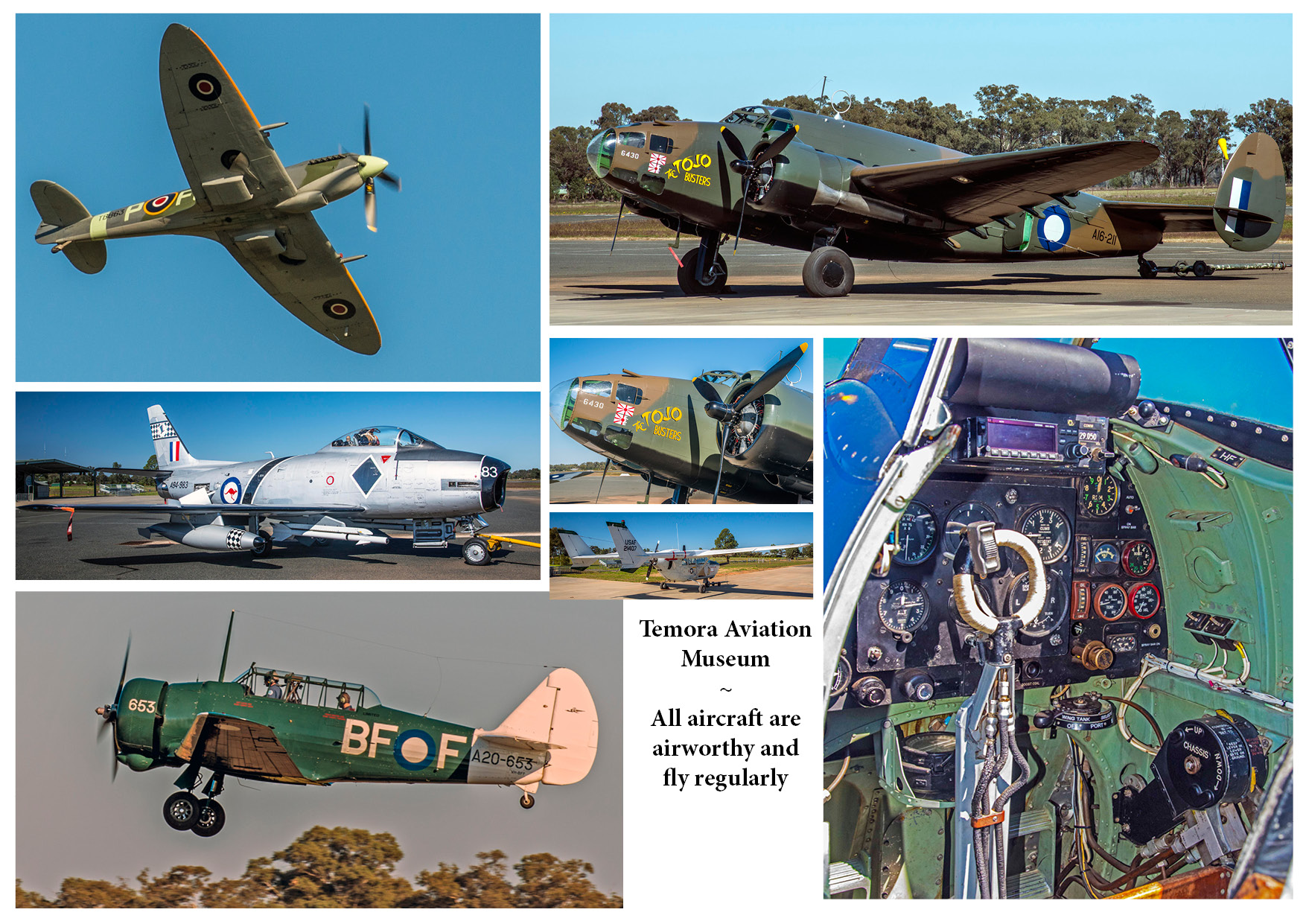
On to TEMORA to fulfill one of Ian’s bucket list items! This town is full of aviation history and LOTS of people flying LOTS of old planes. The flyover during the ANZAC Day ceremony included a Tiger Moth, a Spitfire, a Cessna 337 and a Wirraway.
Temora aircraft for blogWe stayed four days out at the ‘airpark’, designed for building your home with a hangar opening to the airstrip, along with space for caravans. A very friendly town so we were in hog heaven and a special blog will follow in due course for other aviation buffs.
Heading east we drove through beautiful scenery and good farm land to YOUNG, home of the Big Cherries – not ripe till mid November so we compromised with a jar of cherry and ginger jam. Then on past the Weddin National Park to Grenfell, the birthplace of Henry Lawson, author of brilliant short stories – our favourite is ‘The Loaded Dog‘. We were glad we chose this route rather than the Newell Highway…. mind you, none of the roads are great.
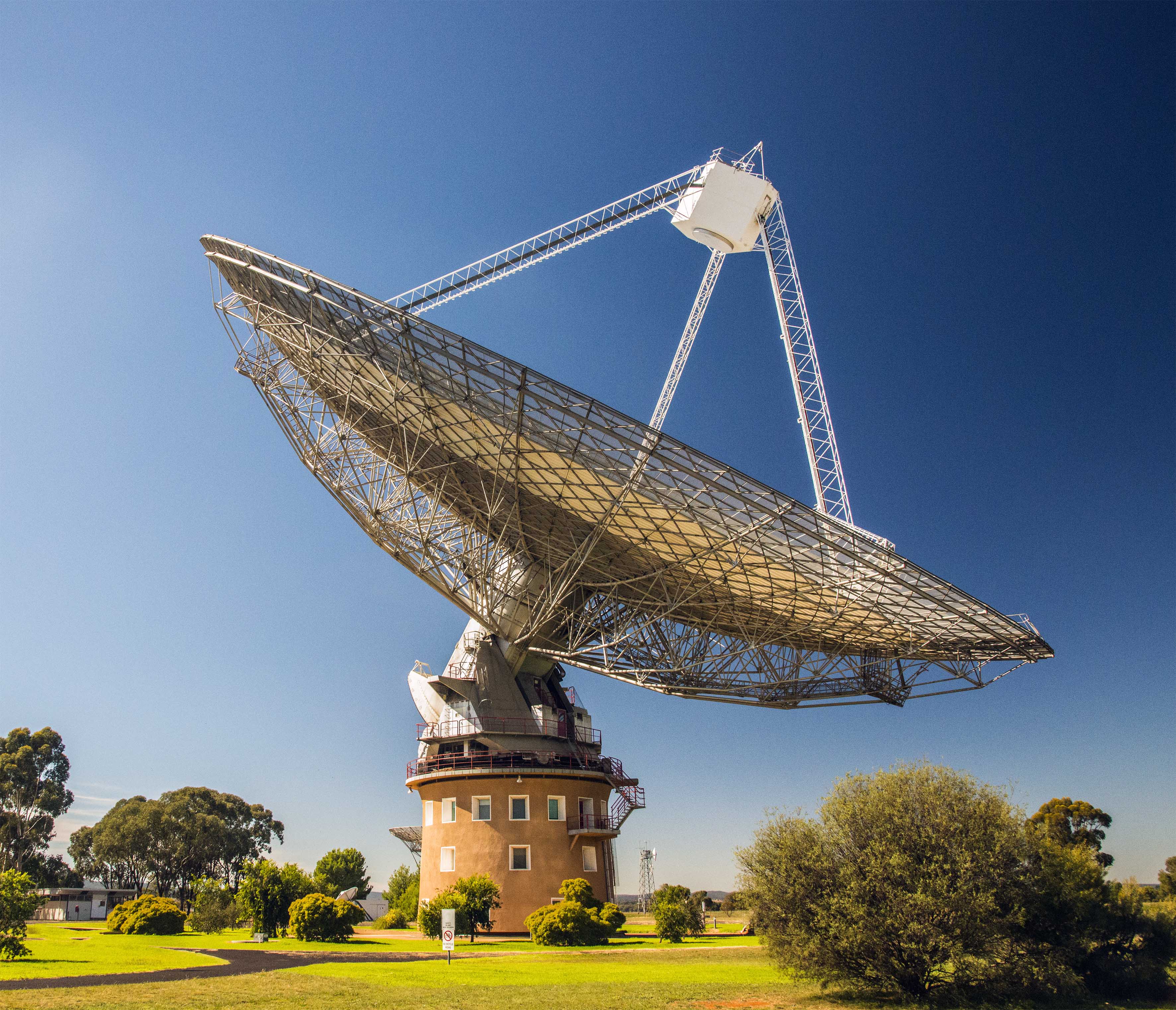
After lunch in Forbes, we camped in PARKES – no sign of Elvis anywhere (they have a predilection for him here with an annual party night, costume displays and regular concerts!) Off to visit THE DISH as in the movie of the same name – and yes, we bought the commemorative DVD edition! This CSIRO project came to fame during the first moon landing in 1969 as it was the vital communication point between the Apollo 11 astronauts and Houston National Control Centre.
The Dish 4
It is also free to visit – that’s a first for a while! – and the 3D movie and photography exhibition were excellent. As the new SKA (Square Kilometre Array) develops in the remote part of the Murchison region in WA, no doubt many links will be made between these two ‘astronomical’ spots.
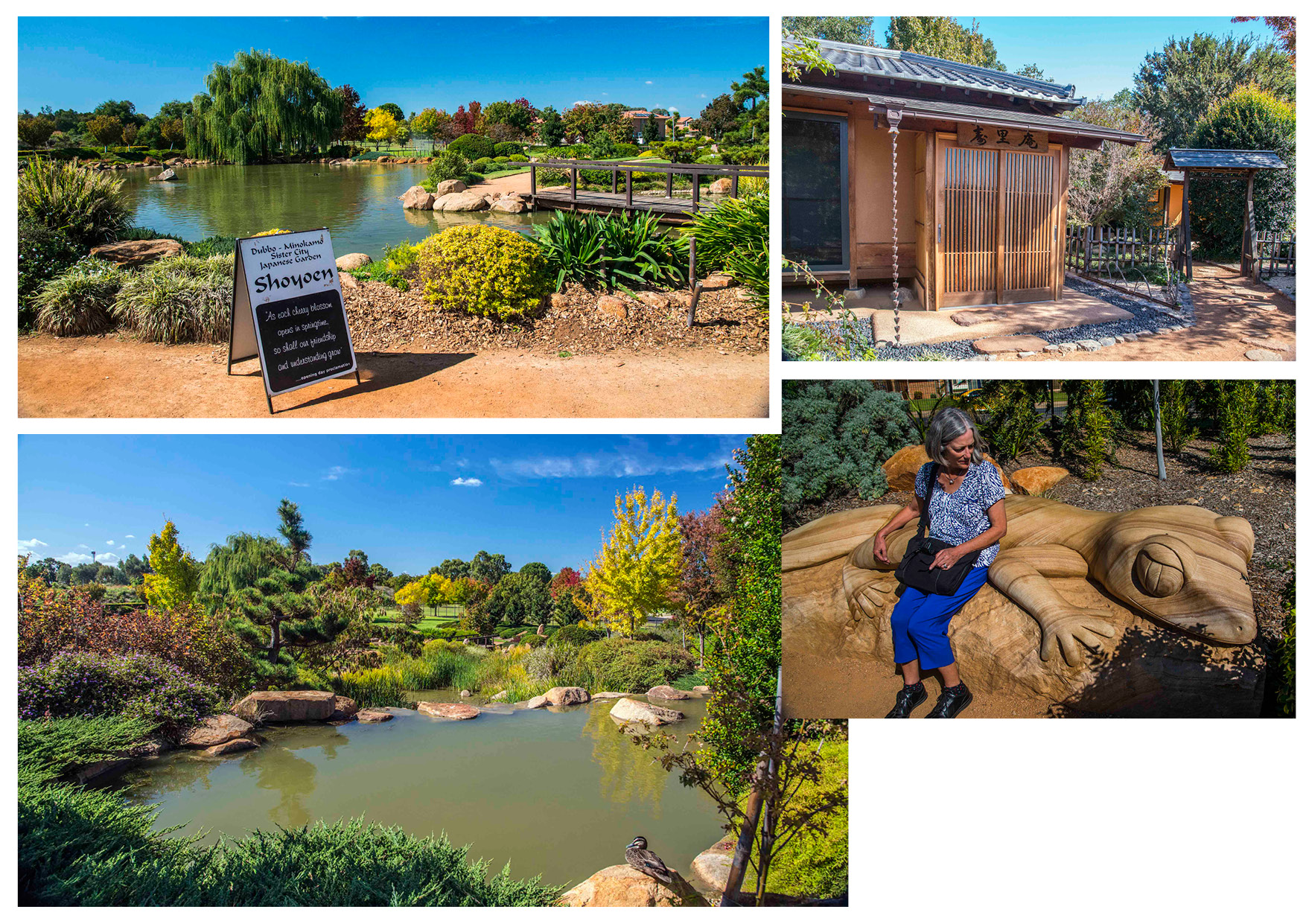
Next stop was 3 days in Narromine to explore this small town with aviation links, and also Trangie and the Macqaurie River area where we saw cotton flying all over the road for the first time. On our day trip to Dubbo we were impressed with the Shoyoen garden – a beautiful Japanese ‘strolling’ garden complete with a small home, and also a sensory garden with plants and flowers to see, smell and touch.
Shoyoen garden
Our intention was to visit the Taronga Park zoo, however it is very large and can’t be seen on foot in one day. As we ‘jointly’ have a dodgy hip and knee, we would need to hire a $69 buggy for the day, on top of a $46 entrance fee each. We thought that was a bit OTT for two people who aren’t into zoos that much, so we proceeded to the lovely Red Earth vineyard instead!
Heading northeast now!

Mildura

MILDURA – wow, what a petrol-head city! Lots of families having lots of fun over Easter and the school holidays taking in the Uteznvanz national meeting (serious chrome and art work), the ‘Mildura 100’ billed as the fastest water ski race in the world, drag racing, and by the number of motor bikes in town it’s likely they had something on as well!
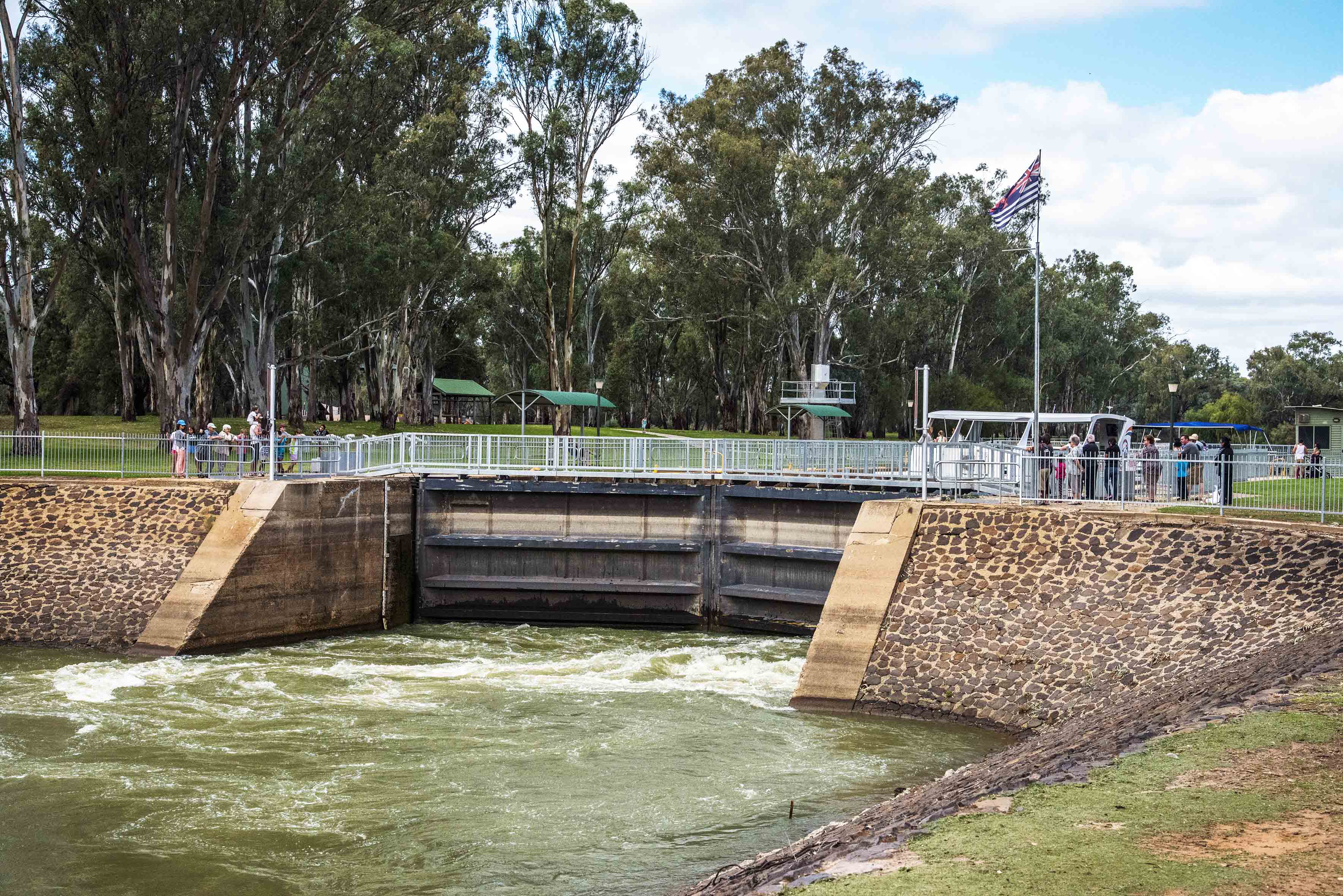
The Mildura Weir and Lock 11 have been regulating the Murray River’s water supply since 1927. The lock and weir are separated by an island, where lots of people were picnicing, boat-watching, fishing and just enjoying this lovely bushland.
Lock 11 Mildura 2
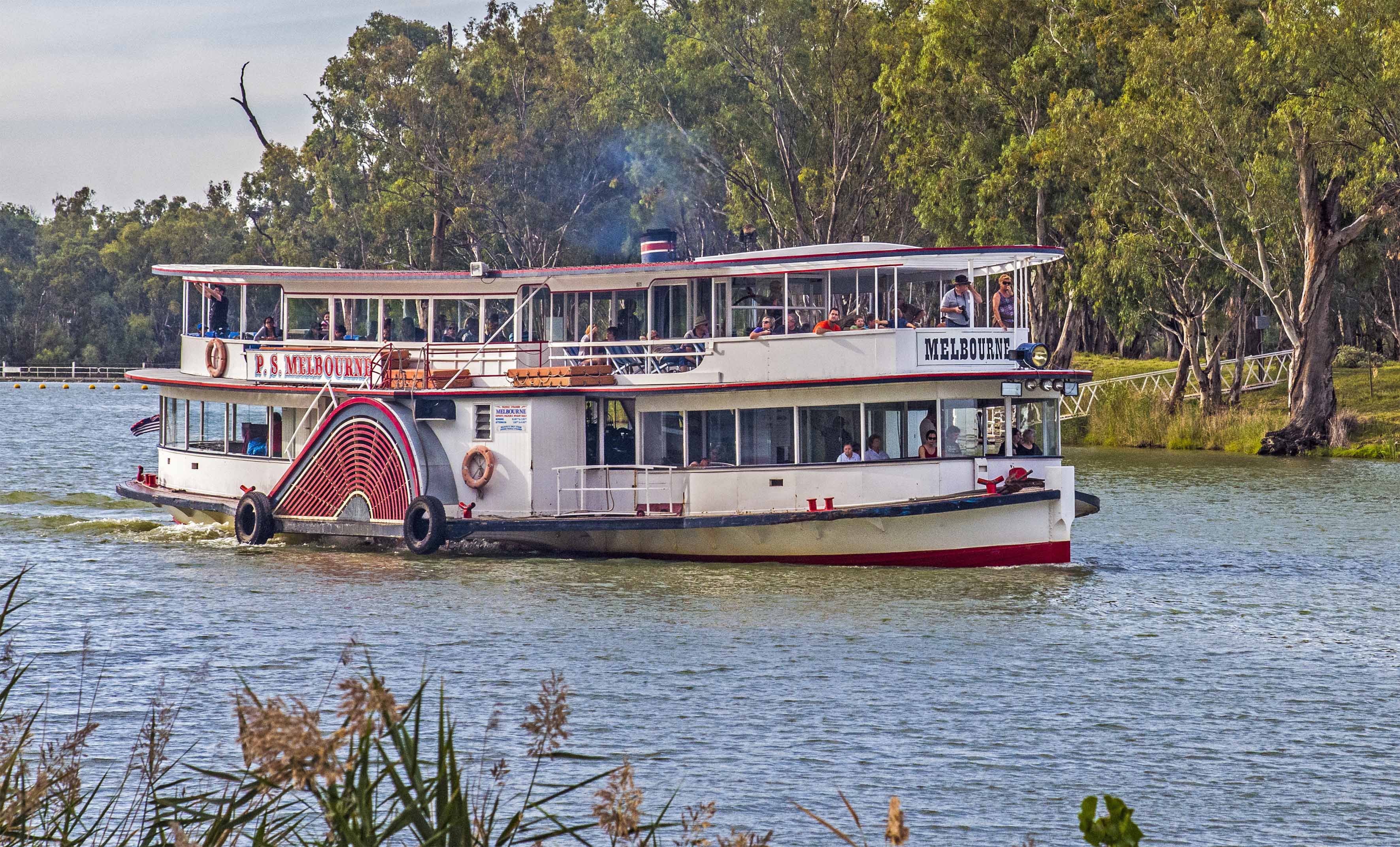
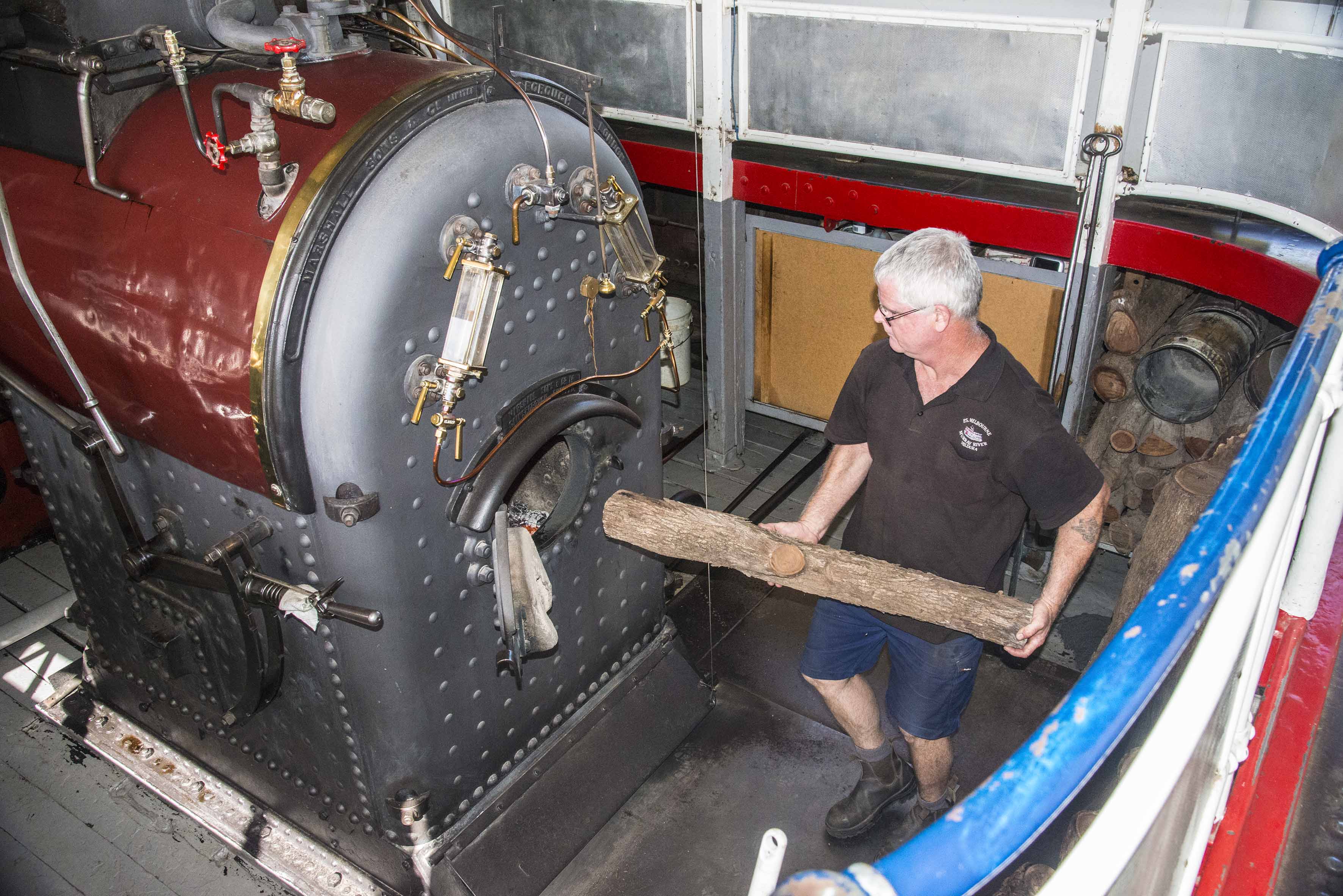
Our trip on the lovely paddle steamer ‘Melbourne’ (built 1910) took us through the lock both coming and going. We also moved interstate as the weir straddles both Victoria and New South Wales! The operation and smells from the steam engine reminded us of a previous trip on the ‘Earnslaw’ in Queenstown NZ – very happy memories.
PS Melbourne 3
104 yo steam engine 2
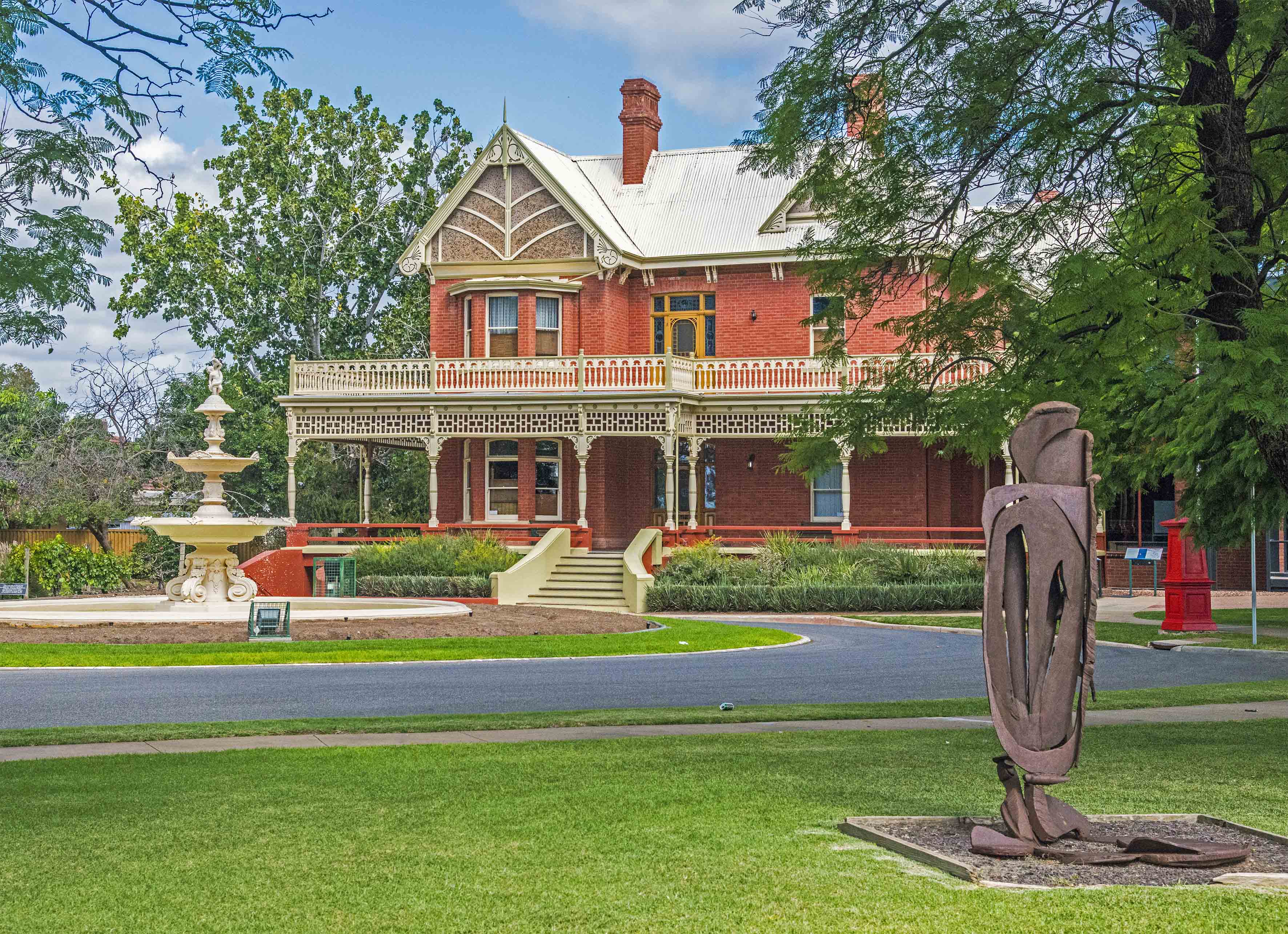
Rio Vista House is adjacent to the art gallery, and has been maintained as a beautifully built Queen Anne home built in 1892. We loved the stained glass windows featuring local birds and flowers.
Rio Vista 1
Originally it was owned by the Chaffey family. These two brothers were persuaded by the government of the day to migrate from Canada to help develop an irrigation system for the region. Unfortunately things didn’t go so well and they ended up penniless. but you wouldn’t know that today as the region is just one big vineyard… or farm…or orchard. Grapes, almonds, olives, lemons were abundant, and we also enjoyed the exquisite dried fruits from Angas Park at Irymple.
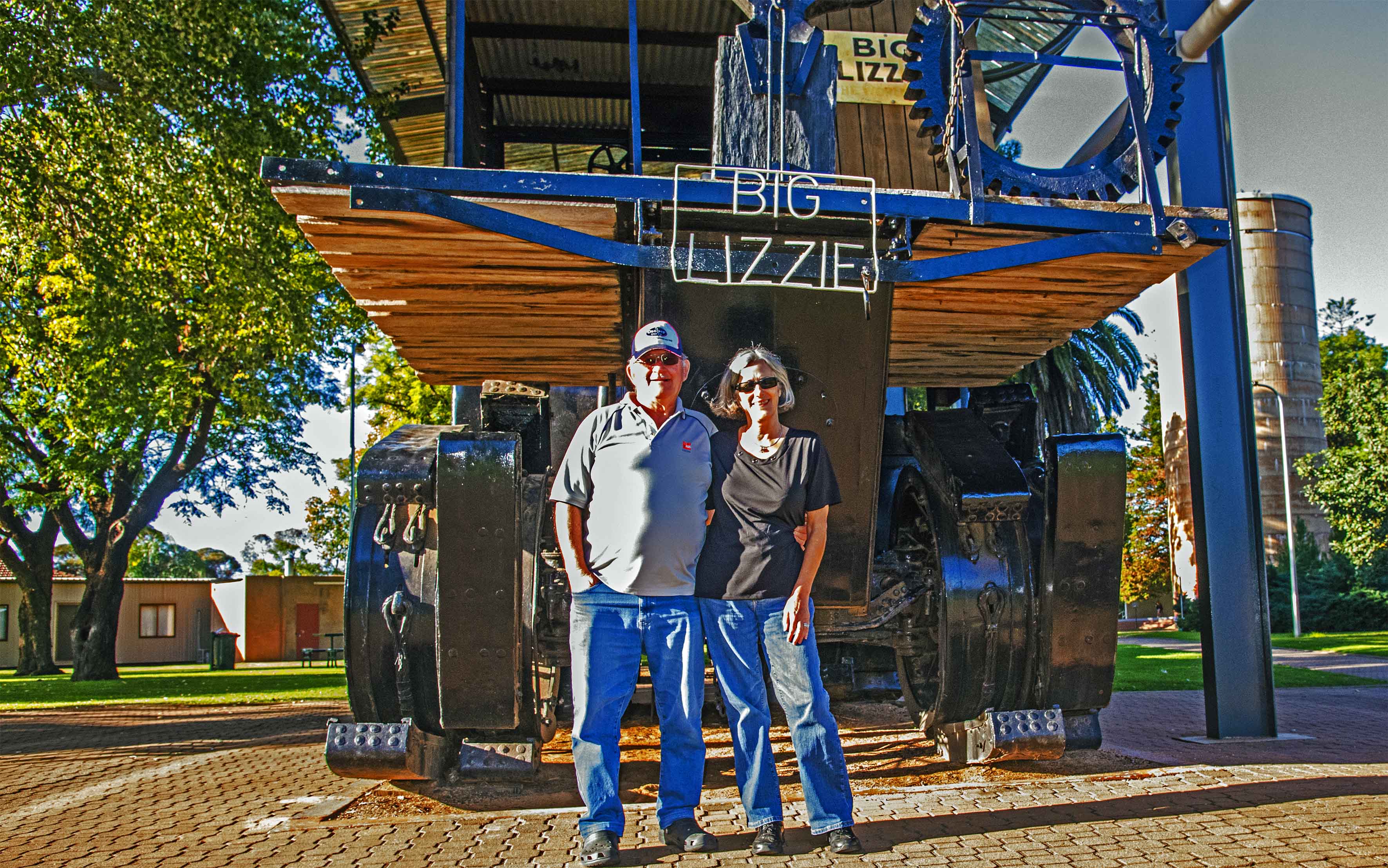
Big Lizzy 1psd
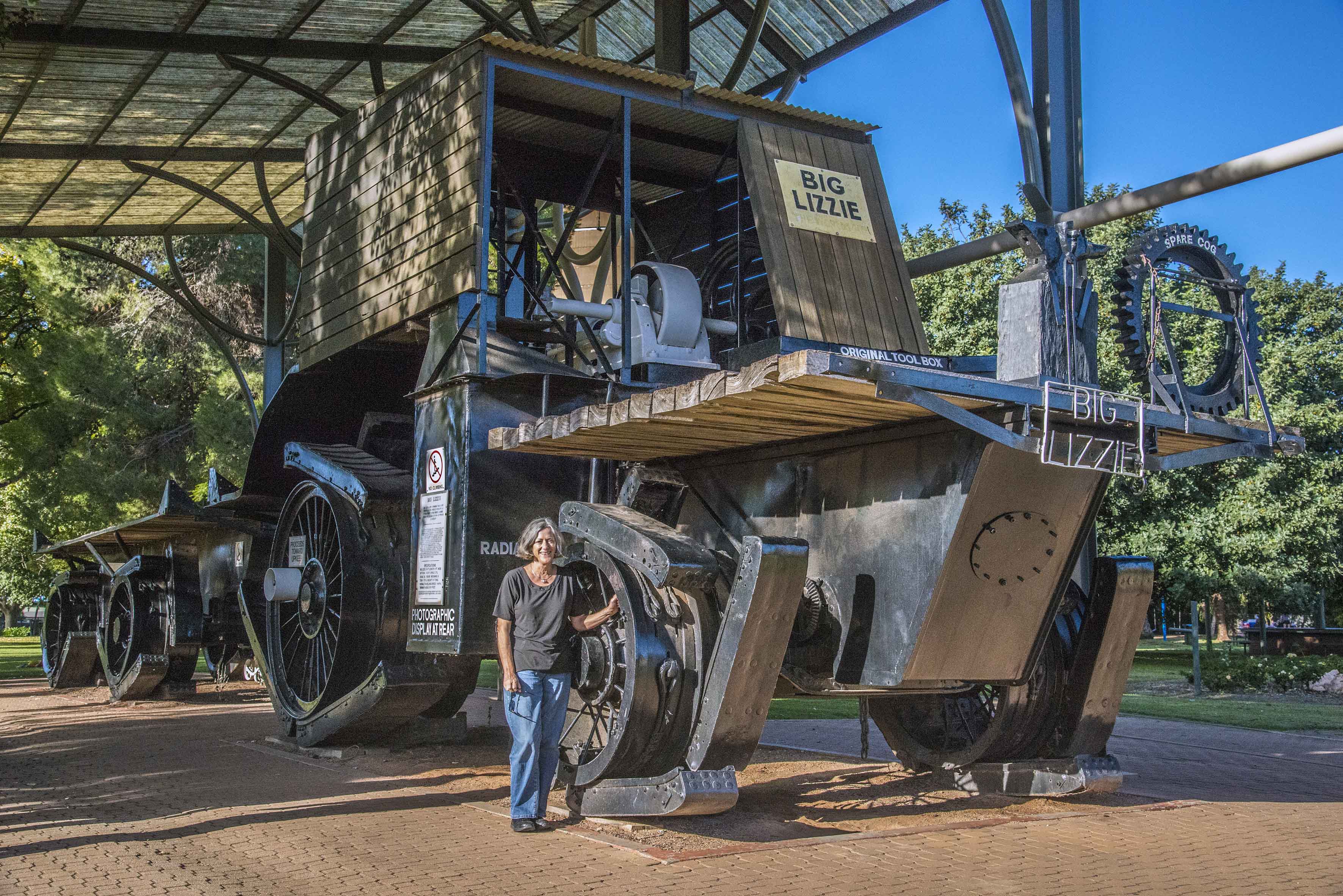
Big Lizzie is located in a park in the town of Red Cliffs, 15 kms south of Mildura..
Big Lizzie a
Big Lizzy 2
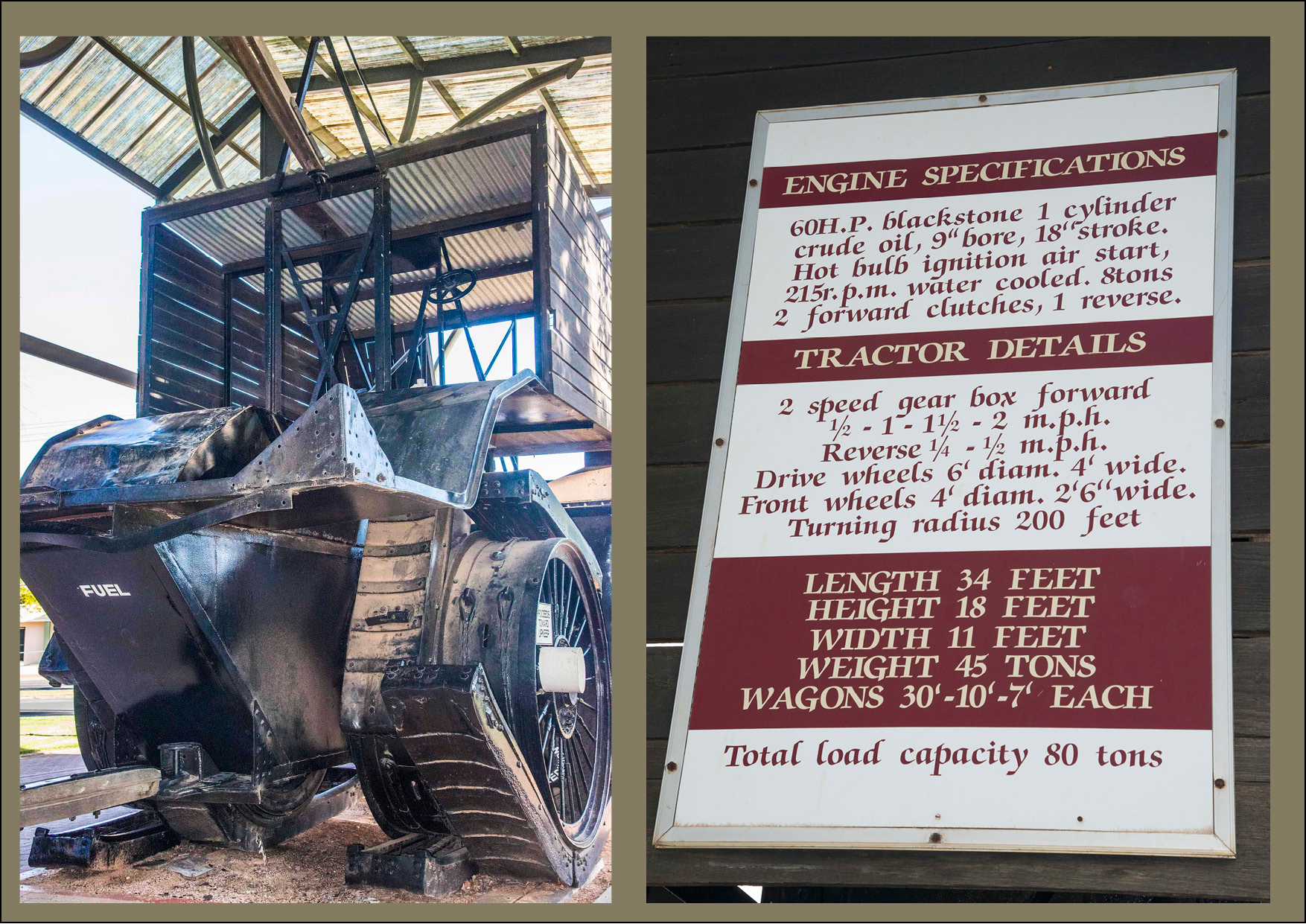
The Big Lizzie story is something else… in 1920 she commenced clearing scrub for the proposed 6,000 ha irrigation area of Red Cliffs and to provide 700 Soldier Settlement blocks for veterans of World War 1. For the time it was an amazing feat of mechanical work; she was built to be able to negotiate deep sand country with her patented modified wheels while carting a reasonable load – 80 tons of goods on two trailers and with some of the load on the tractor itself. She could move at 2mph, but suffered wheel damage so was kept down to 1 mph! More about this amazing machine can be found from the Red Cliffs & District Historical Society or on You Tube
After following the Murray River so far, we finally saw the ‘confluence’ with the Darling River occur out at the town of Wentworth. This area was a resettlement area for World War 2 soldiers and their families, so they were only just getting their farms started when the 1956 flood hit. The local museum’s presentation showed the many tragedies, along with the heroes (Massey Ferguson tractors) and losers (so many families lost). A stark reminder to us about how natural disasters shape people and their landscape forever, especially thinking about our much loved Christchurch – see our previous blog at Nomad171.com
Next stop – New South Wales!

Renmark

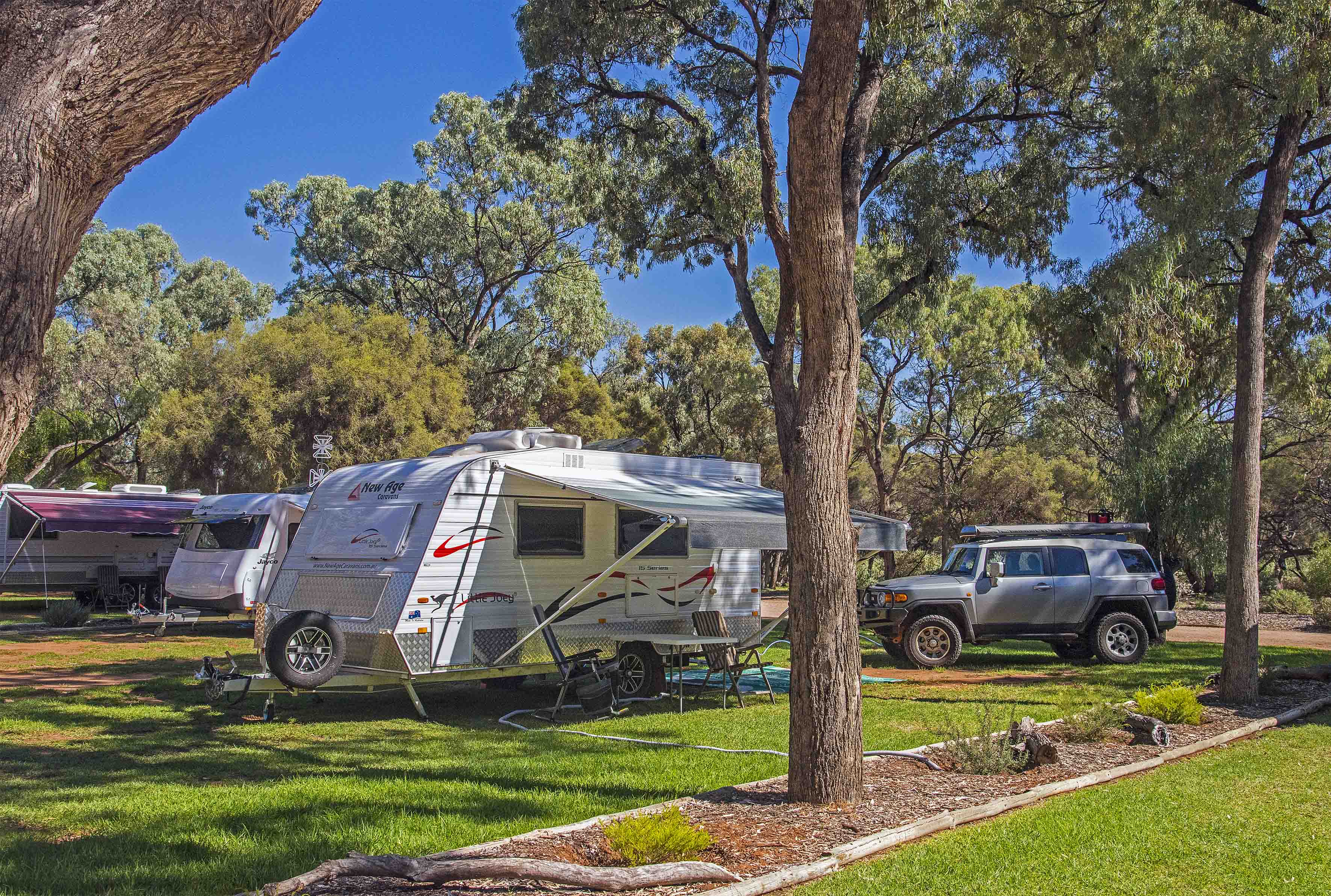
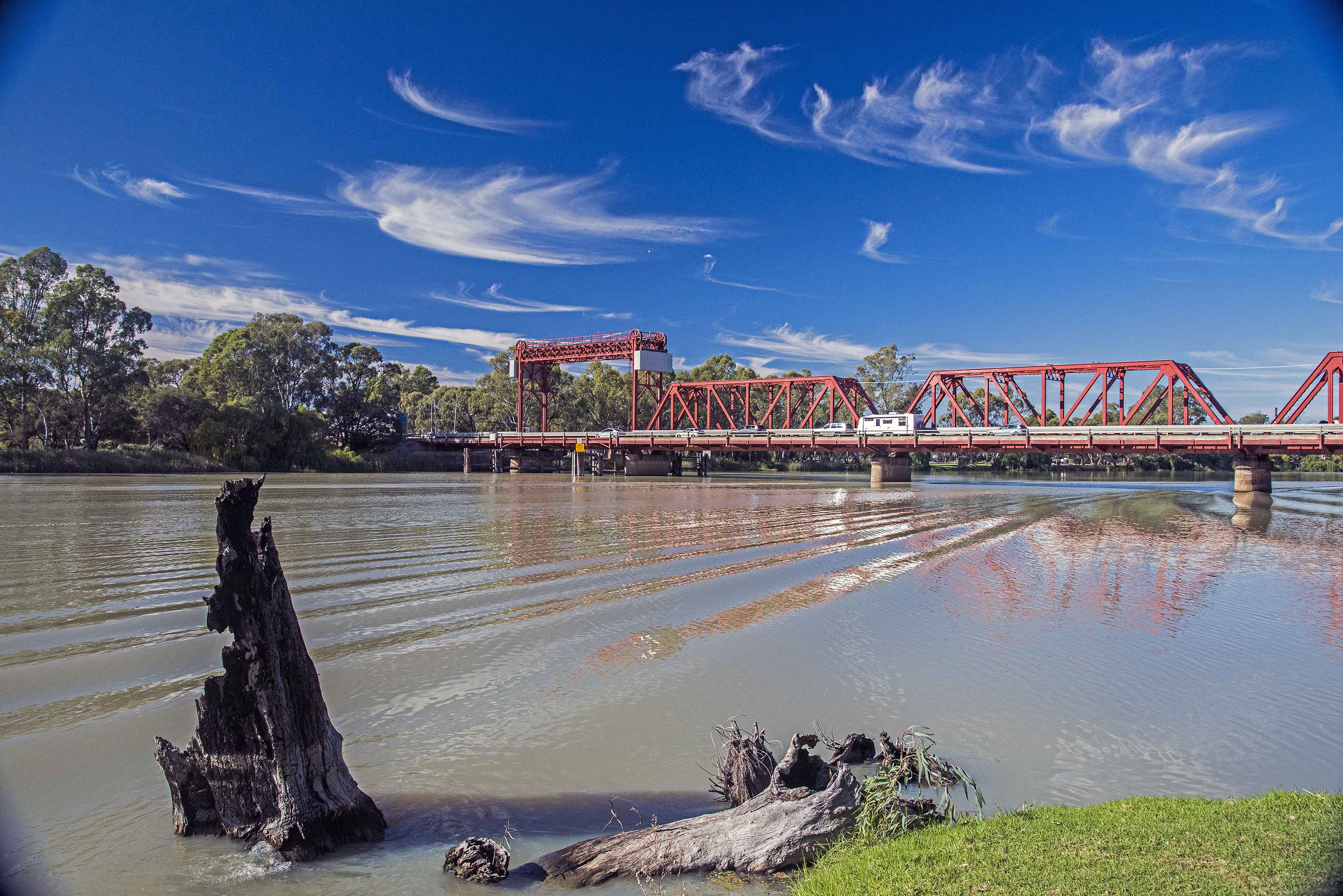
We stayed at the Big 4 Riverbend caravan park in Renmark, perfectly located besidethe Paringa suspension bridge which opens twice each day to allow river cruisers 
and houseboats to move up and down the Murray River. 
Campsite RenmarkRenmark bridge 1The range of houseboats is amazing  - both modern luxury style and older restored types. Little driver training is required, so now we want to go house-boating, or even better see if we can do a home/boat exchange in Europe or USA ... who wants 
to come with us?!
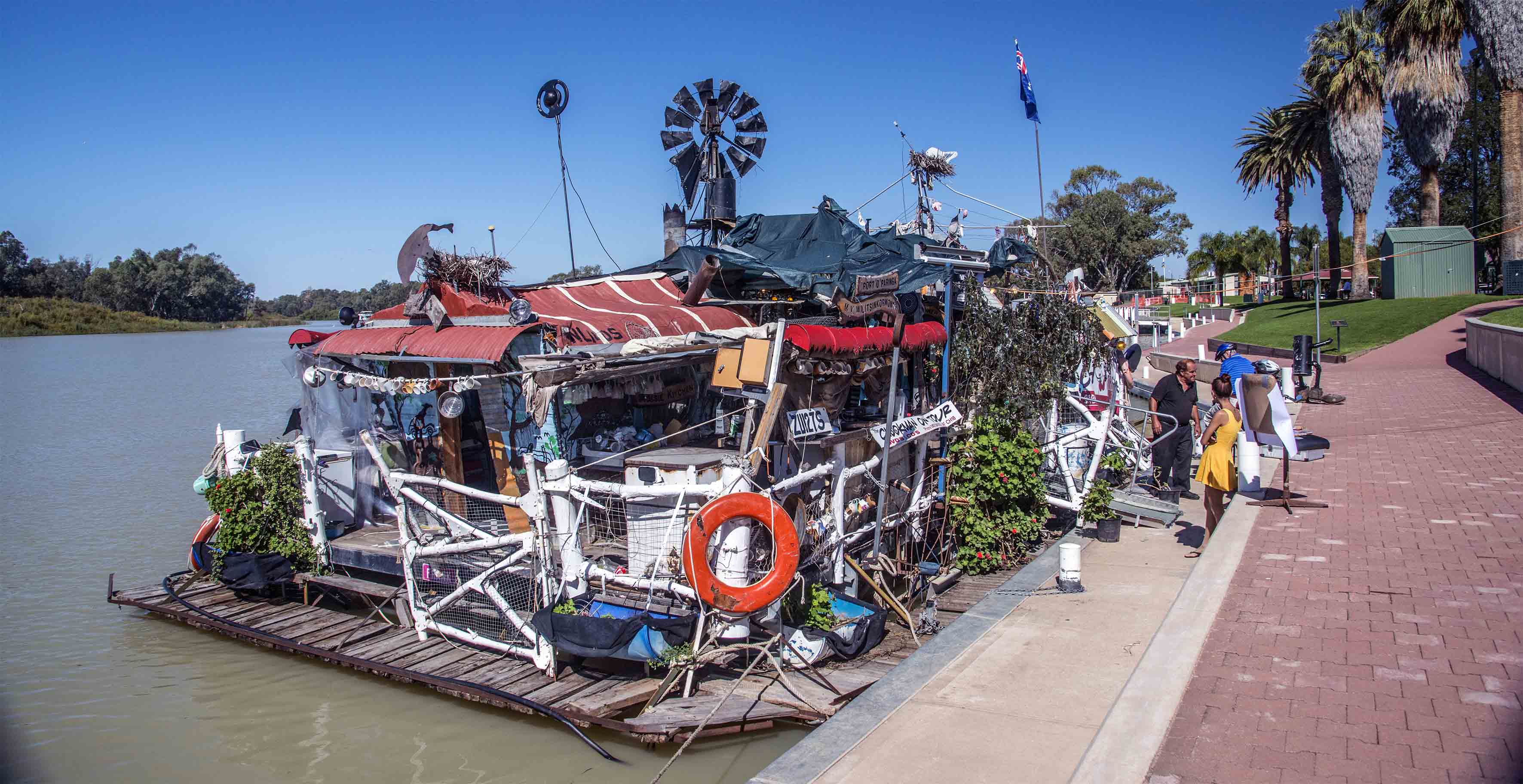
The Chook Man was in town for the premiere of a documentary that has been made about him. What a character. Over the years he has graduated from a minibus to a "water vessel"- we use the term loosely! Worth reading about.
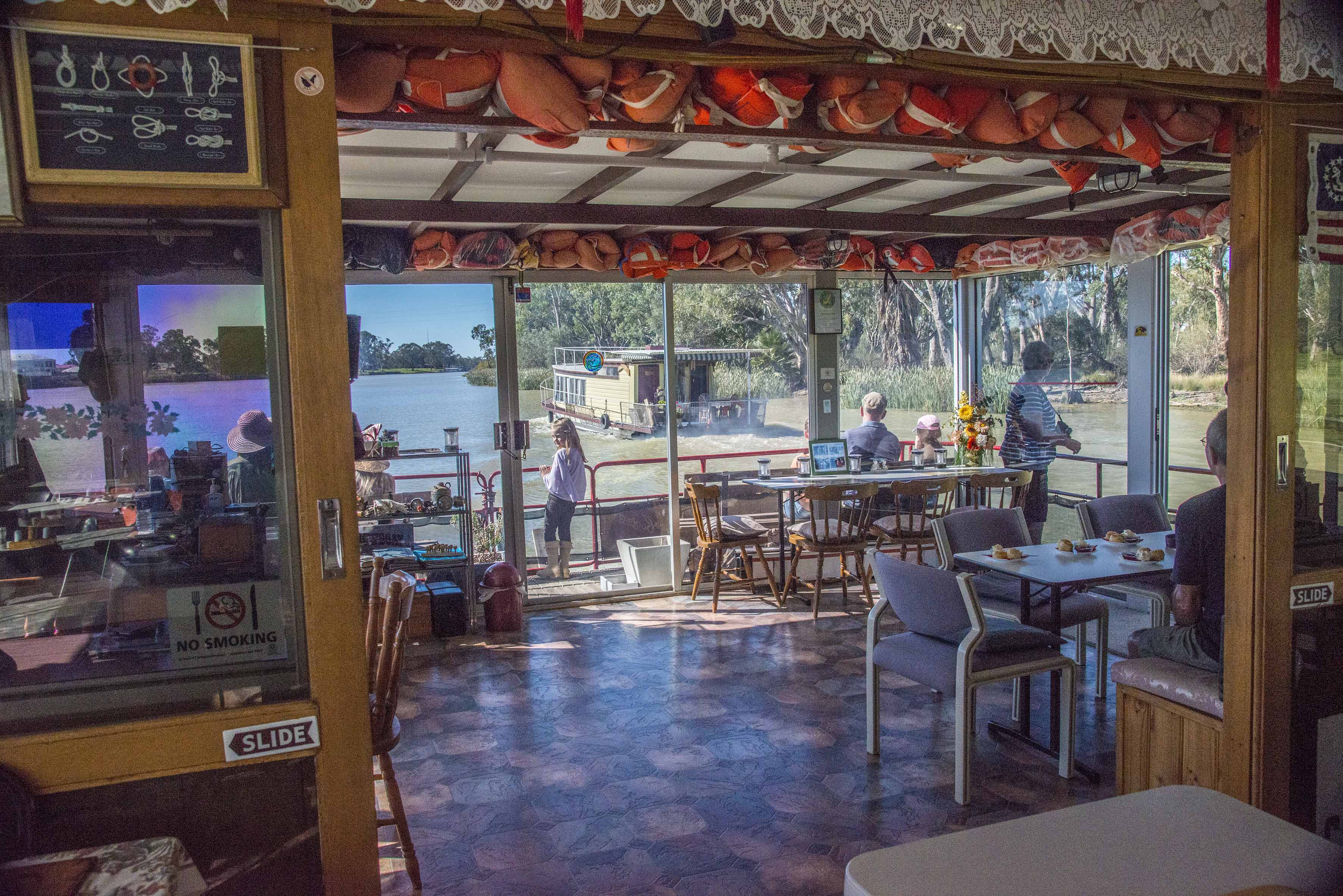
Floating garbage dumpA lovely afternoon river cruise on the MV Barrangul included Devonshire tea, and  great birdlife photo opportunities for Ian. The owners are just starting off in   Renmark after running a similar enterprise at Murray Bend for many years. We were impressed by their range of activities for children - good to see a varied age    range getting right into solving intricate puzzles and games, and the big kids    helping the littlies... not an i-Pad or phone in sight! 
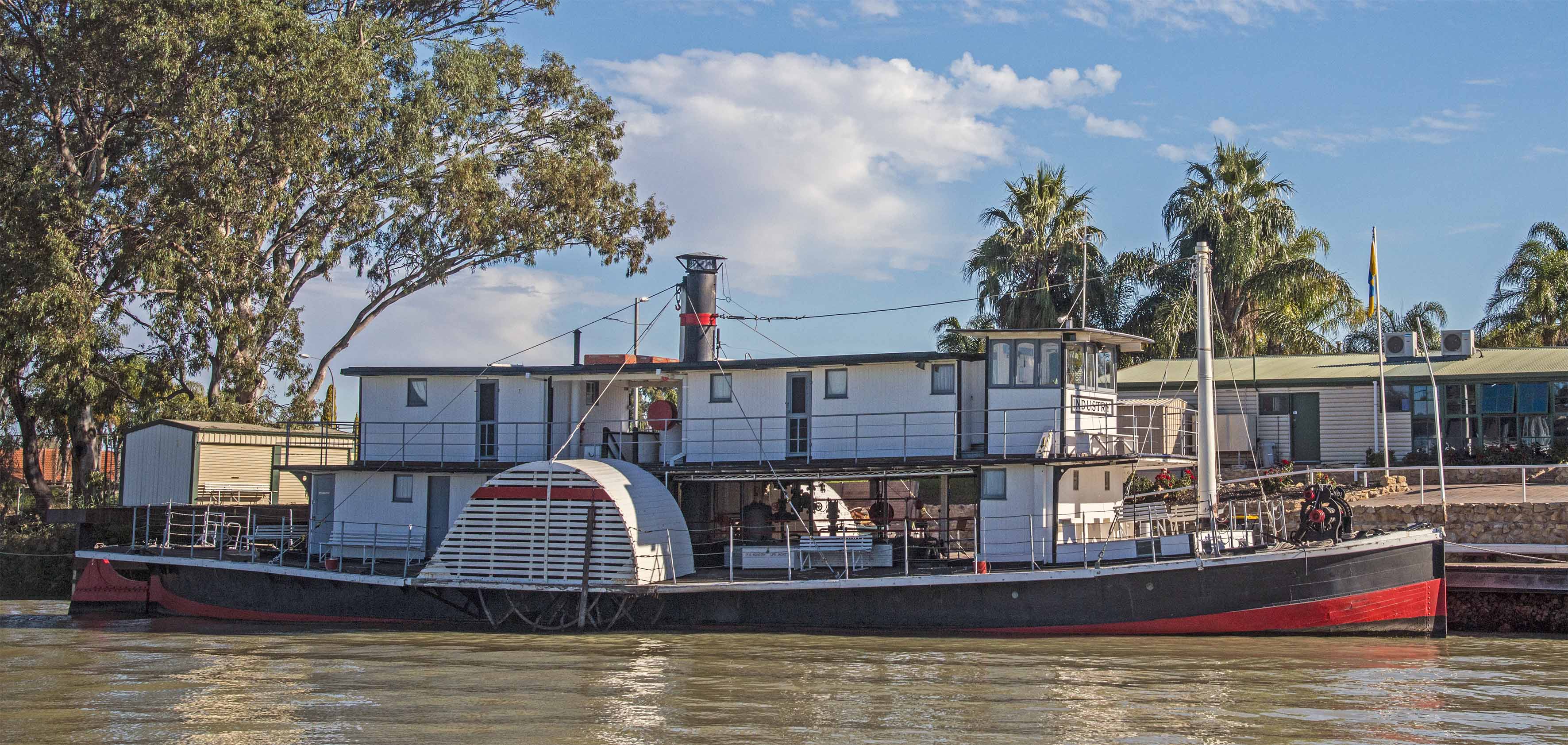
Tour boat Renmark 1PS Industry 1The restored paddle steamer 'Industry' steams down the river occasionally - not inour time frame sadly.

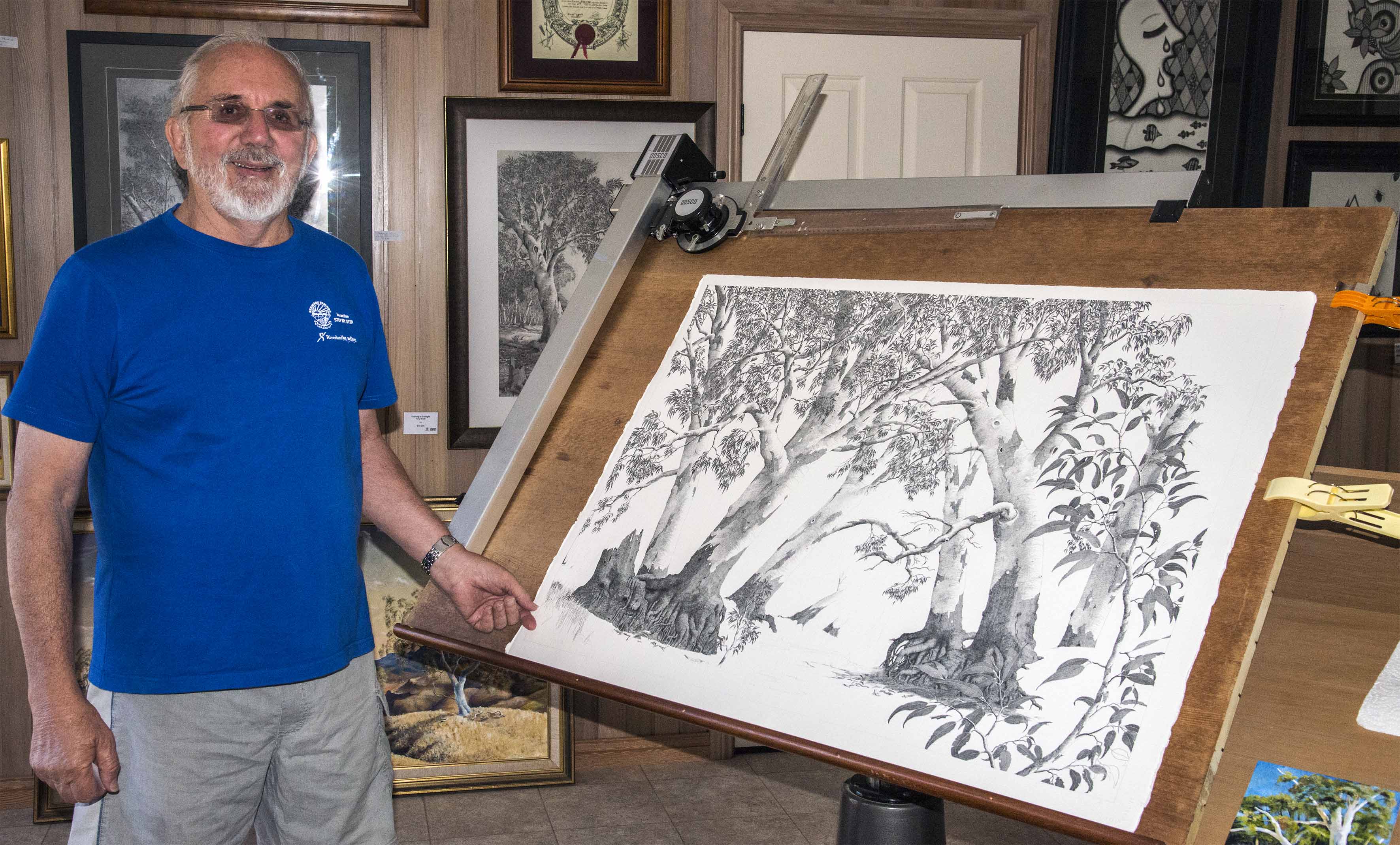
We have many beautiful red river gums in our back garden, and had heard about an  artist in Lyrup who specialises in pen and ink drawings of them. After some       detective work, we tracked Tony Smith down in his back yard, and spent a wonderful30 minutes yarning about fine art, the meaning of life, trees and ships. He was   the Master of the Murray Princess for many years, and has spent 25 years          regenerating native bush around his home. Tony's sight is failing due to glaucoma so we felt especially happy to have seen his finely detailed work, and have 2     lovely prints to remind us of our meeting.
Artist Tony Smith AOM LyrupSadly we were disappointed with the promise of fresh fruit in Berrie, Loxton and  Renmark - wrong time, wrong place probably. Next stop, Mildura!
Design a site like this with WordPress.com
Get started